Quick answer
In most large rooms, a heavy duty air circulator feels weak because its stream is being broken up or aimed at empty space, not because the motor is failing. Fix the aim and the path first; only then decide whether the room needs a second unit.
Why a big room exposes weak setup, not weak hardware
A heavy duty circulator moves a focused column of air. In a small room, that column bounces off walls and mixes the space quickly, so almost any aim feels effective. In a large room, the same column has farther to travel before it reaches a surface that can redirect it, and every obstacle along the way costs momentum.
That is why the same unit can feel strong in a garage and disappointing in an open-plan living area. The room is not defeating the fan; it is revealing whether the airflow path was planned. Treat the first pass as a placement problem, not a product problem.
The trade-off: more coverage versus more focus
Widening the oscillation or tilting the head toward the ceiling can make a room feel less stuffy overall, but it also spreads the stream thinner. If your complaint is that you cannot feel airflow where you sit or work, narrow the aim before you widen it. If your complaint is stale air in the far corners, a broader sweep plus a wall to bounce off will do more than pointing the unit at the corner itself.
Decide which problem you actually have. Chasing both at once usually produces a setting that does neither well.
Diagnose the weak airflow step by step
- Symptom: strong airflow up close, nothing across the room: Stand in the stream a few feet away, then at your normal seat. If the near field is strong and the far field is dead, the stream is being dispersed before it reaches you. Aim the pivoting head along a wall or toward a far surface so the air can be redirected back into the room instead of dissipating into open space. If the far field improves after re-aiming, the unit was fine and the path was the problem.
- Symptom: airflow feels weak everywhere in the room: Check what sits between the circulator and the occupied area: furniture, curtains, shelving, or a doorway edge. Move the unit to a clear line of sight to the people or space it should serve. On a job site, also confirm the intake side is not pressed against a wall or drawing in loose debris. Clear the intake and the output path before assuming the motor is at fault.
- Symptom: airflow seems weaker than it did before: Confirm the unit is set to its higher speed rather than a low or oscillating setting, and that the head has not drifted during use. Toggle controls can be changed accidentally when the unit is moved or bumped. If the setting is correct and the path is clear, the remaining explanation is usually room size rather than a sudden loss of performance. Rule out settings and aim drift before considering a second unit.
- When to stop adjusting and add capacity: If you have cleared the path, aimed along a wall or far surface, and confirmed the highest setting, and the far end of a very large or open room still feels stagnant, stop repositioning. One focused circulator is doing its job; the room simply has more volume than a single stream can mix. Add a second circulator at the opposite end, or accept that the unit serves the zone it is aimed at rather than the whole floor plan. Choose another option when the room, not the setup, is the limit.
Product facts
-
EXO61 Heavy Duty Air Circulator: The EXO61 has a pivoting head and glove-friendly toggle controls. You can redirect the stream and change settings quickly during a placement test without hunting for small buttons.
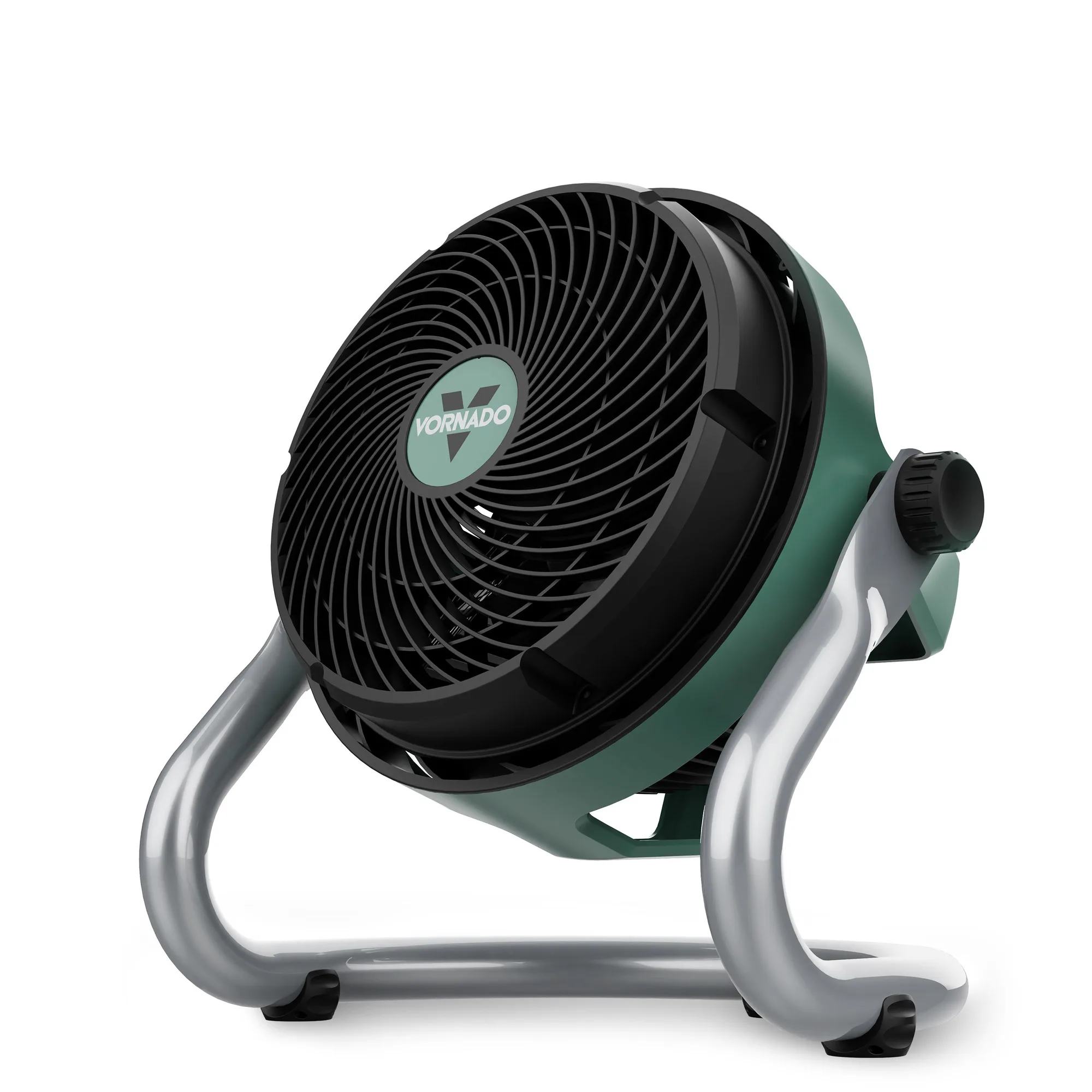
EXO61 Heavy Duty Air Circulator
-
EXO61 Heavy Duty Air Circulator: Its IP54-rated motor is protected against dust and debris, and the EXOskeleton housing is built for job-site use. Dust and grit are less likely to be the reason for weak airflow, so placement and obstructions deserve attention first.