Quick answer
For most heavy flow nights, choose a dedicated heavy flow overnight pad with a long, full-coverage shape. If your flow is moderate by bedtime, a regular overnight pad with an organic cotton cover may be enough.
Overnight vs. regular pads: what actually changes
Overnight pads are built for longer wear and more coverage than regular pads. The difference is not just length; it is how the pad is shaped to stay in place while you lie down, toss, and turn. A regular pad may work for light evening flow, but it can shift or run out of absorbency before morning.
For heavy flow nights, the priority is a pad that holds a larger volume and covers more area front to back. That extra coverage matters most when you sleep on your back or stomach, because gravity moves fluid toward the ends of the pad.
Why the cover material matters for overnight comfort
You will wear an overnight pad for six to ten hours, so the surface against your skin deserves attention. An organic cotton cover is breathable and soft, which can reduce the damp, clammy feeling that comes from synthetic topsheets during long wear.
A cotton cover does not replace absorbency, though. Look for a pad that pairs a soft cover with an absorbent core, especially if you bleed heavily in the first hours of sleep.
When a regular overnight pad is the better trade-off
Heavy flow overnight pads are bulkier by design. If your flow is light to moderate at night, or if you are sensitive to bulky pads, a regular overnight pad with a cotton cover can be more comfortable and still protect your sheets.
The trade-off is straightforward: regular overnight pads offer less capacity and less end-to-end coverage. Choose them when your flow is predictable and lighter, not on your heaviest nights.
Decision rules for choosing overnight coverage
- Match absorbency to your heaviest night: If you routinely wake up with leaks or need to change pads during the night, choose a heavy flow overnight pad. If your flow is lighter by bedtime, a regular overnight pad is sufficient. Track your first two nights of each cycle to confirm which absorbency you actually need.
- Check length against your sleep position: Back and stomach sleepers need more coverage at the front and back of the pad. Side sleepers should prioritize a pad that stays put and consider a longer overnight shape.
- Prioritize a cotton cover for long wear: For six to ten hours of wear, an organic cotton cover helps reduce moisture and irritation. Choose a pad with a cotton cover and an absorbent core rather than a synthetic topsheet.
- Choose regular overnight pads when bulk is the bigger problem: If heavy flow pads feel too bulky or you are sensitive to thicker pads, use a regular overnight pad on lighter nights and save the heavy flow pad for your heaviest two nights.
Product facts to know
-
Organic Cotton Comfort Cover Heavy Flow Overnight Pads: Made with supreme absorbency for heavy flows and overnight use. This is the pad to choose when your flow is heaviest and you need the highest capacity for long sleep hours.
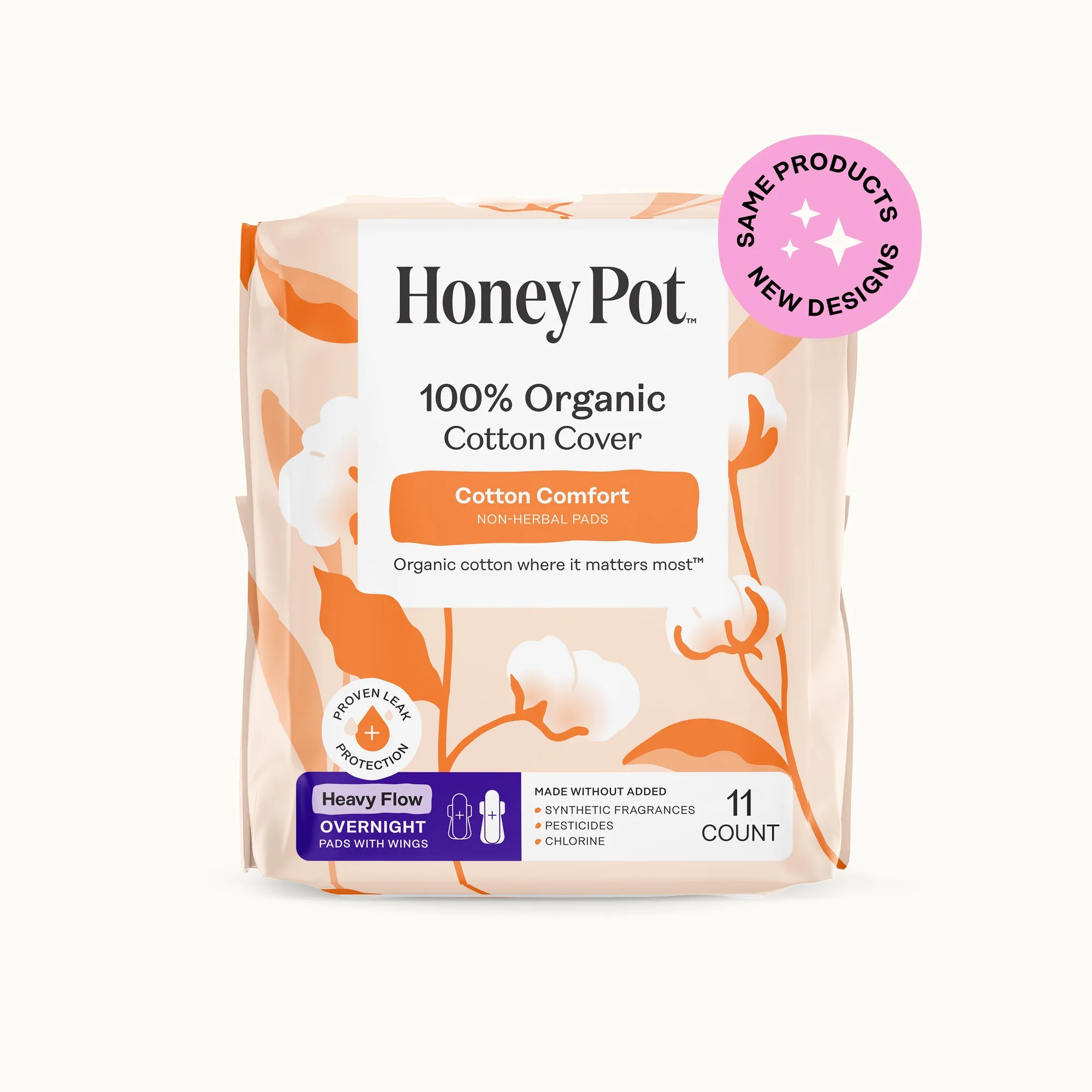
Organic Cotton Comfort Cover Heavy Flow Overnight Pads
-
Organic Cotton Comfort Cover Overnight Pads: Features a 100% organic cotton cover and an ultra-absorbent pulp core for leak-proof protection that lasts overnight. This pad balances breathable cotton comfort with overnight protection, making it a good fit for moderate overnight flow.
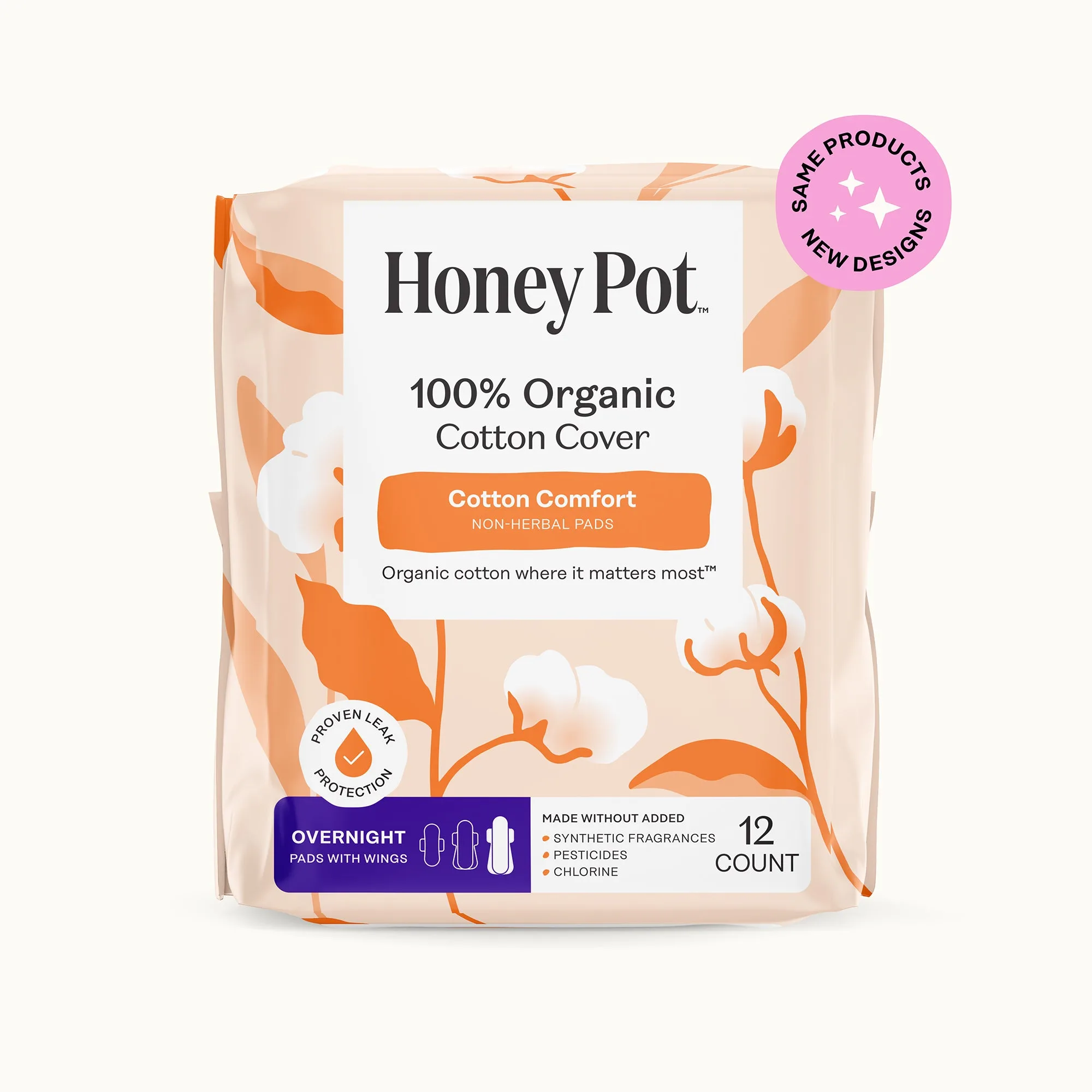
Organic Cotton Comfort Cover Overnight Pads
Who should choose heavy flow overnight pads
Best for
- People with heavy flow who leak through regular pads at night
- Back or stomach sleepers who need coverage at the ends of the pad
- Anyone who wants a cotton cover for long overnight wear
Not for
- Light or moderate overnight flow where a regular overnight pad is enough
- People who prefer the thinnest possible pad and can change frequently