Quick answer
Choose hematite if you want a heavy, mirror-polished stone that pulls your attention down to your feet and works well in a magnetic bracelet or pocket piece. Choose black tourmaline if your priority is deflecting — it is the classic protection stone for anxiety and EMF-heavy spaces. Many people keep both: hematite for grounding during focused work, black tourmaline for boundaries in crowded or wired environments.
How hematite and black tourmaline differ in practice
Hematite is an iron oxide with a metallic, mirror-like luster. Its weight is the point: holding it gives a physical cue to slow down and feel your feet. That makes it a natural fit for grounding crystal comparison shoppers who want something they can feel in the hand, not just admire on a shelf. Black tourmaline is a crystalline boron silicate that forms in long striated columns and is traditionally described as a deflector — it is used to create a boundary rather than to pull energy downward.
The practical difference shows up in how you carry them. Hematite is dense and smooth, so it sits flat in a pocket, palm, or bracelet without bulk. Black tourmaline is often kept as a raw or tumbled piece near a workspace, router, or doorway, where its job is to stand between you and a busy environment. Neither is a substitute for the other; they solve different problems.
Hematite for protection and magnetic bracelets
When people search for hematite for protection, they usually mean two things: a feeling of being anchored, and a reflective surface that symbolically sends energy back. Hematite delivers the first reliably through weight and the second through its polished finish. A hematite magnetic bracelet adds a snug, constant reminder on the wrist, which is why it is popular for people who fidget or need a grounding cue during meetings.
One honest tradeoff: hematite is brittle compared with many tumbled stones. A hard knock against a tile floor can chip the polish or crack a thin band. If you plan to wear it daily, choose a design with a protected setting, and treat it as a desk-to-dinner piece rather than gym jewelry.
Black tourmaline benefits for anxiety and EMF-heavy rooms
Black tourmaline benefits are usually described in terms of clearing and shielding. Because it is a protection stone for anxiety in many people's routines, it is often placed where stress accumulates: beside a laptop, on a nightstand, or near an entryway. Its dark, striated look also makes it easy to spot in a bag, so you are more likely to actually use it.
The tradeoff is subtlety. Black tourmaline is not a stone you wear as a delicate accent, and a large raw piece is not something you slip into a pocket comfortably. If your goal is a constant physical cue, hematite wins. If your goal is a boundary around a space, black tourmaline is the more natural fit.
Choosing between them without overbuying
Start with the problem you actually have. If you feel scattered, restless, or ungrounded, a weighted hematite piece is the faster intervention. If you feel drained after crowds, calls, or long screen sessions, a black tourmaline piece placed in that environment addresses the boundary you are missing. Buying one of each in a small size is often more useful than buying a large piece of either.
If you already own grounding stones, check what you reach for. A stone that stays in a drawer is not helping. The best grounding stone is the one that fits your hand, your pocket, or your desk — and that you will pick up tomorrow.
Tradeoffs at a glance
- Grounding vs deflecting: Hematite pulls attention downward through weight and reflection. Black tourmaline creates a boundary between you and a busy environment. Pick hematite for internal scatteredness; pick black tourmaline for external overload.
- Wearability vs placement: Hematite is dense and smooth, so it works in bracelets and pockets. Black tourmaline is often kept as a raw or tumbled piece near a workspace or doorway. If you want to wear it, hematite is usually easier. If you want to place it, black tourmaline is.
- Durability and care: Hematite can chip or lose polish on hard impacts. Black tourmaline is generally tougher but less comfortable to carry close to the body. Protect hematite from drops; accept that black tourmaline is a space piece, not a pocket piece.
- Cost and commitment: Both are affordable entry points, so the real cost is attention. A stone you never pick up is wasted regardless of price. Buy small, use daily, and add a second stone only when you notice a specific gap.
Stones that pair well with either choice
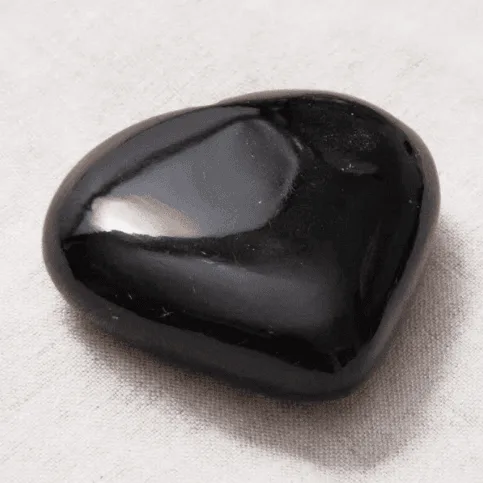
- BLACK OBSIDIAN HEART: The Black Obsidian Heart is described as a protective stone born from volcanic energy, made to help you ground down, ride emotional waves, and reveal hidden truths. If you want protection with an emotional, heart-centered focus rather than a strict deflector, obsidian covers that middle ground and pairs naturally with either hematite or black tourmaline.
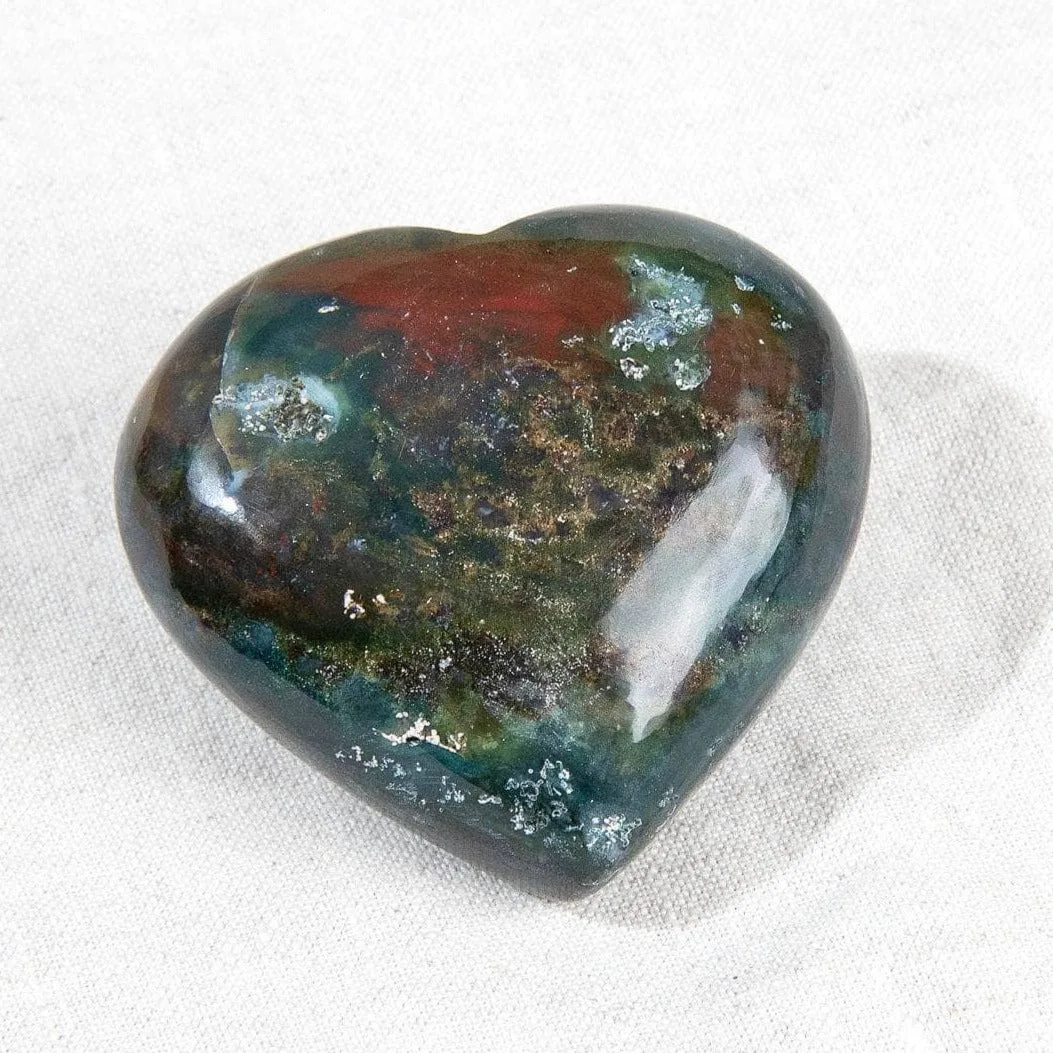
- BLOODSTONE HEART: The Bloodstone Heart is described as a stone of courage that supports circulation, energy levels, and the immune system, with deep green coloring speckled in red. Bloodstone is a useful third option when your real issue is low energy or confidence rather than scattered attention or environmental overload.
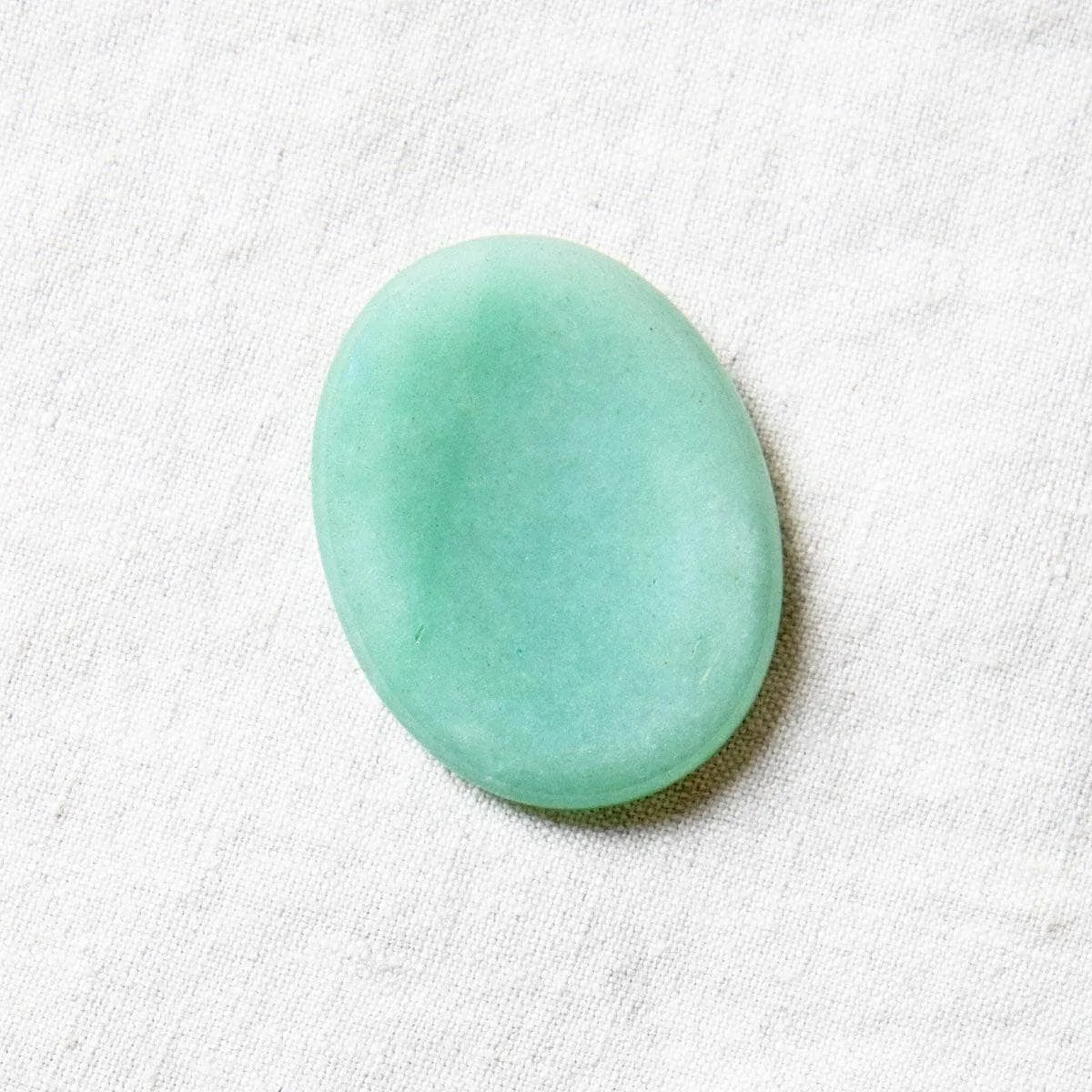
- GREEN AVENTURINE WORRY STONE: The Green Aventurine Worry Stone is described as a soothing green stone for people who struggle to let go, feel tethered to old trust patterns, or feel followed by bad luck. A worry stone gives your hands something to do during anxious moments, which is a practical complement to a grounding or protection stone rather than a replacement.
Which one should you choose?
Best for
- People who feel scattered, restless, or ungrounded and want a weighted, wearable cue
- Anyone who wants a magnetic bracelet or pocket stone for focused work and meetings
- Shoppers who prefer a polished, mirror-like finish they can see and feel
Not for
- People who need a boundary against crowds, screens, or EMF-heavy rooms — choose black tourmaline instead
- Anyone who wants a stone to leave in one place rather than carry
- Shoppers looking for a delicate, low-profile jewelry accent