The Real Difference Between Hemp and Cotton Twine
When you reach for a natural twine, the choice usually comes down to two materials: hemp and cotton. Both are plant-based, biodegradable, and popular for crafts, gardening, and jewelry. But they behave differently in your hands. Hemp twine is stronger per strand, more resistant to rot, and holds knots without slipping. Cotton twine is softer, more absorbent, and easier on sensitive skin. Which one wins depends entirely on what you are tying, wearing, or growing.
Strength and Durability: Hemp Takes the Lead
Hemp fibers are naturally long and dense, giving hemp twine a higher tensile strength than cotton of the same thickness. The organic hemp twine from Bean Products is twisted for added strength and longer life. It holds tight knots and doesn't snap easily. Cotton twine is strong enough for light to medium tasks, but it will break under heavier loads and can stretch over time. For garden tying, macrame plant hangers, or any project that needs to bear weight, hemp is the more reliable choice.
Feel and Workability: Cotton Is Softer
Cotton twine has a softer, fluffier texture that feels gentle on hands. It is a good choice for projects that sit against the skin, like friendship bracelets or lightweight jewelry. Hemp twine, especially the unwaxed version, can feel rougher until broken in. However, the organic hemp twine from Bean Products is described as smooth and skin-friendly. The beeswax waxed twine option adds a smooth coating that also makes it easier to work with and gives a slight grip for knotting.
Hemp Twine Options That Affect Your Choice
-
Hemp Twine, Cord Rope Gardening Crafting Cooking Jewelry Decor assorted sizes and colors and beeswax waxed: Available in sizes from 0.5mm x 328 ft (8 lb test) up to 5.0mm x 120 ft (280 lb test). Choose waxed or unwaxed. Colors include natural, black, blue, brown, green, orange, pink, purple, red, white, yellow, and Rasta. The wide size range lets you pick a cord that matches the strength you need. Waxed cord holds its shape and resists fraying, while unwaxed is better for projects where you want a matte, natural look.
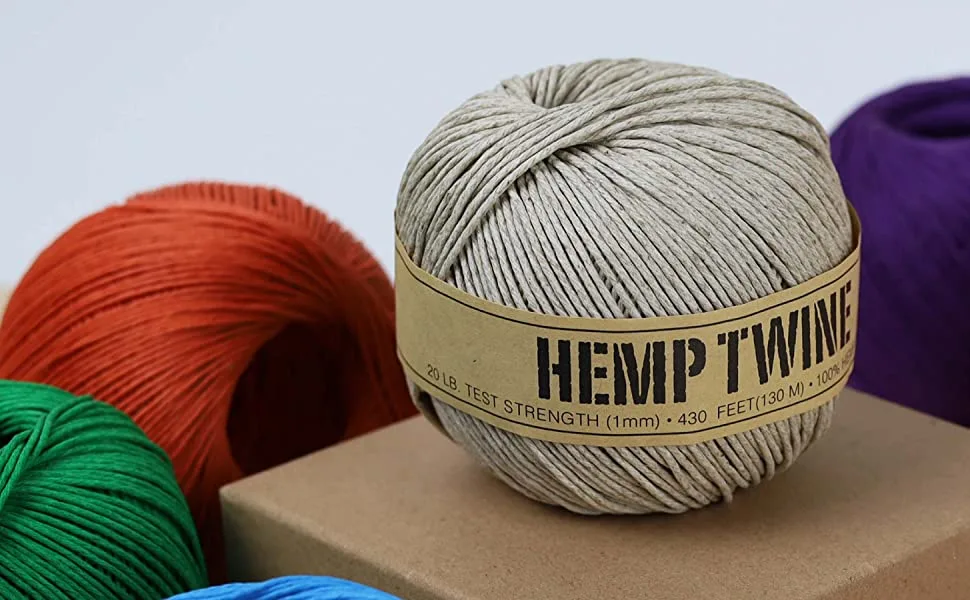
Hemp Twine, Cord Rope Gardening Crafting Cooking Jewelry Decor assorted sizes and colors and beeswax waxed
Eco-Friendliness: Both Are Green, but Hemp Has an Edge
Both hemp and cotton are natural fibers, but hemp requires far less water and fewer pesticides to grow. The hemp twine from Bean Products is organic, with no synthetic fibers or harsh chemicals. It is more eco-friendly than cotton and better than plastic twine. Cotton grown conventionally can be water-intensive, though organic cotton is a better option. If your project calls for a renewable, low-impact material, hemp is the clear winner.
Hemp vs. Cotton: Key Differences at a Glance
Use this quick comparison to match the cord to your project.
- Strength: Hemp: Higher tensile strength; holds knots firmly. Cotton: Moderate strength; can stretch or break under heavy loads.
- Texture: Hemp: Slightly rough initially; smooth with wax coating. Cotton: Soft and fluffy from the start.
- Best for jewelry: Hemp: Great for macrame, beaded bracelets, and necklaces (especially 0.5mm or 1.0mm). Cotton: Good for soft, lightweight designs.
- Best for gardening: Hemp: Excellent for tying tomatoes, cucumbers, and other plants; resists rot and weather. Cotton: Works for light tying but degrades faster outdoors.
- Eco-impact: Hemp: Low water use, few pesticides, fully biodegradable. Cotton: Higher water and pesticide footprint unless organic.
When to Choose Hemp Twine
Reach for hemp twine when you need strength and durability. It is ideal for garden tying, macrame plant hangers, heavy-duty craft projects, and outdoor use. The waxed hemp cord is also great for fire-starting or survival gear because it burns like a candle. If you are making jewelry, the 0.5mm or 1.0mm hemp cord works well for beading and fine work. The organic hemp twine from Bean Products offers a range of sizes and colors, including black hemp cord for a bold contrast.
When Cotton Twine Might Be Better
Choose cotton twine for projects where softness and a gentle hand feel matter most. It is a good fit for children's crafts, lightweight gift wrapping, or any application where the cord will be in direct contact with sensitive skin. Cotton also absorbs dye easily, so it is available in a wider range of bright colors. However, for tasks that require real holding power or outdoor longevity, cotton falls short.
Making Your Choice
There is no single winner in the hemp vs. cotton twine debate. Hemp wins on strength, durability, and eco-friendliness. Cotton wins on softness and immediate comfort. For most crafters and gardeners, having both on hand is the practical solution. Start with a spool of organic hemp twine for your heavy-duty needs and a small cotton roll for delicate work. That way, you always have the right cord for the job.