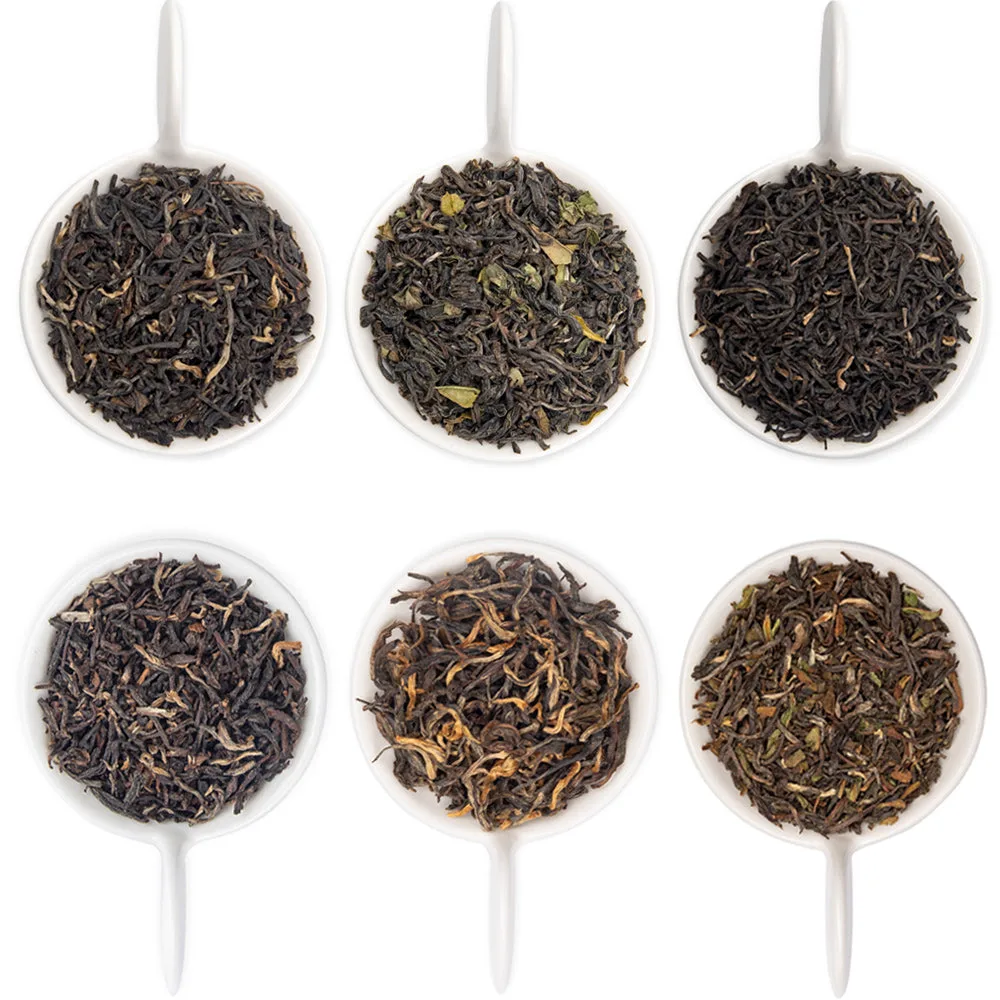
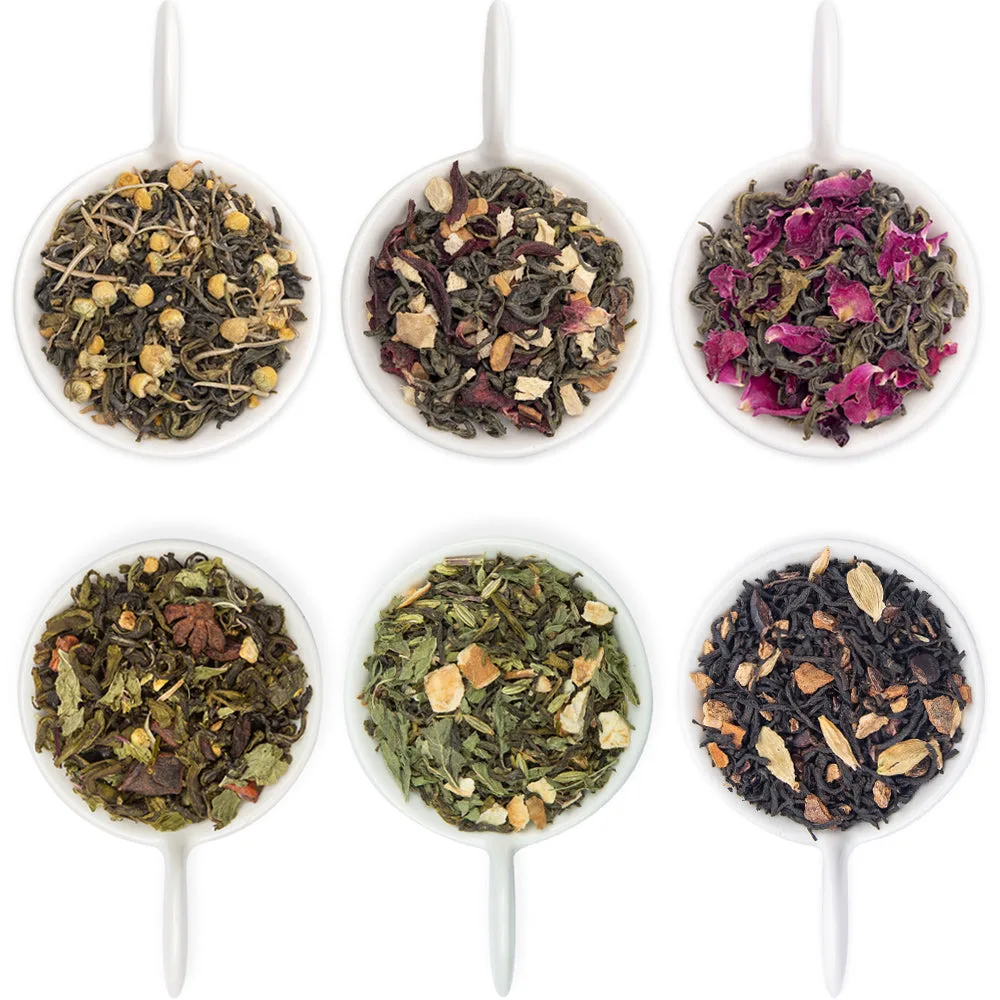
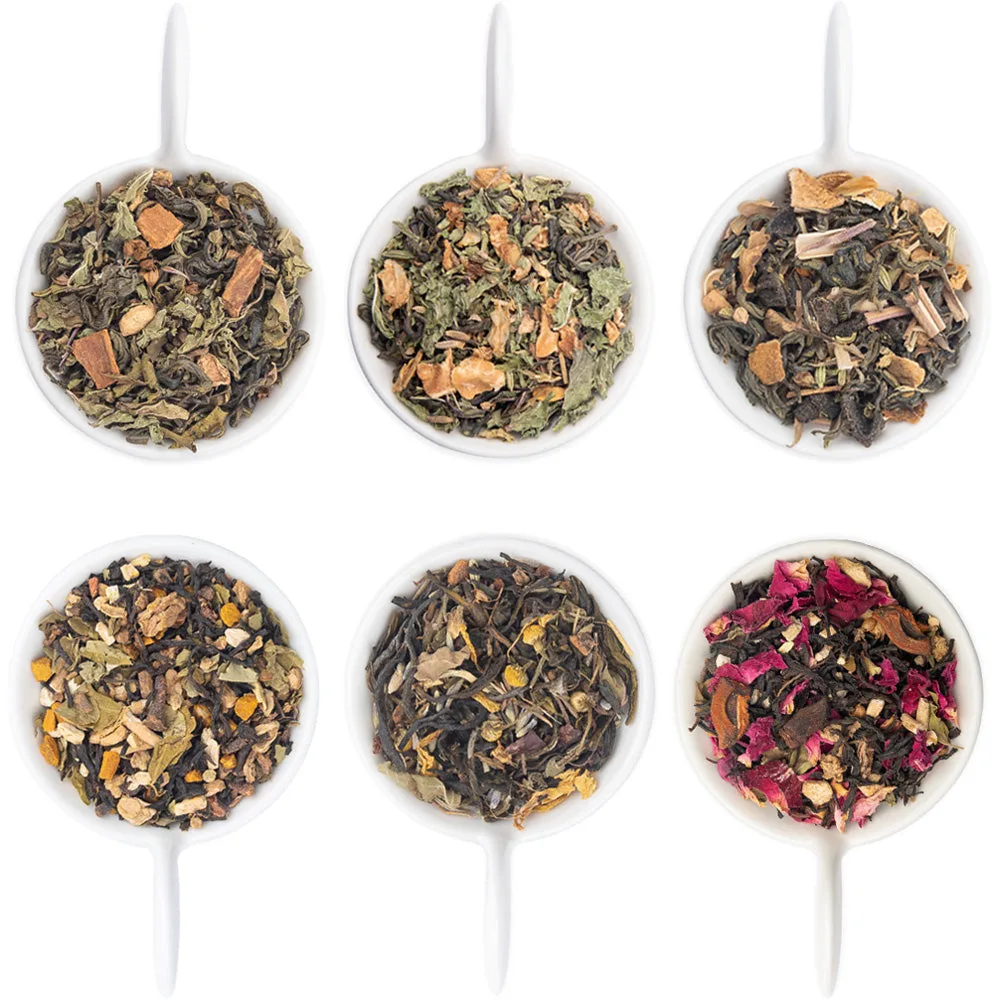
Start with the format, not the flavor list
The Herbal Green Tea Sampler Pack gives you six distinct blends, each in a 10-gram pouch — 60 grams total, or roughly 24 cups. That format is the key to how you should work through it: small enough to finish each blend while it is still fresh, but varied enough to compare flavors side by side. The catalog describes the collection as an exploration of Indian herbs, from subtle notes to bold flavors, but it does not list the individual blend names or ingredients. That means your first job is a simple one: open the pack, identify each pouch, and decide on an order before you brew.
A simple sequence for tasting all six blends
Because the catalog does not specify which blends are light or bold, use your own senses to set the order. The goal is to avoid overwhelming your palate early and to keep notes that help you decide what to reorder.
- Label each pouch: Write the blend name (or a short code) and the date you opened it on the pouch or a piece of tape. With six similar-looking pouches, this prevents mix-ups later.
- Smell before you brew: Open each pouch one at a time and note the dry aroma. Herbal green tea blends can range from grassy to spicy to floral; this quick sniff helps you sequence from lighter to stronger.
- Brew a small cup of the mildest-smelling blend first: Use one teaspoon of leaves per cup as a starting point, since the catalog does not provide a specific leaf-to-water ratio. Adjust from there. Taste and note the flavor before moving on.
- Work toward the boldest blend: Save the blend with the strongest dry aroma for later in the session. This keeps your palate from being dominated by one flavor.
- Keep brief notes: For each blend, jot down three things: dry aroma, brewed flavor, and whether you would drink it again. These notes become your shopping list for full-size pouches.
Brewing checkpoints when the catalog is silent
The supplied product information does not include water temperature, steeping time, or a recommended leaf-to-water ratio. That is not a flaw in the tea; it simply means you will need to taste as you go. Start with water that is hot but not boiling (let a kettle rest for a minute or two after boiling) and steep for a short time, then taste. If the cup is too weak, steep longer; if it turns bitter, shorten the next steep or use slightly cooler water. Because these are herbal green tea blends, a lighter touch generally preserves the delicate notes the catalog mentions. Keep a small notebook or phone note with the time and temperature that worked for each blend, so you can repeat your favorite cup.
What the pack gives you to work with
-
Herbal Green Tea Sampler Pack: Six distinct blends, 10 grams each (60g total, about 24 cups). Small pouches mean you can taste broadly without committing to a large bag of any one blend; plan to finish each pouch within a few weeks of opening for the best flavor.
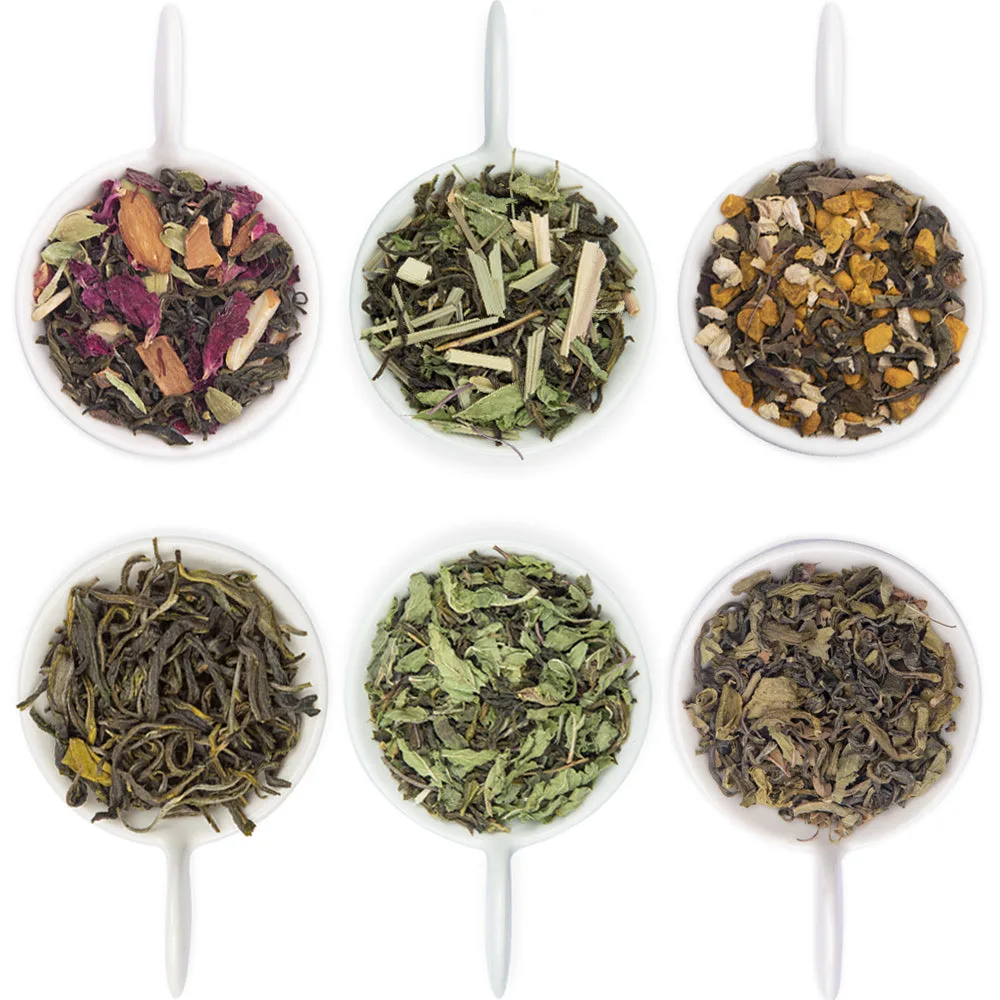
Herbal Green Tea Sampler Pack
-
Herbal Green Tea Sampler Pack: The catalog describes rich and wholesome flavors of Indian herbs, from subtle to bold. This range is why a tasting order helps: start with the subtler blends so the bolder ones do not mask them.
Storage that protects 10-gram pouches
The catalog does not provide specific storage instructions, so use general best practice for loose-leaf tea: keep the pouches sealed in an airtight container, away from light, heat, and strong odors. A tin or a zip-top bag with the air pressed out works well. Because each pouch is only 10 grams, you will likely open several at once during tasting; reseal each one promptly after use. If you live in a humid climate, a small desiccant packet in the storage container can help, but do not rely on it as a substitute for a good seal. The goal is to finish the pack while the leaves still smell fresh — roughly 24 cups is not a long commitment if you drink tea regularly.
Turning the sampler into a repeatable routine
The most practical way to work through the pack is to assign each blend a purpose. For example, pick one for mornings, one for after lunch, and one for evenings, based on your tasting notes. This prevents the pack from becoming a novelty you forget about. If a blend does not appeal to you on the first try, give it a second chance with a different steep time before writing it off; flavors can shift noticeably with small brewing changes. When you find a favorite, note the blend name and use it to guide your next full-size purchase. The sampler has done its job once you know which one you would buy again.