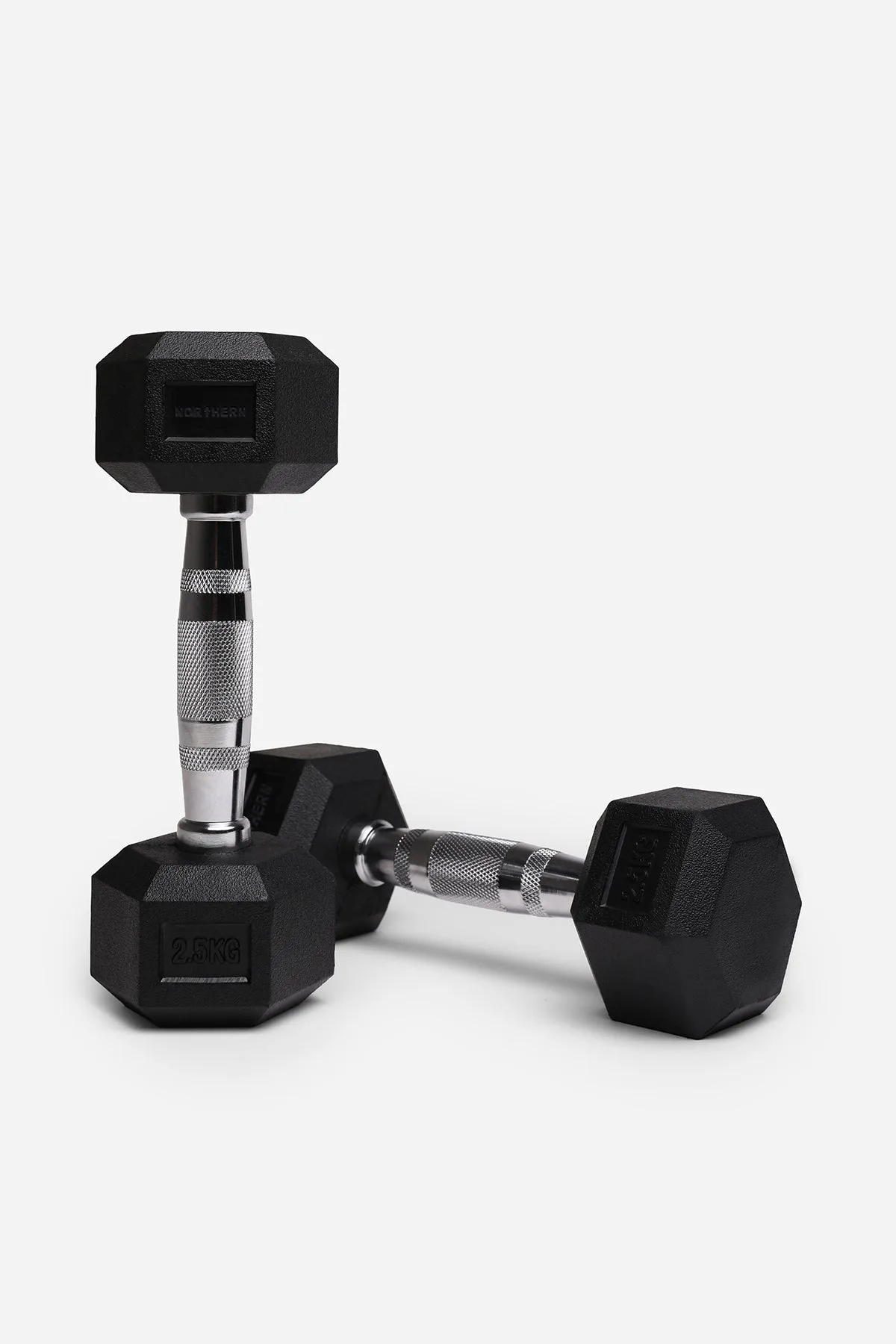
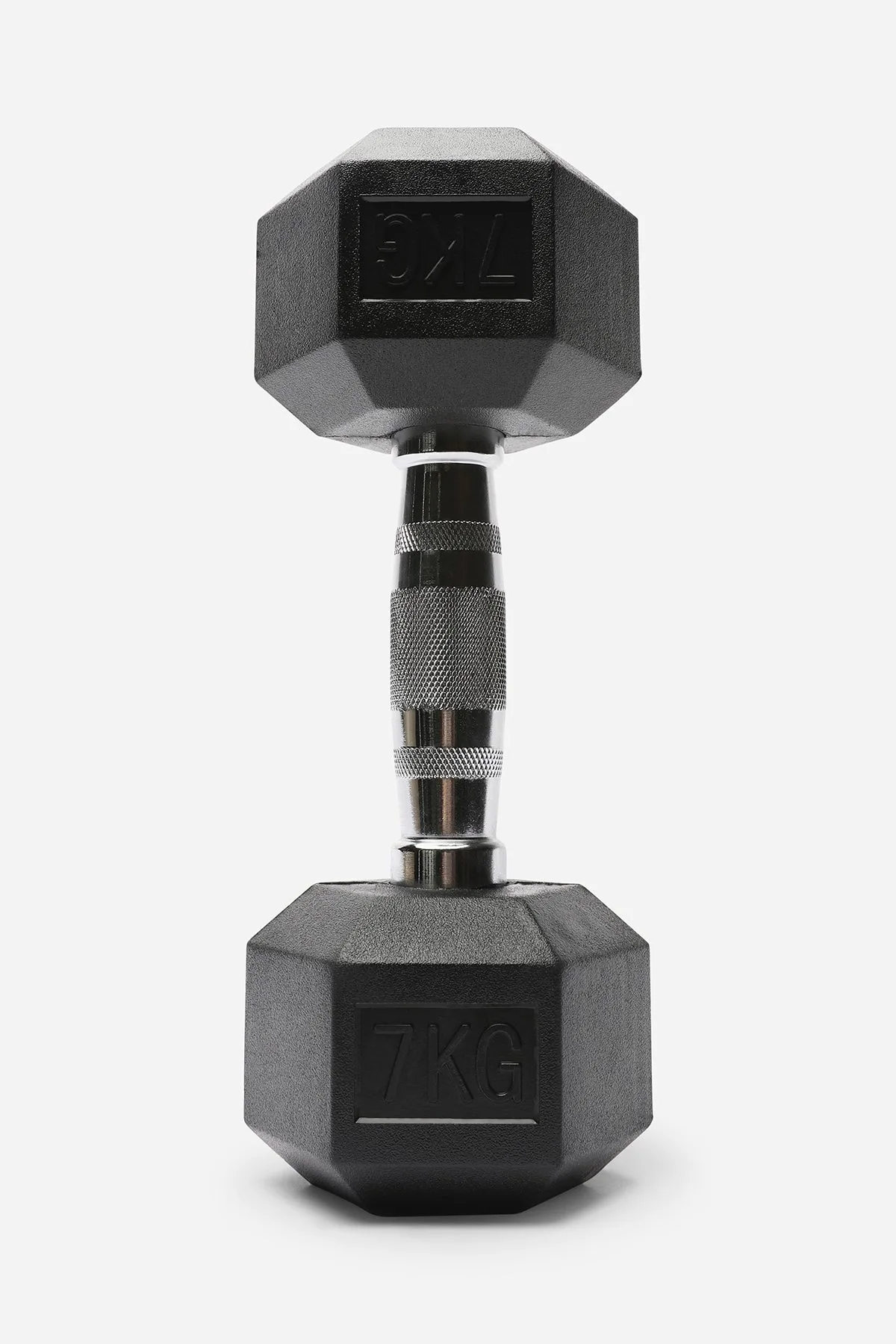
A 3kg pair is a tool for movement quality, not max strength
A 3kg dumbbell in each hand gives you 6kg total to work with. That's light enough to pick up without a warm-up, but heavy enough to add meaningful resistance to warm-ups, toning work, and everyday movement patterns. The Northern Hex Dumbbells 3kg x 2 (6kg) are sold as a pair and sit at the entry point of a range that runs from 2.5kg to 50kg, so they're often the first dumbbell people buy for home use.
The question isn't whether 3kg is 'enough' in absolute terms. It's whether this pair fits the specific jobs you have in mind: preparing your joints for heavier work, adding gentle load to high-rep sets, or giving you a portable weight for movement breaks at home. This guide walks through those uses and the practical details that matter when you're deciding.
What the Northern 3kg pair actually is
-
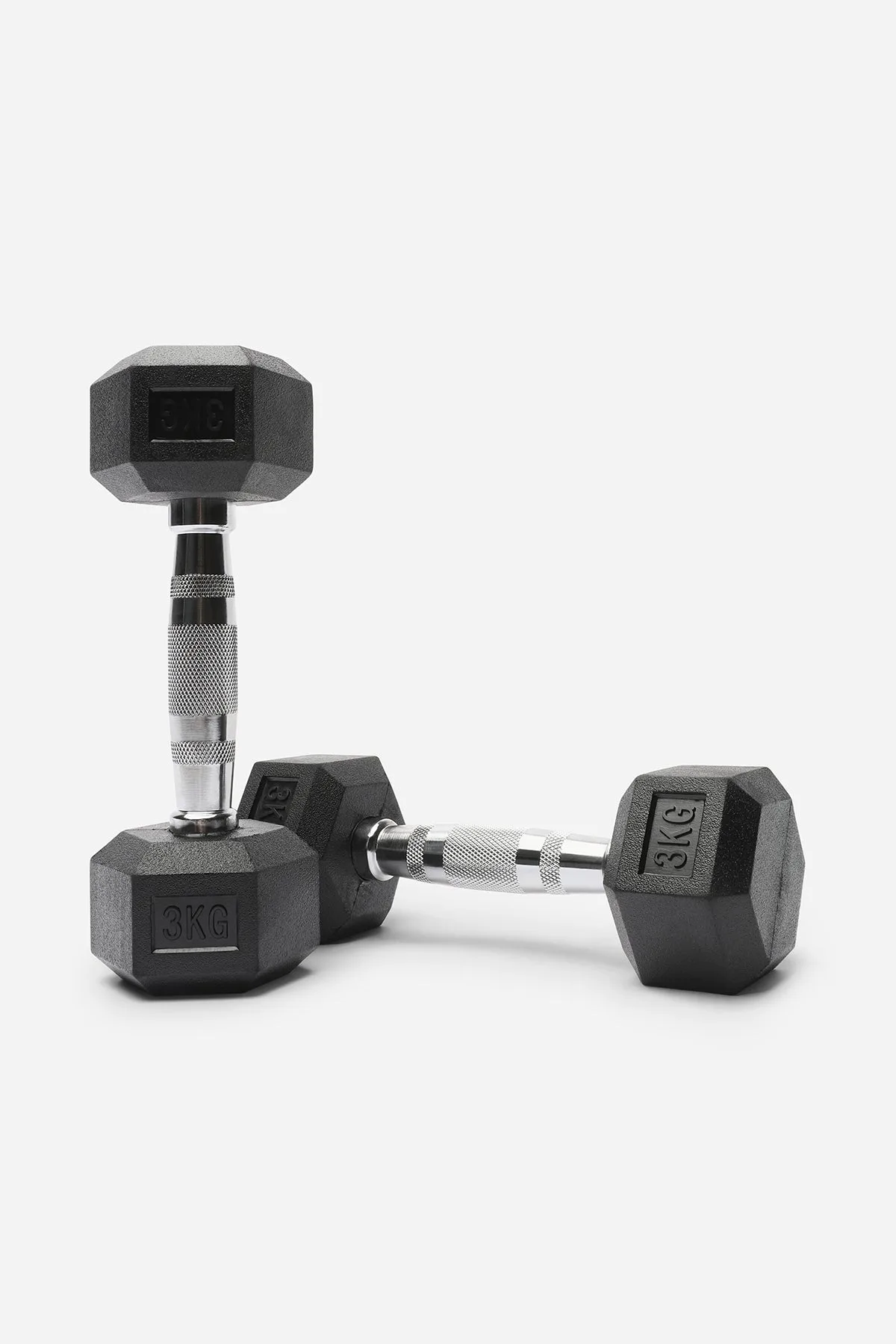
Hex Dumbbells 3kg x 2 (6kg): Sold in pairs, with each dumbbell weighing 3kg (6kg total). A pair lets you load both sides evenly for squats, lunges, and presses without buying two singles.
Hex Dumbbells 3kg x 2 (6kg)
-
Hex Dumbbells 3kg x 2 (6kg): Hexagonal rubber-covered heads. The shape stops the dumbbells rolling away when you set them down, and the rubber protects floors from scuffs during floor-based work.
-
Hex Dumbbells 3kg x 2 (6kg): Ergonomic chrome handle with a knurled grip. The textured grip helps you hold on during higher-rep sets when your hands get sweaty, without needing chalk.
-
Hex Dumbbells 3kg x 2 (6kg): Available in a range from 2.5kg to 50kg. If you later need a heavier pair for progressive work, you can stay with the same hex design and handle feel.
How to use the 3kg pair in a warm-up
A light pair is most useful before heavier training, when the goal is to raise blood flow and rehearse movement rather than fatigue muscles. Keep the reps smooth and stop well short of failure.
- Start with shoulder circles and arm swings: Hold one dumbbell in each hand and make slow, controlled circles. The 3kg load adds gentle traction to the shoulder joint without straining it.
- Add light goblet squats: Hold one dumbbell vertically against your chest with both hands. Squat to a comfortable depth, using the weight as a counterbalance to help you sit back.
- Finish with walking lunges or step-ups: Carry one dumbbell in each hand and take short, controlled steps. The load is light enough to keep your balance while waking up your hips and legs.
Toning and higher-rep work where 3kg earns its place
For toning or muscular endurance, the aim is often higher reps with controlled form. A 3kg pair lets you work through sets of 12 to 20 reps on smaller muscle groups or movements where a heavier weight would force you to cheat.
- Lateral raises: Stand with a dumbbell in each hand and raise your arms out to the sides. 3kg is a realistic load for most people to keep the movement strict and avoid shrugging.
- Front raises: Alternate arms or raise both together. The light weight helps you avoid swinging your torso to generate momentum.
- Bicep curls and tricep extensions: Higher reps with 3kg can build a pump and reinforce elbow position. If you can easily do 25+ reps, that's a sign to move up in weight rather than add more reps.
- Rear delt flyes: Bend at the hips and raise the dumbbells out to the sides. This small muscle group often responds better to light loads and strict form.
Everyday movement at home: more than a gym tool
Because the pair is compact and the hex heads don't roll, it's easy to keep near a desk or in a living room. You can use it for short movement breaks: a set of squats while the kettle boils, a few curls between meetings, or lunges during a phone call. The rubber coating means you don't have to worry about marking wooden or tiled floors when you set them down.
This is also where the 3kg weight shines for beginners or anyone returning to exercise. It's heavy enough to feel like you're doing something, but light enough that you can focus on learning the movement rather than fighting the weight. The knurled chrome handle gives you a secure grip even if your hands are dry or slightly sweaty.
When a 3kg pair is the right call, and when it isn't
No single dumbbell weight suits every goal. Here's how the 3kg pair compares with common alternatives in the Northern hex range.
- Choose the 3kg pair if: You want a light pair for warm-ups, toning, high-rep sets, or everyday movement. It's also a sensible first dumbbell for someone new to resistance training who wants to learn form before loading heavier.
- Consider a heavier pair if: Your main goal is building strength or muscle in large muscle groups like legs and back. A 3kg pair will quickly feel too light for squats, lunges, or rows once you've adapted. The same hex design is available up to 50kg, so you can add a heavier pair later.
- Buy both if: Many home gyms end up with a light pair for warm-ups and a heavier pair for working sets. The 3kg pair doesn't become redundant when you progress; it becomes part of your warm-up routine.
What the product information doesn't confirm
The supplied details don't include a specific handle diameter, warranty period, or maximum drop rating. If you need those specifications for a commercial setting or for a particular hand size, check with the retailer before buying. For typical home use, the hex shape and rubber coating are the practical details that matter most.