Quick answer
Choose hibiscus tea when you want a bold, sharply tart cup with a deep red color and a strong floral edge. Choose rose hips tea when you prefer a softer, berry-like tartness and a lighter amber infusion that works equally well hot or iced.
Taste: sharp floral tartness vs rounded berry tartness
Hibiscus tea taste is defined by an intense, almost cranberry-like tartness with a pronounced floral note. It hits the front of your palate quickly and stays bright, which is why it stands up well to honey or a slice of orange without losing its identity.
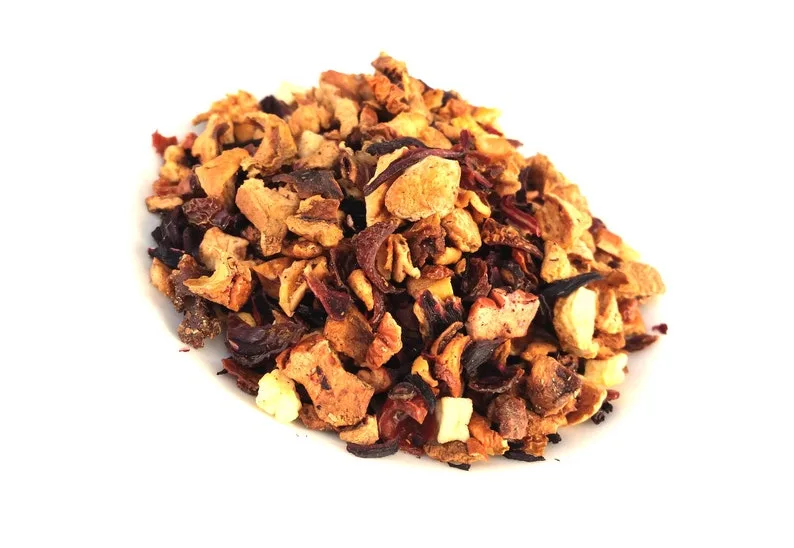
Rose hips tea is also tart, but the acidity is rounder and more berry-like, closer to a mild cranberry or rosehip jam than to a floral punch. It leaves more room for subtle sweetness, so you can drink it plain without the sharp edge some people find in hibiscus.
Color and body: deep red vs light amber
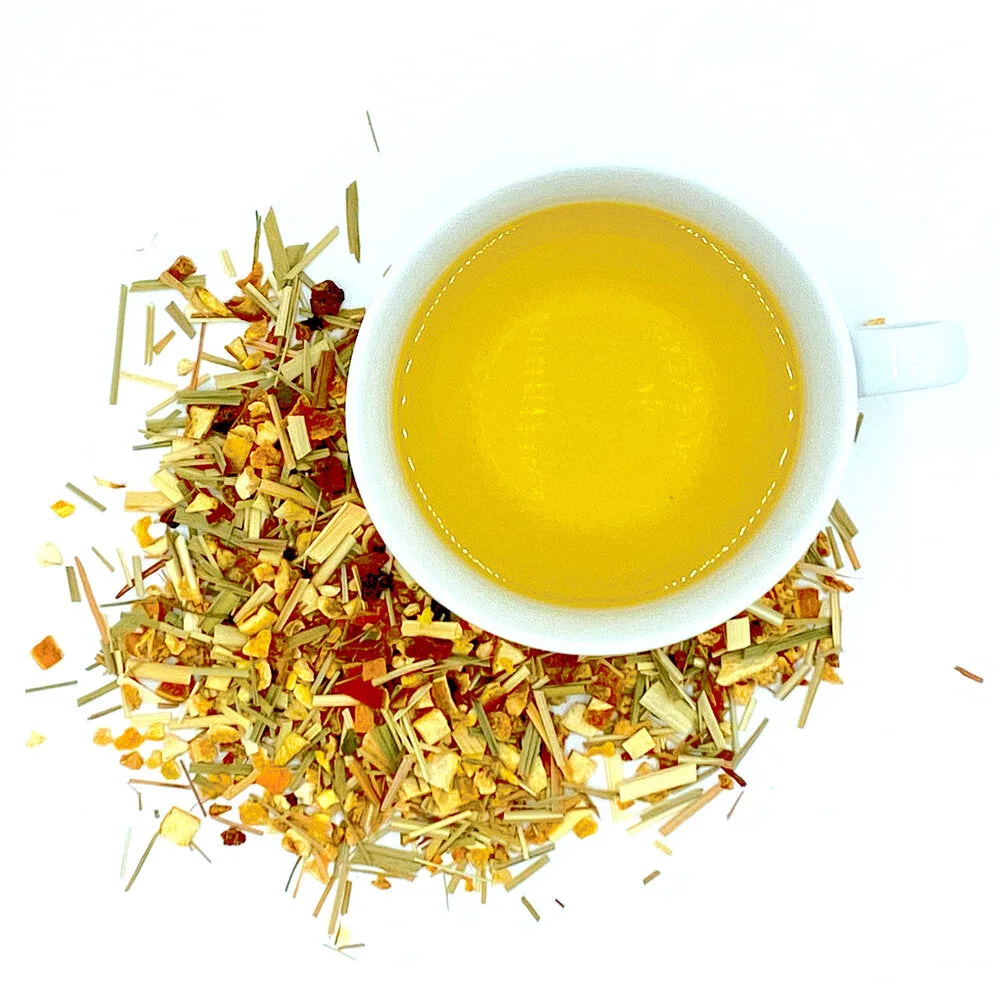
The visual difference is immediate. Hibiscus infuses a deep ruby-red liquor with a full-bodied feel, making it a natural base for punch-style drinks or a colorful iced tea. Rose hips steep to a pale amber or pinkish-orange, with a lighter body that reads more like a delicate fruit infusion.
If you are serving a crowd or making a pitcher, hibiscus gives you more color per bag. Rose hips is the better pick when you want a gentle, sippable cup that does not dominate the glass.
Caffeine-free fruit tea: when each one fits
Both are naturally caffeine-free fruit teas, so neither will keep you awake. The practical difference is intensity. Hibiscus is a strong-flavored infusion that can replace an afternoon coffee or soda with a bracing tartness, while rose hips is gentler and easier to drink in the evening or alongside a meal.
Because both are single-ingredient botanicals, you can also blend them: use hibiscus for color and punch, rose hips for roundness. Start with a 2:1 hibiscus-to-rose-hips ratio and adjust from there.
Trade-offs at a glance
- Flavor intensity: Hibiscus delivers a sharp, floral tartness that can overwhelm delicate palates; rose hips is milder and more rounded but may taste too subtle if you want a strong cup. If you usually add sweetener, start with hibiscus; if you drink tea plain, start with rose hips.
- Color payoff: Hibiscus gives a deep red infusion with strong visual impact; rose hips gives a light amber-pink liquor that is less dramatic in a pitcher. For iced tea or punch, use hibiscus as the base and rose hips as a softener.
- Brewing flexibility: Both are forgiving, but hibiscus can turn bitter if steeped too long, while rose hips stays mild even with a longer steep. Neither product supplies a recommended steep time, so taste as you go. Check the cup at 5 minutes and adjust your next steep rather than following a fixed rule.
Product facts
-
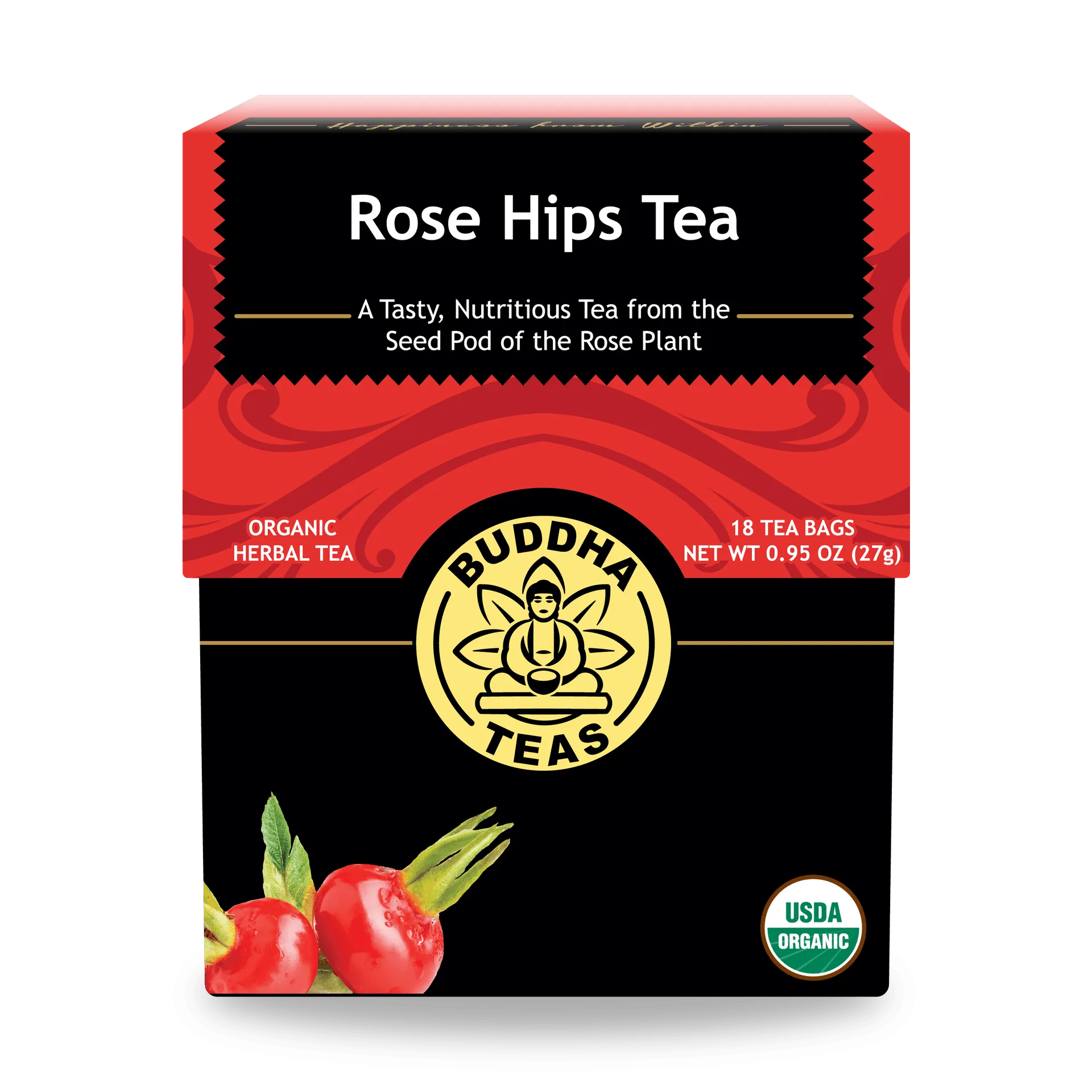
Rose Hips Tea: Organic Rose Hips Tea is made from pure wild-harvested fruit with no additives. A single-ingredient rose hips cup gives you a clean, berry-like tartness without added flavorings, so the taste is entirely the fruit.
Rose Hips Tea
-
Hibiscus Tea: Organic Hibiscus Tea comes in bleach-free and plastic-free tea bags and contains only hibiscus. The plastic-free bag matters if you care about what touches your tea, and the single ingredient keeps the tart floral taste consistent from cup to cup.
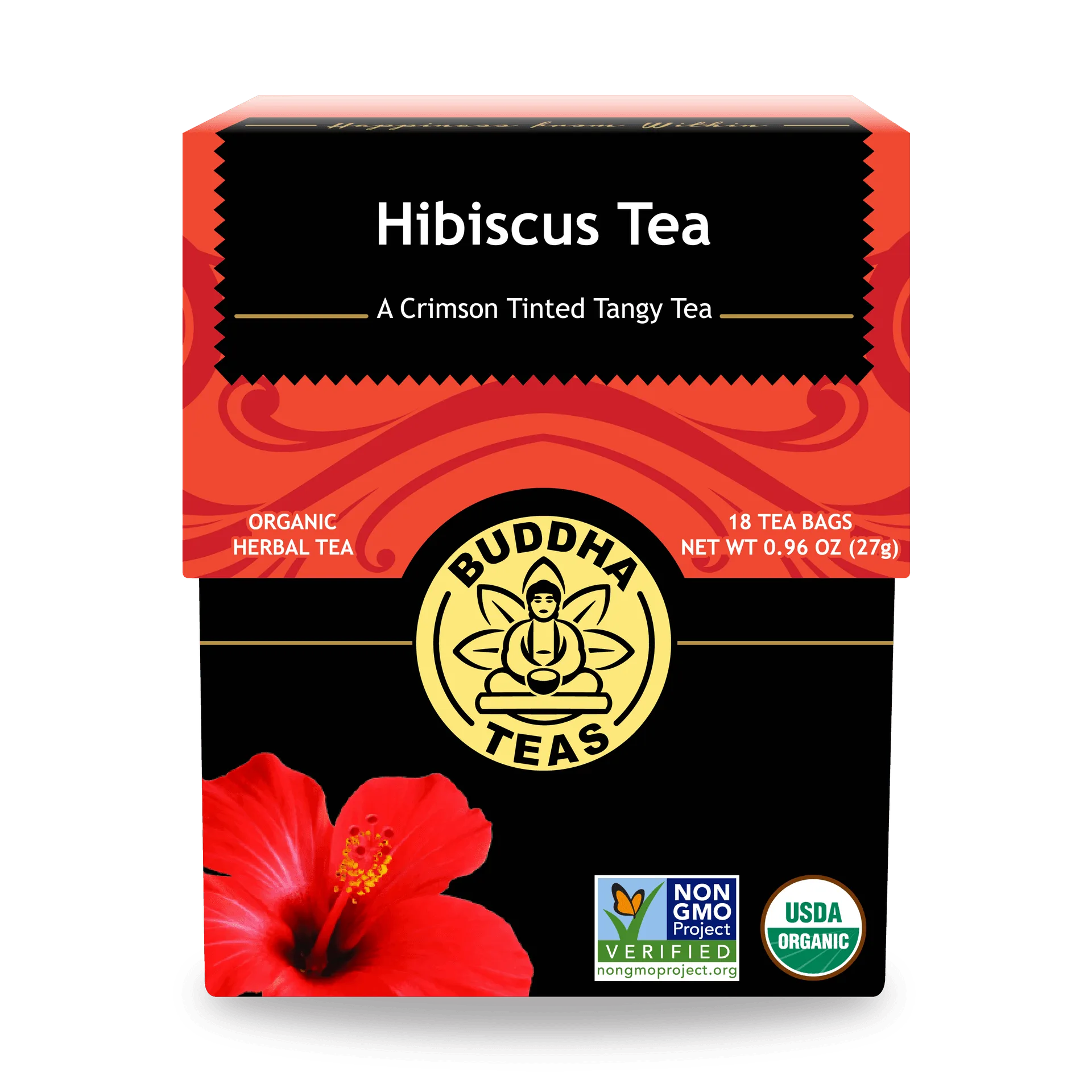
Hibiscus Tea
Which cup is for you?
Best for
- Drinkers who want a bold, caffeine-free fruit tea with a strong tart flavor and deep red color
- Anyone making iced tea, punch or a colorful pitcher for guests
Not for
- People who dislike sharply tart or floral flavors and prefer a mild, berry-like cup
- Those looking for a light evening infusion where subtlety matters more than intensity