How HIFI Differs from Classic Tile Games
If you enjoy classic tile games like Carcassonne or Azul, HIFI: The Meeples Are BACK offers a fresh twist that still scratches the same strategic itch. Both genres involve placing pieces to score points, but HIFI replaces static tile-laying with a dynamic, rotating turntable that changes your available actions each round.
Classic tile games typically have you draw a tile and place it on a shared board, often building a landscape or pattern. HIFI shifts the focus: you're a producer recording the B-side of a legendary album, placing audio cards onto song tracks to earn points, achieve objectives, and gain bonus actions. The theme is more narrative-driven, and the rotating turntable (which is the box itself) acts as an action selector, adding a layer of tactical planning not found in most tile games.
Key Differences at a Glance
Here's how HIFI compares to typical tile games in terms of core mechanics, player interaction, and table presence.
- Core Mechanic: Classic tile games: Draw and place tiles to build a shared board. HIFI: Strategically place audio cards on song tracks, using the rotating turntable to select actions.
- Player Interaction: Classic tile games: Often indirect, via tile placement blocking or scoring. HIFI: Directly competitive as opponents can remix the board for their own goals, forcing you to rethink your strategy on the fly.
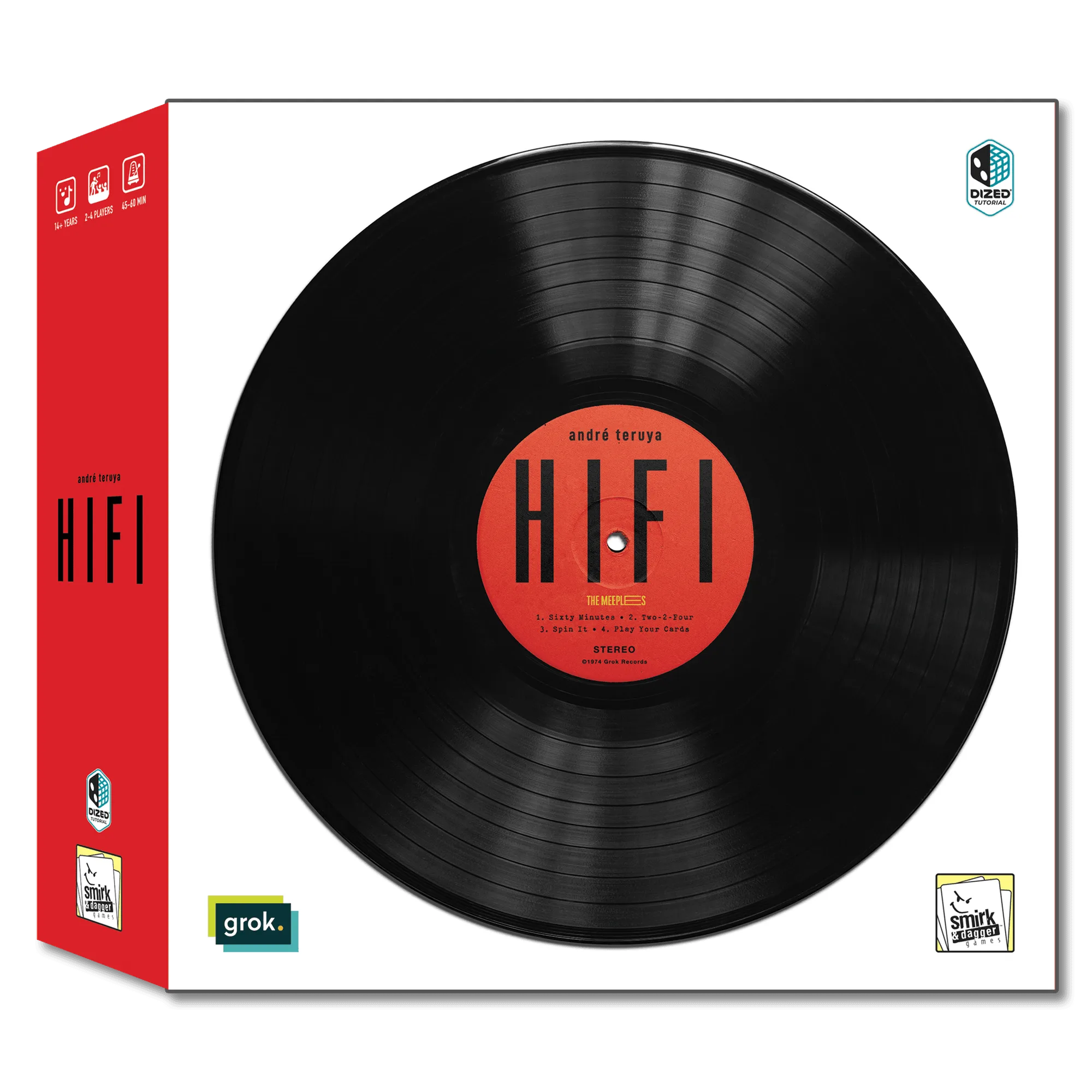
- Table Presence: Classic tile games: Usually a flat board with tiles. HIFI: The box becomes a rotating turntable with stunning graphics that draws players in, creating a visual centerpiece.
- Replayability: Classic tile games: High due to random tile draws. HIFI: Also high, because tactics can turn on the fly as opponents remix the board, and the final recording bonuses add a scoring twist at the end.
What HIFI Brings to the Table
-
HIFI: The Meeples Are BACK in this Strategic, Tactical Puzzle Game: In 1973, the internationally renowned band, The Meeples, stunned the world by breaking up during the recording of their highly anticipated album, HIFI. Only the 'A' side of the album was ever released - but now The Meeples have reunited and YOU are the producers charged with recording the 'B' side of this long-awaited masterpiece. This theme sets HIFI apart from abstract tile games, giving each placement narrative weight and a clear goal beyond mere points.
HIFI: The Meeples Are BACK in this Strategic, Tactical Puzzle Game
-
HIFI: The Meeples Are BACK in this Strategic, Tactical Puzzle Game: The box becomes a rotating turntable, which functions as the Action Selector for the game. This innovative use of the box as a game component is a unique physical feature that classic tile games don't offer, adding a tactile and strategic element.
-
HIFI: The Meeples Are BACK in this Strategic, Tactical Puzzle Game: Tactics can turn on the fly as opponents remix the board for their own goals leaving you to rethink your strategy. This dynamic player interaction means HIFI is more reactive and less predictable than many classic tile games, where your plan can be disrupted by an opponent's move.
Which One Should You Choose?
If you love the calm, methodical building of classic tile games and prefer to focus on your own strategy without too much interference, stick with tile games. But if you want a more interactive, theme-rich experience where the board can change dramatically each turn, HIFI: The Meeples Are BACK is a compelling alternative.
HIFI also offers a striking table presence that can draw in new players who might be intimidated by abstract tile games. The pattern-matching and tactical puzzle elements are familiar enough for tile game fans, but the rotating turntable and remixing opponents keep every game fresh. For game nights where you want something that stands out both visually and mechanically, HIFI is a strong pick.