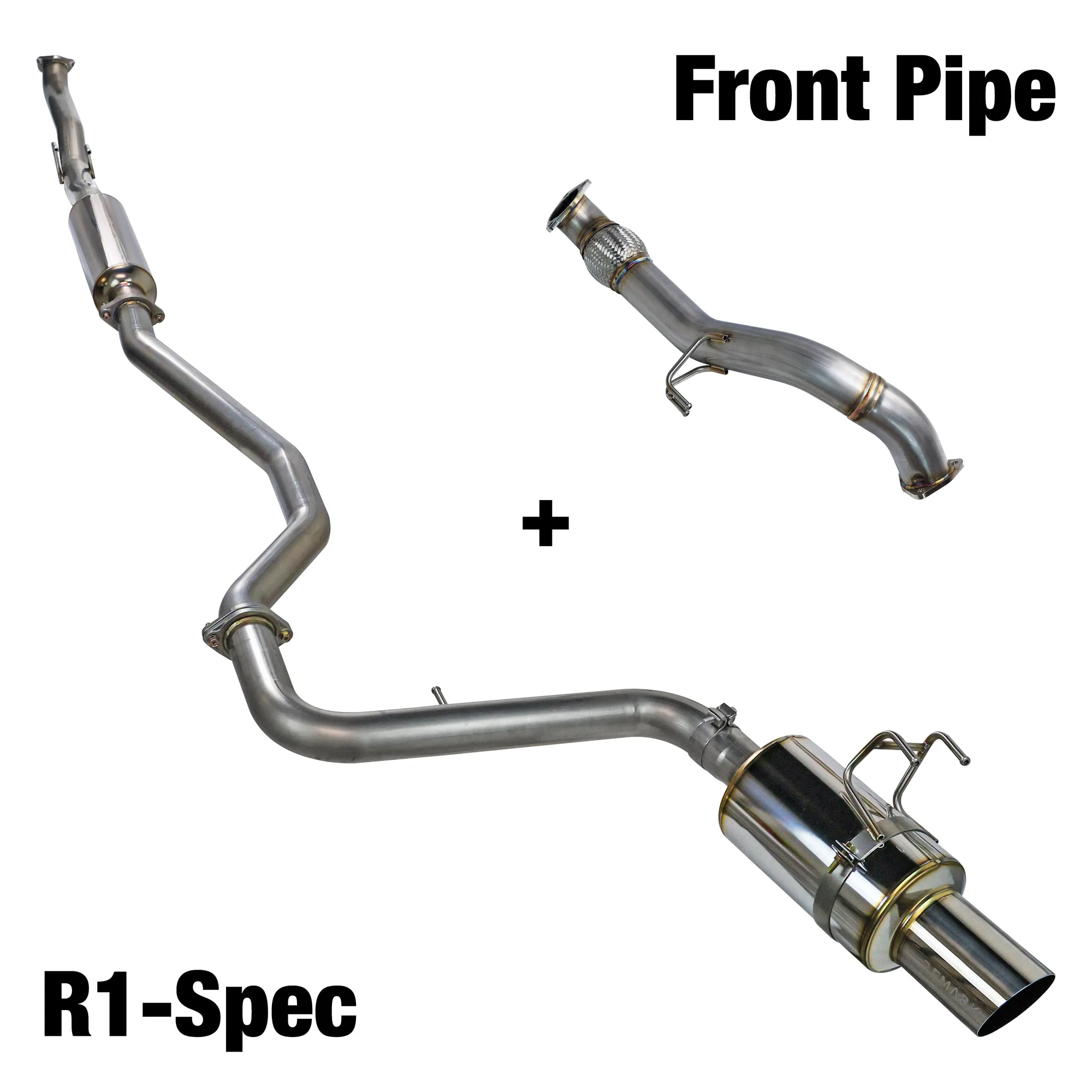
Quick answer
A high flow catalytic converter front pipe is worth buying if you drive a turbocharged car, want quicker spool and a stronger midrange, and your car still has its factory downpipe and sensors intact. Buy the version built for your exact chassis and engine, keep the factory emissions hardware, and confirm your state's inspection rules before you order. If you need to pass a tailpipe or visual test that checks the original converter, stay stock.
A front pipe sits after the downpipe and catalytic converter and before the midpipe. Swapping the factory pipe for one with a higher-flowing cat reduces restriction on the exhaust side, which is exactly where a turbocharged engine feels it most. On a Honda Civic Si FE1, an Acura Integra A-Spec, or a Toyota 86 / Subaru BRZ, this is one of the few bolt-on changes that affects both response and sound without touching the turbo or the tune.
The catch is that 'high flow' and 'legal' are two separate questions. This guide gives you decision rules for picking a front pipe with a cat, matching it to your platform, and knowing when to skip the upgrade entirely.
What a front pipe with a cat actually changes
The factory front pipe is sized and baffled for noise and cost, not flow. A larger-diameter pipe with a high-flow cat reduces back pressure, so exhaust gas leaves the turbine faster. On a turbo car, that usually shows up as quicker spool and a cleaner pull through the midrange rather than a big peak-number jump. On a naturally aspirated 86 or BRZ, the gain is smaller and mostly about tone and throttle feel.
Because the front pipe installs after the downpipe or catalytic converter on many applications, it does not disturb the emissions sensors or control devices upstream. That matters for legality: you are changing the pipe and its cat, not deleting the factory converter on the downpipe. Always confirm the layout on your specific car before assuming this.
- Turbo engines feel a front pipe more than naturally aspirated engines.
- A front pipe is a supporting mod, not a replacement for a tune.
- Keep every factory sensor and emissions device in place.
Fit guidance: match the pipe to the chassis, not the badge
The single biggest cause of returns is buying for the wrong generation. The R1-Spec Catback Exhaust - Scion FRS / Subaru BRZ / Toyota 86 [2013-21] fits 2012-2021 cars and does not fit the 2022+ Toyota GR86 or Subaru BRZ. If you own a second-generation car, a first-generation front pipe or catback will not bolt up, no matter how similar the engine code looks on paper.
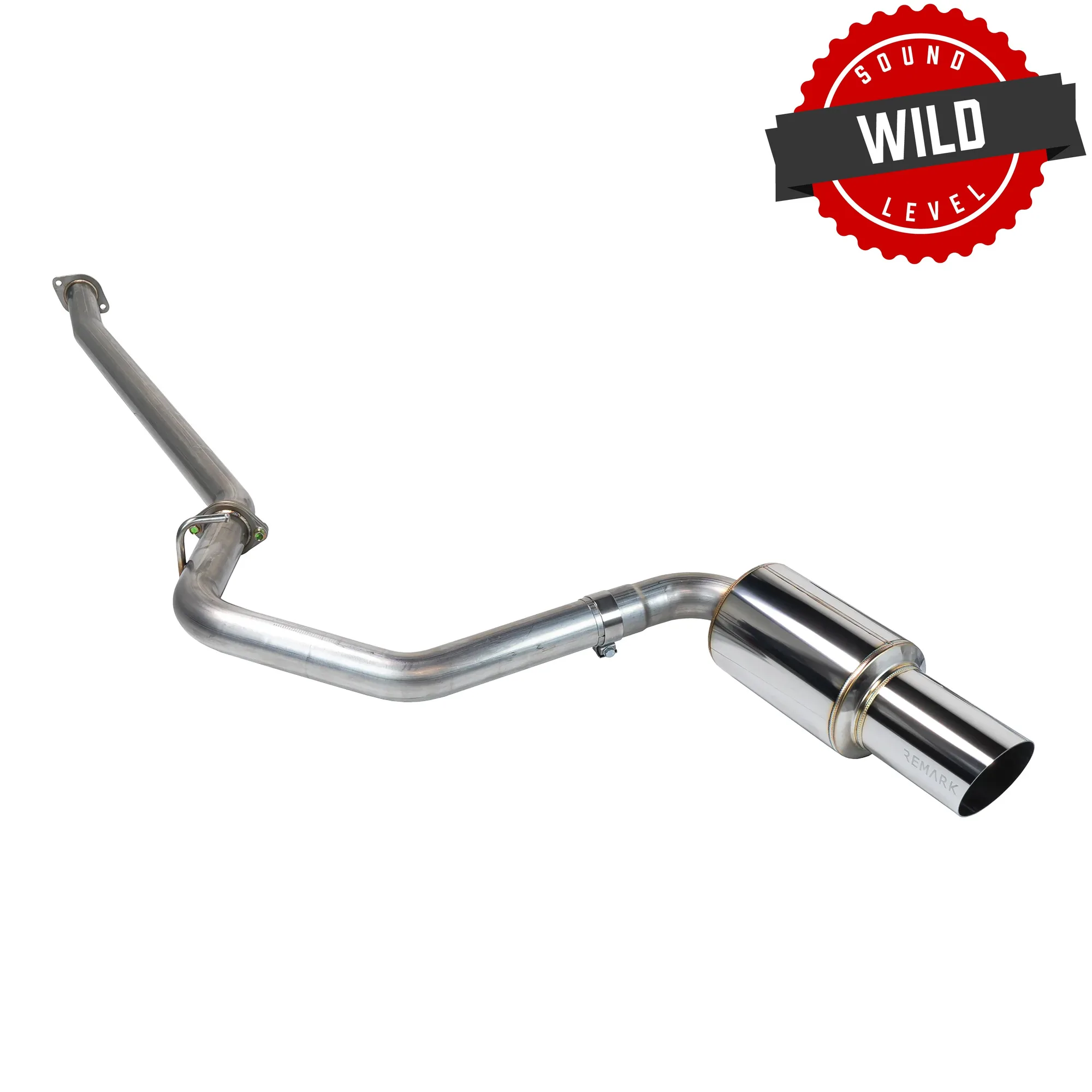
R1-Spec Catback Exhaust - Scion FRS / Subaru BRZ / Toyota 86 [2013-21]
The same logic applies across the Honda and Acura lines. A Front Pipe - Acura Integra A-Spec (DE4) 2023+ is built for that chassis and engine combination. Check your model year, engine, and trim before ordering, and note whether the listing includes gaskets and hardware. If a specification such as pipe diameter or material is not listed, treat it as unknown and ask before you buy rather than assuming.

Front Pipe - Acura Integra A-Spec (DE4) 2023+
- Confirm model year range and engine before ordering any front pipe.
- 2022+ GR86 and BRZ owners need second-generation parts.
- If gaskets or hardware are not specified, plan to source them.
High flow cat legality: what to check before you buy
Legality depends on where you register the car, not on how the pipe is marketed. Many states and provinces run OBD-II readiness checks, visual inspections, or tailpipe sniffs, and some require a CARB-approved converter. A high flow cat that is not approved for your state can fail a visual or emissions test even if the car runs clean.
The practical rule: if your inspection checks the converter itself, buy a compliant unit or leave the factory pipe alone. If your area only runs an OBD-II plug-in check and your sensors stay happy, a front pipe that installs after the emissions control devices is far less likely to cause a problem. Verify with your local inspection authority, not with a forum post.
- Check your state or province rules before ordering, not after.
- CARB states have stricter converter requirements than most others.
- Never remove or bypass a factory emissions device to gain flow.
How a front pipe fits into your build order
If you are starting from stock, a catback is usually the first step because it changes sound and is easy to live with. A front pipe is the second step, and it pairs naturally with a catback that already uses larger piping. On a Civic Si FE1, the COMBO: R1-Spec Catback Exhaust PLUS Front Over Pipe - Honda Civic Si FE1 [2022+] bundles both pieces as a true cat-back system with a 3 inch front over pipe, which is a sensible way to avoid buying twice.
On a daily driver, the Sports Touring Catback Exhaust - Honda Accord 1.5L Sport & 2.0L Turbo [2018-22] shows the other end of the spectrum: a sporty note without excessive drone. Decide whether you want maximum flow or a quiet commute first, then choose the front pipe that matches that goal.
- Catback first for sound, front pipe second for flow.
- Buying a matched combo often costs less than two separate orders.
- Decide on sound tolerance before you add a front pipe.
Decision rules for buying a front pipe with a cat
- If your car is turbocharged and still on the stock downpipe: A high flow cat front pipe is a reasonable next step because it reduces back pressure after the emissions hardware. Pair it with a catback that uses matching piping for the best result. Go ahead, but confirm the pipe installs after the factory sensors.
- If your state or province inspects the converter itself: Buy a converter that is approved for your jurisdiction, or keep the factory front pipe. A high flow cat that is not approved can fail a visual or tailpipe test even when the car runs clean. Legality first. Check your local rules before ordering.
- If you own a 2022+ GR86 or BRZ: First-generation 86, FR-S, and BRZ parts will not fit. Look for second-generation-specific front pipes and catbacks instead of trying to adapt an older design. Wrong generation is the most common and most expensive mistake.
- If you want a quiet daily driver: Choose a touring-style catback and skip the front pipe, or add it only after you have lived with the catback for a while. A front pipe adds volume as well as flow. Sound tolerance decides more purchases than horsepower does.
Product facts that affect your decision
- Front Pipe - Acura Integra A-Spec (DE4) 2023+: Installs under the engine, after the downpipe or catalytic converter, and connects to the midpipe. It does not affect emissions because it installs after the emissions control devices and sensors, and turbocharged engines benefit from improved exhaust flow and reduced back pressure. This is the clearest example of a front pipe that adds flow without touching the factory emissions hardware, which keeps the legality question simpler for Integra owners.
- COMBO: R1-Spec Catback Exhaust PLUS Front Over Pipe - Honda Civic Si FE1 [2022+]: A full exhaust plus 3 inch front over pipe that makes it a true cat-back system, with larger diameter piping and a straight-through muffler design for improved flow and reduced back pressure. The exhaust and front over pipe are also sold separately, but the combo is offered at a special price when purchased directly. If you already know you want both pieces on your Civic Si, the combo removes the guesswork about matching diameters and usually saves money versus two separate orders.
- R1-Spec Catback Exhaust - Scion FRS / Subaru BRZ / Toyota 86 [2013-21]: A single-exit catback for 2012-2021 cars, with a midpipe section in T304 stainless steel, and it does not fit the 2022+ Toyota GR86 or Subaru BRZ. First-generation 86 platform owners have a clear, documented fitment window, and second-generation owners should look elsewhere rather than trying to adapt this part.
Who should buy a high flow cat front pipe
Best for
- Turbocharged Civic Si, Integra A-Spec, and WRX owners who want quicker spool and a stronger midrange
- Enthusiasts in areas with OBD-II-only inspections who keep all factory sensors and emissions devices in place
- Drivers building a matched exhaust system who want the front pipe and catback to share piping diameter
Not for
- Owners in CARB or strict visual-inspection states who need a factory-approved converter
- Drivers who want a stock-quiet cabin on long commutes
- Anyone hoping a front pipe alone will replace a proper tune or deliver large peak gains
A high flow catalytic converter front pipe is a focused upgrade: real flow and response gains on turbo cars, modest changes on naturally aspirated ones, and a legality question you answer before you order. Match the part to your exact chassis and model year, keep the factory emissions hardware intact, and buy the combo when you already know you want the full system.