What These Lenses Do
High index progressive clear light responsive lenses combine three features into one pair of glasses. They are high index, meaning the lens is thinner and lighter than standard prescription lenses. They are progressive, so they correct distance, intermediate, and near vision without a visible line. And they are light responsive, turning clear indoors to dark grey outdoors when exposed to UV light.
This combination suits people who need a strong prescription, multifocal vision correction, and the convenience of not switching to sunglasses outdoors.
What the Lens Record Confirms
-
High Index Progressive Prescription Clear Light Responsive Lenses: Thinner & lightweight prescription lenses that transition from clear to dark grey when outdoors. This confirms the dual indoor-outdoor function and the high index benefit of reduced lens thickness and weight.
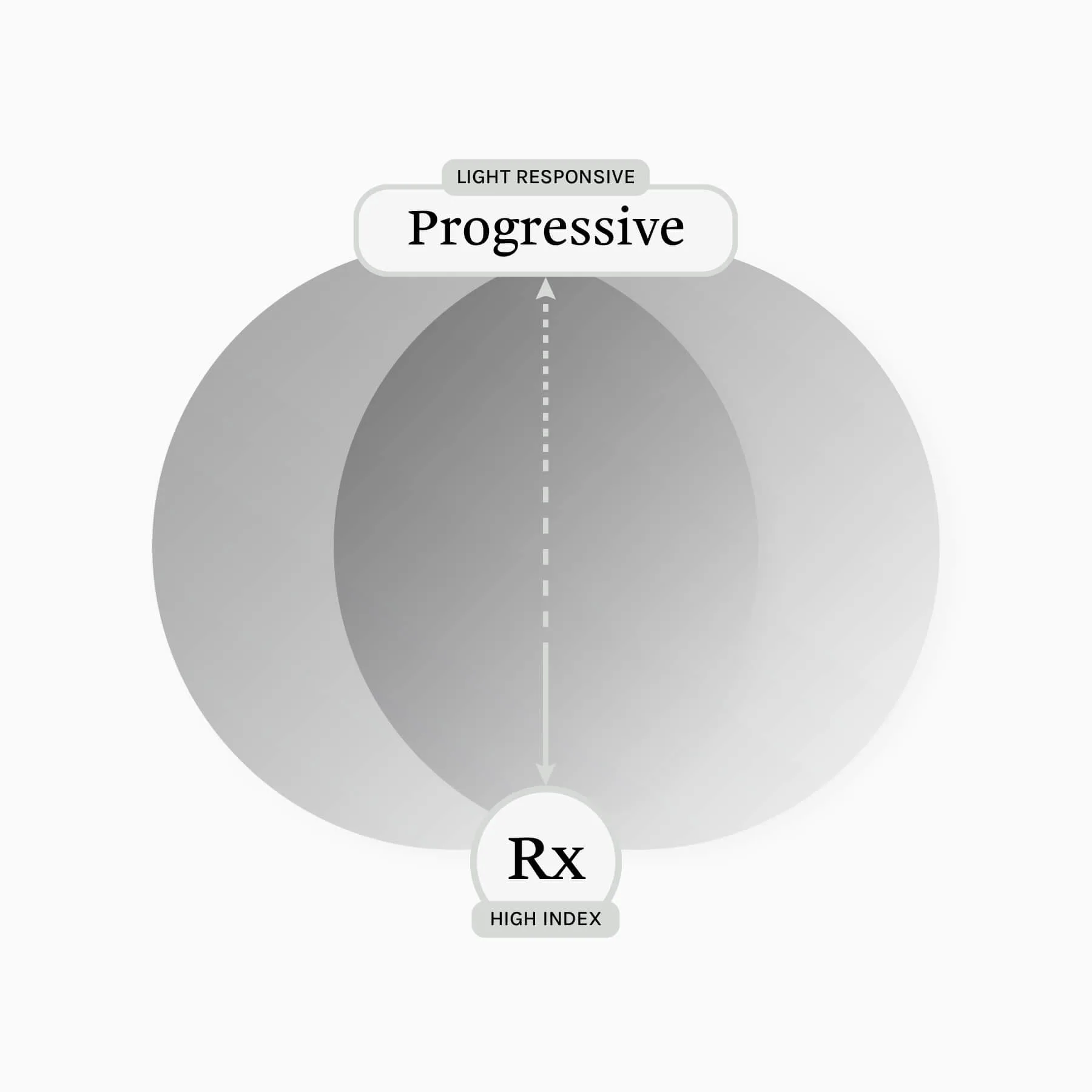
High Index Progressive Prescription Clear Light Responsive Lenses
-
High Index Progressive Prescription Clear Light Responsive Lenses: Recommended for prescriptions with a SPH value +/- 4.00 or greater. High index lenses are most useful for stronger prescriptions. If your sphere is below +/- 4.00, standard index lenses may be a lighter, more affordable option.
-
High Index Progressive Prescription Clear Light Responsive Lenses: ✔️ 100% UV protection The dark grey tint blocks UV, but the lenses also provide UV protection when clear indoors, so your eyes are shielded all day.
-
High Index Progressive Prescription Clear Light Responsive Lenses: ✔️ Anti-reflective & anti-scratch coating These coatings reduce glare from screens and headlights and help the lenses resist everyday wear, which is especially useful for progressive wearers who look through different zones.
Who Should Choose High Index Progressive Light Responsive Lenses
These lenses work best if you need a strong prescription (SPH +/- 4.00 or greater) and already wear or want progressive lenses. The high index material keeps the lens profile slim, so the frame can still look modern and sit comfortably. The light-responsive tint saves you from carrying separate sunglasses, which is practical for everyday outdoor use.
If your prescription is mild, standard index progressives or separate clear and tinted pairs might be more economical. The trade-off is convenience versus cost.
What the Record Does Not Tell You
The supplied information does not specify the exact transition speed, the final tint darkness, or whether the lenses are polarised. It also does not confirm compatibility with all frame materials or whether the light response works through a car windscreen (most photochromic lenses do not activate behind glass).
If you drive frequently, you may need a separate pair of prescription sunglasses with fixed tint. For everyday walk-around use, these lenses are a solid all-in-one choice.