High index thickness and weight questions
What does high index actually change about lens thickness?
High index refers to a lens material that lets a prescription be made thinner than a standard index lens would be at the same power. In practice, that means less bulk at the edges of strong lenses and a lighter feel on the face. The supplied product record describes these lenses as thinner and lightweight, so the benefit is physical rather than cosmetic only.
Is high index worth it if my prescription is not very strong?
The product record recommends these lenses for prescriptions with a SPH value of +/- 4.00 or greater. If your sphere value sits below that, the thickness saving is smaller and the case for high index is weaker. Your optometrist can confirm your SPH value and whether high index is the right material for your prescription.
Will high index lenses make my sunglasses feel noticeably lighter?
The record describes the lenses as lightweight, which is the intended outcome of the thinner material. How light they feel in your frame depends on your prescription and the frame you choose. The supplied information does not give a specific weight, so treat lightness as a relative benefit rather than a number.
What the Valley Eyewear lens record confirms
-
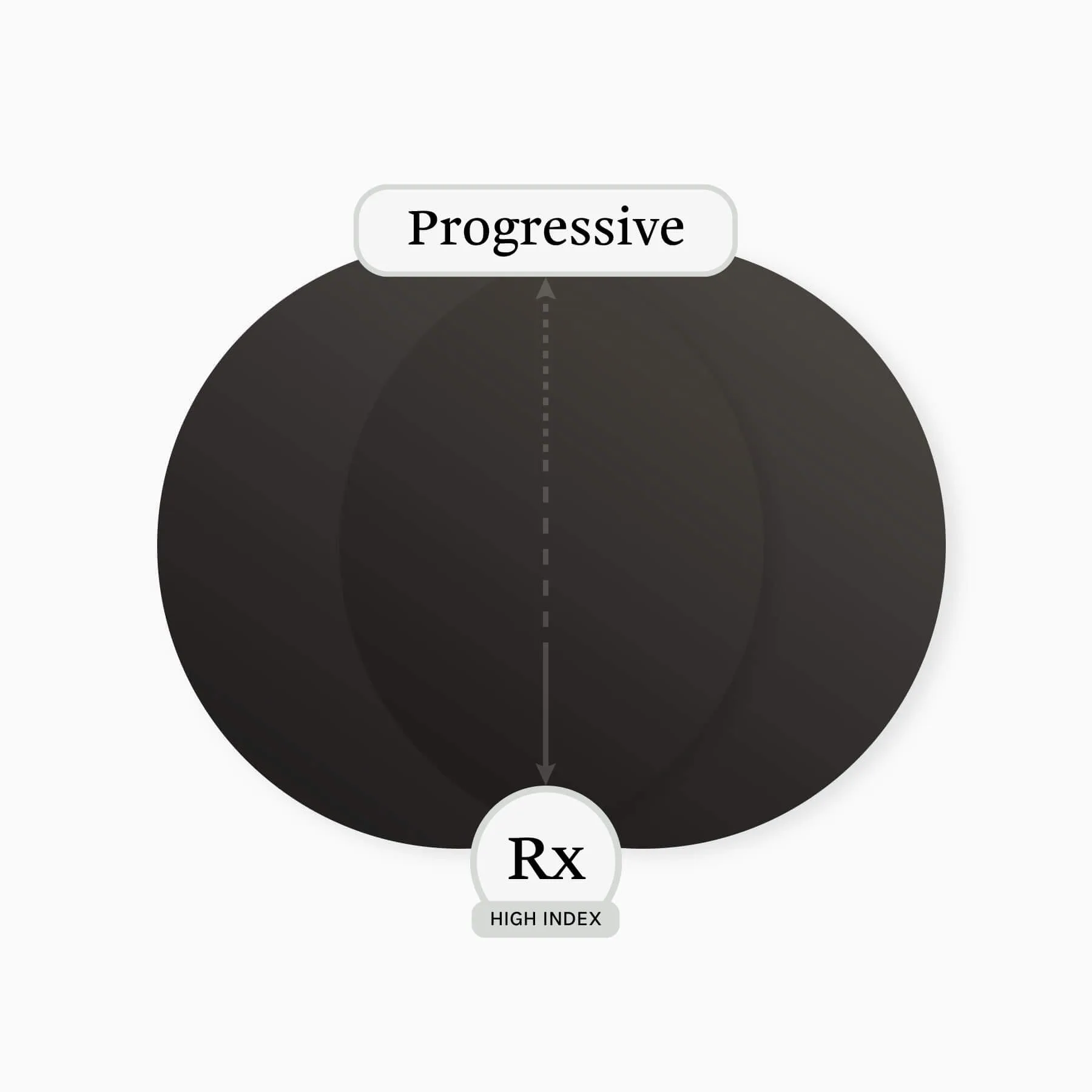
High Index Progressive Prescription Sunglass Lenses: Recommended for prescriptions with a SPH value of +/- 4.00 or greater. This is the clearest suitability marker in the record and the first thing to check against your prescription.
High Index Progressive Prescription Sunglass Lenses
-
High Index Progressive Prescription Sunglass Lenses: Thinner and lightweight tinted prescription lenses. Explains the practical benefit of high index for stronger prescriptions: less edge bulk and less weight.
-
High Index Progressive Prescription Sunglass Lenses: 100% UVA and UVB protection. Confirms the tinted lenses are built for sun protection, not just vision correction.
-
High Index Progressive Prescription Sunglass Lenses: Scratch resistant and anti-reflective. These coatings affect daily handling and how the lenses perform in bright, high-glare conditions.
Adapting to progressive tinted lenses
How long does it take to get used to progressive sunglasses?
The supplied information does not include an adaptation timeline, so there is no confirmed number to quote. Adaptation varies by wearer and prescription. What the record does confirm is that these are progressive lenses, which means multiple viewing zones in one lens. Give yourself time with them in low-stakes situations before relying on them for driving or detailed work.
Why do progressive lenses feel different from single-vision lenses?
Progressive lenses pack distance, intermediate and near viewing into one lens, so your eye moves through different zones rather than looking through a single prescription. That is a design characteristic of progressives, not a fault. The tint adds a second adjustment because the lens is darker than a clear lens.
Should I wear my new progressive sunglasses around the house first?
That is a sensible first-time progressive sunglasses tip: start indoors or in familiar surroundings so you can find the reading zone without bright light or traffic. The supplied record does not include a wearing schedule, so treat this as general adaptation advice rather than a manufacturer instruction. Move to outdoor use when the lenses feel comfortable.
Can I drive in progressive tinted lenses straight away?
The record confirms 100% UVA and UVB protection but does not confirm driving suitability or any tint category. Tint darkness affects how much visible light reaches your eye, and that matters behind the wheel. Ask your optometrist whether the tint is appropriate for driving before you rely on these lenses on the road.
Tint, coatings and everyday use
Do these lenses protect my eyes from the sun?
Yes. The product record confirms 100% UVA and UVB protection. That is the core reason to choose a tinted prescription lens over a clear one for outdoor wear.
What do the scratch-resistant and anti-reflective coatings do for me?
Scratch resistance helps the lens surface stand up to daily handling, and the anti-reflective coating reduces reflections that can otherwise sit on the lens. Both are confirmed in the record. Neither coating makes the lens indestructible, so normal care still applies.
Can I wear these lenses indoors?
The record describes them as tinted lenses for protection from the sun, so they are intended for outdoor light. The supplied information does not confirm a tint level or indoor suitability. If you need one pair for indoor and outdoor use, discuss that with your optometrist rather than assuming these will work in both settings.
Are these lenses suitable for all-day wear?
The record supports thinner, lightweight lenses with UV protection, which is consistent with comfortable extended wear. It does not include a wearing limit or a care routine. Follow the guidance from your lens provider for cleaning and handling, and give yourself an adaptation period before long days.
What the record does not answer
The supplied information covers suitability, thickness, weight, UV protection and coatings, but it does not include a tint category, a lens index number, a weight in grams, an adaptation timeline, or cleaning and handling instructions. Those gaps are decision points, not product flaws. If any of them matter to you, ask your optometrist or the store before ordering.
The record also lists a single Standard variant with no further attributes, so there is no confirmed colour or tint option to choose between. Check the current product page for the options available at the time you order.