Quick Answer
Focus on protein per bottle, calorie count, sugar content, and how the shake fits your daily routine. For most active people, a shake with 20 grams of protein, zero sugar, and around 100 calories is a solid starting point.
Why protein per bottle matters more than the label
A ready-to-drink shake's protein content is the main reason you buy it. But the number on the front of the bottle only tells part of the story. Check the nutrition facts to see how much protein you actually get per bottle, not per serving if the bottle contains more than one serving.
For muscle recovery, aim for at least 20 grams of protein per bottle. This amount has been shown to stimulate muscle protein synthesis after exercise. If you're using the shake as a snack or between meals, a lower amount might be fine, but you'll want to adjust your expectations.
Calories and sugar: the trade-off between taste and nutrition
Calories and sugar often go hand in hand. A shake with more sugar will taste sweeter, but it adds empty calories and can spike your blood sugar. If you're watching your weight or managing blood sugar, a zero-sugar option with 100 calories is a better choice.
On the other hand, if you're trying to gain weight or need a post-workout shake that also replenishes carbs, a higher-calorie shake with natural sugars might be acceptable. The key is to match the shake to your specific goal.
Convenience and portability: the real reason to choose RTD
Ready-to-drink shakes exist for convenience. They're already mixed, portioned, and shelf-stable, so you can grab one on your way out the door. This is a huge advantage over powder, which requires a shaker bottle and water.
But convenience comes with a trade-off: you pay more per serving than you would with powder, and you generate more packaging waste. If you're always on the go, the cost is worth it. If you're mostly at home, powder might be more economical.
Decision Rules for Choosing a High-Protein RTD Shake
- Check protein per bottle: Look for at least 20 grams of protein per bottle. If the label lists protein per serving and the bottle has more than one serving, multiply to get the total. Aim for 20g or more per bottle for muscle recovery.
- Evaluate calories against your goal: For weight loss or maintenance, choose a shake with 100-150 calories. For weight gain or intense training, you might need 200+ calories, but then check the sugar and carb content. Match calorie count to your daily energy needs.
- Decide on sugar based on your diet: If you're on a low-sugar or keto diet, pick a zero-sugar option. If you need quick carbs after a workout, a shake with some sugar is acceptable, but keep it under 10 grams. Zero sugar is best for most everyday use.
- Consider taste and texture: You'll be more consistent if you enjoy the shake. Try a flavor you like, but don't let taste alone override the nutrition facts. Taste matters for long-term adherence.
Product Facts
-
Muscle Milk Zero Protein Shake, Vanilla Crème, 20g Protein, Zero Sugar, 100 Calories, Calcium & Genuine Shake, Strawberry, 11.16 Fl Oz Bottles (Pack of 12): Muscle Milk Zero Protein Shake in Vanilla Crème delivers 20 grams of protein per 11.16 fl oz bottle with zero sugar and only 100 calories. This shake hits the key benchmarks for a post-workout recovery drink: enough protein, no added sugar, and a calorie count that won't derail your daily intake.
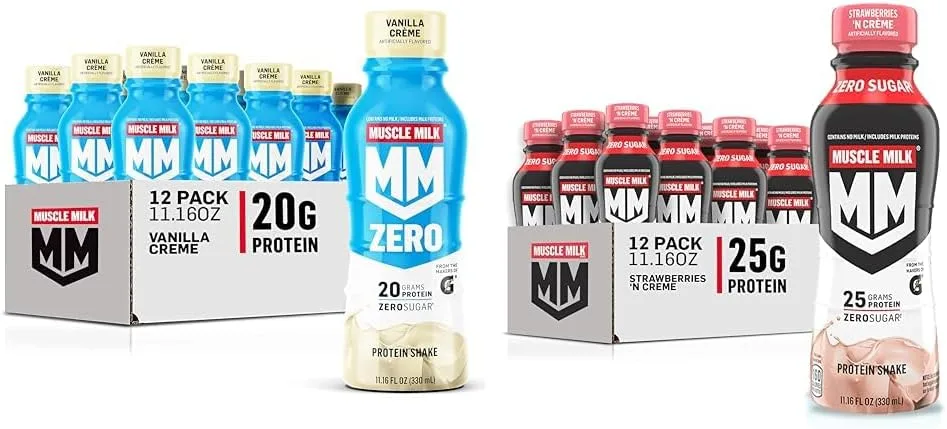
Muscle Milk Zero Protein Shake, Vanilla Crème, 20g Protein, Zero Sugar, 100 Calories, Calcium & Genuine Shake, Strawberry, 11.16 Fl Oz Bottles (Pack of 12)
Who Should Choose What
Best for
- Busy professionals who need a quick, portable protein source without mixing powder
- People on a calorie-controlled diet who want a satisfying, low-calorie shake
Not for
- Those who prefer the lower cost per serving of protein powder
- Athletes needing a high-calorie, carb-heavy recovery shake