Quick answer
Choose a high-velocity circulator like the RTR® HD when you need focused, powerful airflow for drying, fume control, or cooling a large area. A standard fan works for gentle, quiet personal cooling.
Power and reach
A high-velocity circulator moves air at much higher speed and over longer distances than a standard fan. This makes it better for drying wet paint or floors, clearing fumes, or cooling a whole room. Standard fans are designed for close-up personal use and have a softer, more diffuse airflow.
Versatility and positioning
High-velocity circulators often include a wide tilt range, such as the 270° tilt on the RTR® HD, so you can direct air exactly where it's needed—downward to dry a floor or upward to mix room air. Standard fans typically have limited tilt and are best left on a desk or table.
Noise and comfort
The trade-off for power is noise. A high-velocity circulator is louder than a standard fan at similar settings. If you need quiet background airflow for sleep or a quiet office, a standard fan is the better choice.
Trade-offs at a glance
- Airflow power: High-velocity circulators deliver strong, focused airflow over long distances. Standard fans produce gentler, diffused air for close-up use.
- Noise level: High-velocity circulators are louder at comparable speeds. Standard fans are quieter and better for noise-sensitive environments.
- Tilt and direction control: Circulators often have wide tilt ranges (e.g., 270°) to aim air precisely. Standard fans have limited tilt and are less flexible. If you need to dry floors or clear fumes, the extra tilt range is essential.
Product facts
-
RTR® HD High-Velocity Air Circulator: The RTR® HD High-Velocity Air Circulator offers a 270° tilt for directing airflow downward to dry wet floors or upward to mix room air. This wide tilt range makes it a versatile tool for both comfort and practical tasks like drying or fume removal.
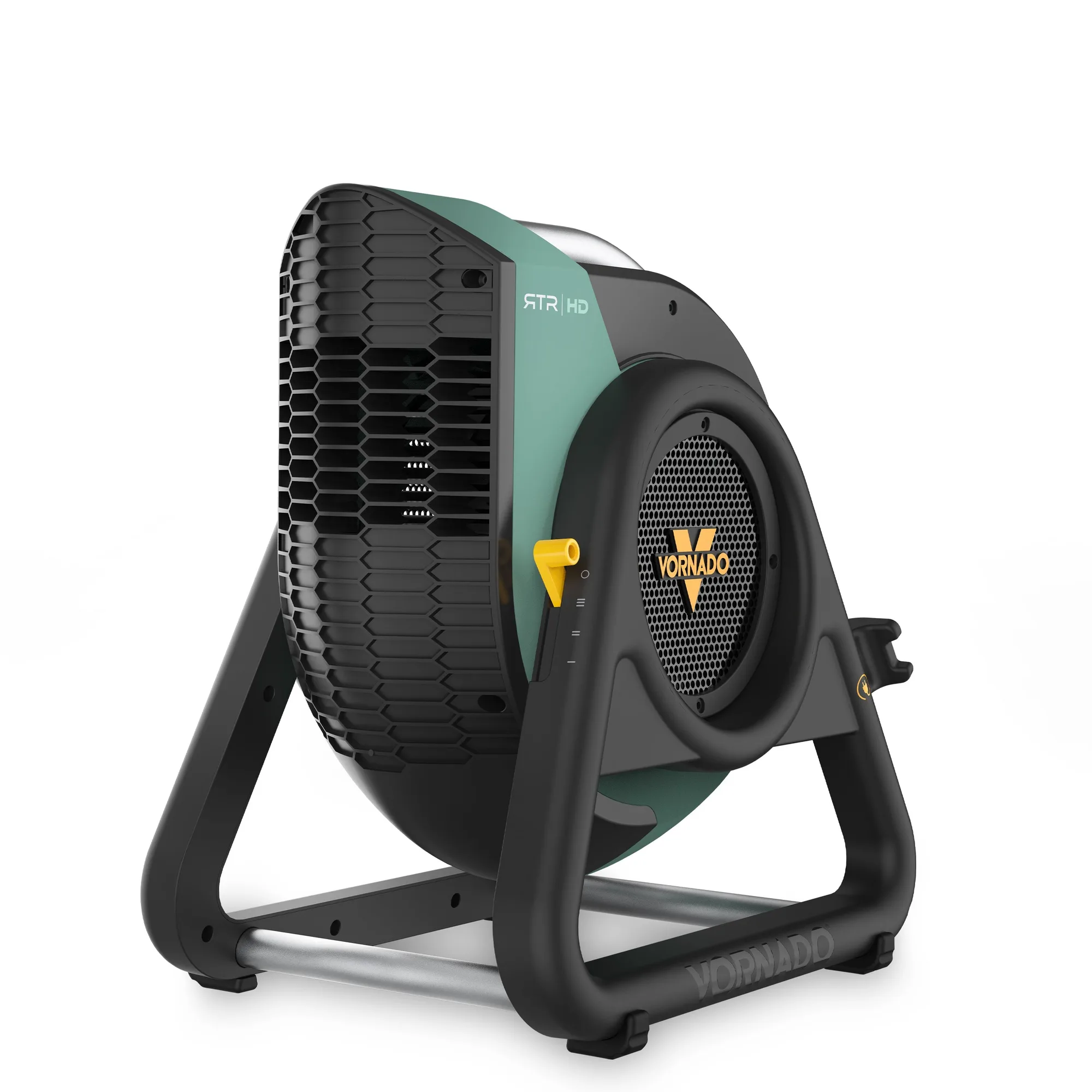
RTR® HD High-Velocity Air Circulator
Which one fits you?
Best for
- Workshops, garages, or job sites where you need to dry paint, floors, or clear fumes
- Large rooms or open spaces that need whole-room air mixing
Not for
- Quiet offices or bedrooms where low noise is a priority
- Personal desk use where a gentle breeze is enough