Quick answer
Choose cushion by how much room your shoe leaves and how much impact your day carries, choose height by what rubs against your ankle and calf, and treat fit as a no-slip, no-bunch rule rather than a size label. If you run the Flow line, the Flow Trail Socks are the simplest starting point.
Cushion is a fit decision, not a comfort upgrade
Adding cushion under the heel and forefoot fills volume inside the shoe. If your hiking or climbing shoe already fits snugly, a heavily cushioned sock can crowd your toes on descents and make the heel slip. If the shoe has spare room or you carry a heavier pack on hard ground, more cushion can absorb impact and reduce hot spots.
Climbing shoes are the exception: most are designed to be worn thin and tight, so a cushioned hiking sock inside them changes the fit you bought. Keep a thin sock for climbing and save cushion for the approach and hike out.
Height changes what rubs, not just how it looks
Ankle socks keep debris out of the shoe but leave the Achilles and lower calf exposed to boot cuffs and brush. Crew socks cover that gap and stay put under gaiters, which is why they dominate on rough trails and in shoulder-season weather.
For trail running, the choice is more personal: ankle socks feel cooler and lighter, while crew socks protect against trail debris and sun. Neither is wrong, but pick before you buy shoes, because sock height affects how the collar sits.
Fit rules that prevent blisters
A sock should hug the arch and heel without leaving marks, and the toe box should have no slack that can fold under pressure. If the heel pocket rides up or the fabric bunches at the instep, size down or change model before you blame the shoe.
Fabric matters too: quick-drying socks reduce the wet, soft skin that blisters love, while cotton holds moisture. Check the care label and wash according to it to keep elasticity.
Decision rules for hiking and climbing socks
- Match cushion to shoe volume: If your shoe fits well with a thin sock, stay thin. If you have spare room or carry a heavy pack, choose moderate cushion under heel and forefoot. Never add cushion to fix a shoe that is already too tight. Try the sock with the exact shoe and insole you will use.
- Pick height by exposure: Choose crew for rough trails, gaiters, cold weather and pack straps near the ankle. Choose ankle for fast trail runs, hot days and minimal coverage. Climbing approach: crew; climbing shoe: thin ankle or low sock.
- Test fit at the heel and toes: The heel pocket should stay seated when you pull gently; toes should have no fabric to bunch. If either fails, change size or model.
- Use trail running socks for running: For trail running, prioritize a close fit and quick-drying fabric over cushion. The Flow Trail Socks fit that brief when you want lightweight breathability.
Product facts
-
Flow Trail Socks: Lightweight, breathable fabric with quick-drying performance, designed to complement the Flow line. Useful when you want a low-bulk sock for fast mountain runs and warm days, where drying speed matters more than heavy cushion.
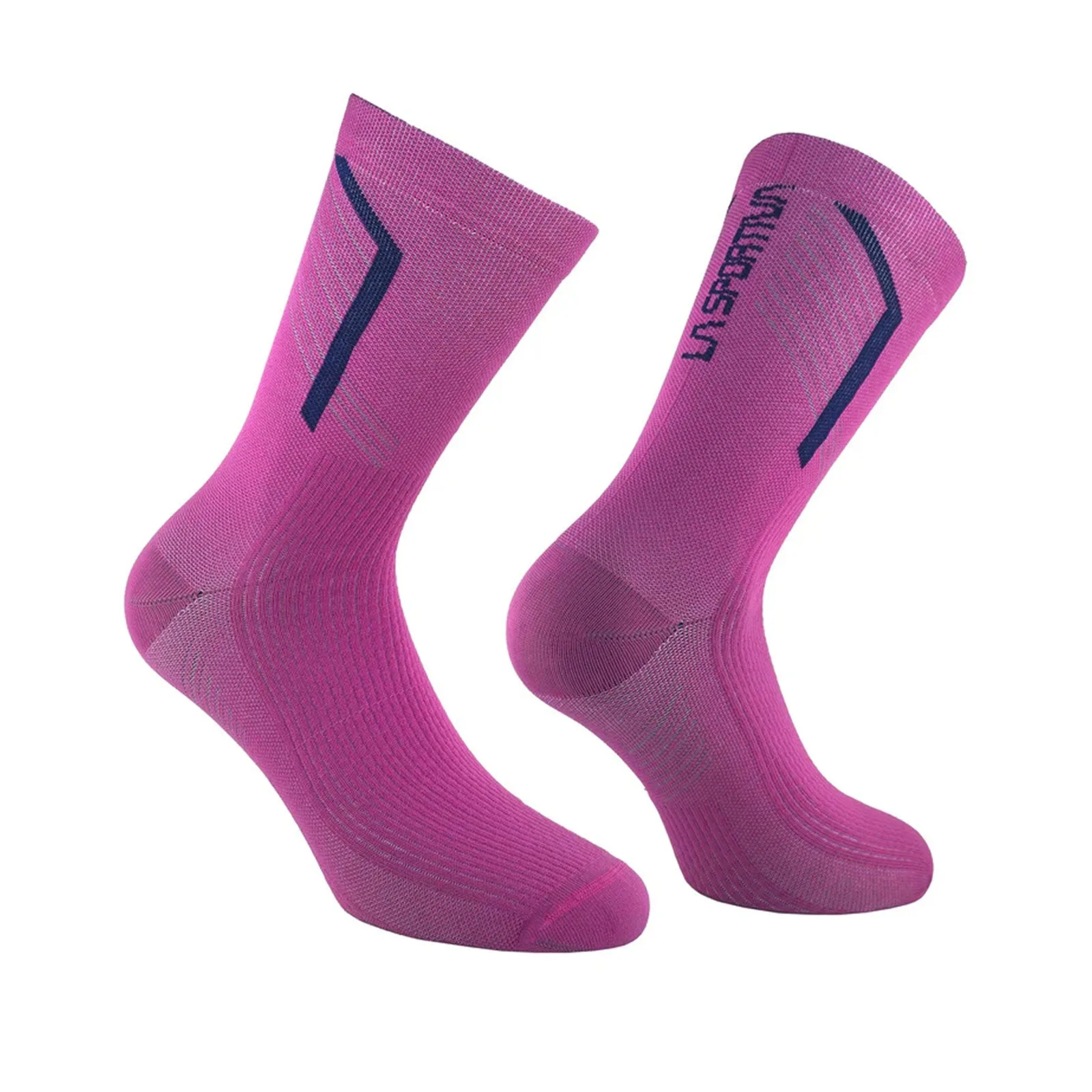
Flow Trail Socks
Who this guide fits
Best for
- Hikers choosing socks for specific shoes and pack weights
- Climbers who need separate approach and climbing sock choices
- Trail runners deciding between ankle and crew height
Not for
- Skiers choosing insulated ski socks
- Anyone looking for a single sock for every activity
- Shoppers who need medical compression guidance