Start with the age and health fit, not the price
Hills Science Plan Urinary Health Adult Cat Dry Food Chicken is formulated for adult cats between 1 and 6 years of age, and the label also says it is suitable for sterilised cats. That age band is the first filter: if your cat is a kitten, senior, or has a diagnosed condition, this is not the right bag to choose on your own.
The record also carries a 'Not recommended for:' line, but the supplied information does not list the specific exclusions that follow it. Treat that gap as a reason to confirm suitability with your vet rather than assuming the food is right for every adult cat.
What the label actually confirms
-
Hills Science Plan Urinary Health Adult Cat Dry Food Chicken: Recommended for adult cats 1–6 years of age. This is the clearest eligibility rule on the pack; outside that range, the feeding rationale changes.
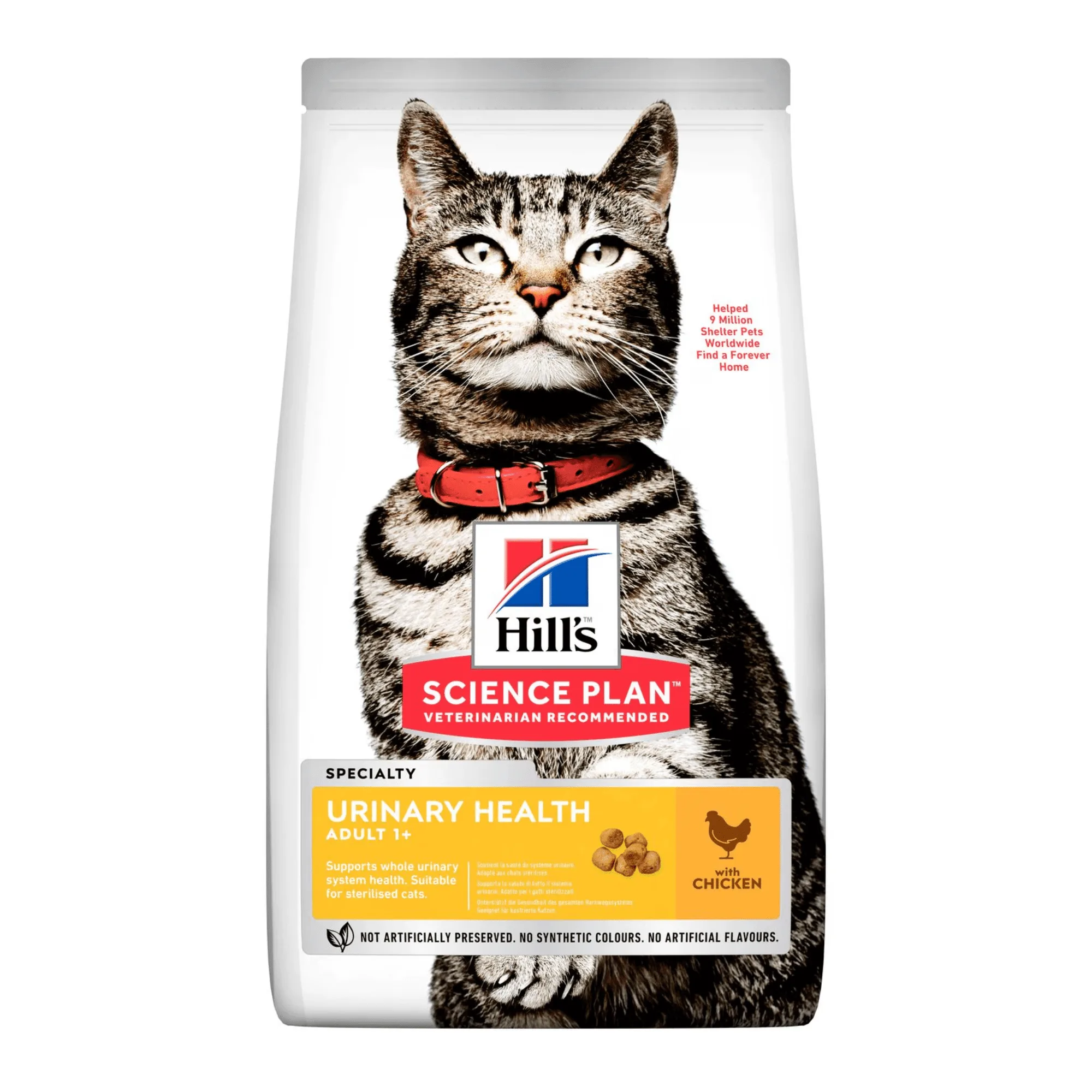
Hills Science Plan Urinary Health Adult Cat Dry Food Chicken
-
Hills Science Plan Urinary Health Adult Cat Dry Food Chicken: Suitable for sterilised cats. Useful if your cat has been neutered and you want a dry food that the maker positions for that group.
-
Hills Science Plan Urinary Health Adult Cat Dry Food Chicken: Controlled minerals to support a healthy urinary system. This is the core urinary claim, but 'controlled' is not a guarantee for crystals or a treatment for existing stones.
The mineral numbers behind the urinary claim
If you are comparing urinary health dry cat foods, the analytical constituents are more useful than the front-of-pack wording. This recipe lists calcium at 0.77%, phosphorus at 0.67%, sodium at 0.35%, potassium at 0.69% and magnesium at 0.09%. Those are the figures to note when your vet asks what your cat is currently eating.
The same panel gives protein at 31.7%, fat at 10.3%, crude fibre at 1.2% and crude ash at 5.2%, plus omega-6 fatty acids at 2.4%. Vitamin E is listed at 550 mg per kg. These are label facts, not a promise that the food will dissolve or prevent urinary crystals.
Chicken is in the name, but read the composition
The composition begins with maize, then chicken and turkey meal, maize gluten meal, animal fat, minerals, fish oil and digest. So this is a chicken-based recipe in the sense that poultry meal is a main animal source, but it is not a single-protein or grain-free food. If your cat has a known reaction to maize, poultry or fish oil, the ingredient list is the place to check before you buy.
The record does not confirm whether the food is hypoallergenic or free from any specific allergen. If you are managing a diagnosed allergy, ask your vet before treating this as a safe swap.
What the bag does not tell you about feeding
The supplied record does not include a daily feeding table, a transition schedule or storage instructions. That is a gap in the information available here, not proof that the packaging lacks them. In practice, you will need the on-pack feeding guide or your vet's portion advice, especially because urinary foods are often fed as a long-term diet rather than a short trial.
The only size confirmed in the record is 1.5 kg. If you are testing whether your cat accepts the food, that is a reasonable starting point, but check the current product page for other sizes before you plan a bulk purchase.
Questions worth answering before you switch
- Has your cat had urinary crystals or a blockage?: This food is described as supporting the urinary system, not treating a condition. A cat with a history of struvite or other crystals needs a vet-led plan, which may involve a different prescription diet.
- Is your cat between 1 and 6 years old?: That is the stated adult range. Kittens and older cats fall outside the recommendation on this record.
- Are you feeding a mix of wet and dry?: The record does not give a mixed-feeding ratio. If you combine this with wet food, ask your vet how to keep the total mineral intake appropriate.
- Does your cat actually eat it?: A urinary diet only helps if it is eaten consistently. The 1.5 kg bag lets you test acceptance before committing to a larger supply.
Where this bag fits in a urinary health routine
For a healthy adult cat in the 1–6 age band, Hills Science Plan Urinary Health is a dry option with a controlled mineral profile and a chicken-and-turkey base. It may suit households that already feed dry food and want a urinary-focused formula from a familiar brand.
It is not the right starting point for a cat with active urinary signs, a history of stones, or a prescription diet already in place. In those cases, the decision belongs with your vet, and this bag should not replace a therapeutic plan.