Quick answer
Choose a chain transport kit when you need to keep handcuffs safely in place while the transport system is applied, adjusted, or removed, especially for corrections-style duty. Choose hinged handcuffs when you want a more rigid, fixed grip for controlled escort, but expect less flexibility during application.
The real difference is what happens during application
Hinged handcuffs lock the two cuffs together at a fixed angle, which can limit wrist movement but also makes the system less forgiving to apply on a resisting subject. Chain handcuffs allow more independent movement, so you can position the cuffs before connecting them to a transport system.
A chain transport kit is designed around that flexibility: the handcuffs stay on and secure while the kit is applied, adjusted, or removed. That matters when you are preparing a subject for transport, booking, or court and cannot afford to remove the cuffs to add the transport system.
When a chain transport kit is the better duty choice
For corrections and general duty transport, the chain version of a transport kit is the practical default because it works with the handcuffs already in place. If your agency uses chain handcuffs as standard, a chain transport kit keeps the same familiar handling while adding secure transport capability.
The trade-off is that chain systems allow more movement than hinged systems, so they are not the best choice if your primary need is maximum rigidity during a high-control escort. In those cases, hinged handcuffs may be preferred, but they may not integrate with a chain-based transport kit.
Check compatibility before you buy
Not every transport kit works with every handcuff style. The Transport Kit, Chain is built for chain handcuffs, and the catalog does not list compatibility with hinged models. If you carry hinged handcuffs, verify fit with the manufacturer before ordering, or plan to use the kit only with chain cuffs.
Also confirm how the kit attaches and adjusts. The catalog describes the design as allowing the handcuffs to remain safely in place during application, adjustment, and removal, but it does not specify attachment points or adjustment range. Ask for a demonstration or training video if those details matter for your duty belt.
Decision rules for choosing a transport restraint kit
- Match the kit to your handcuff style: If you carry chain handcuffs, choose a chain transport kit. If you carry hinged handcuffs, do not assume a chain kit will fit—confirm compatibility with the manufacturer first. Buy the kit that matches the cuffs already on your belt.
- Prioritize application without removal: Choose a kit that lets the handcuffs stay in place while the transport system is applied, adjusted, or removed. This reduces the need to take off the cuffs during transport prep. Ask for a demonstration of the application sequence before purchase.
- Decide based on duty setting: For corrections and general transport, the chain version is the practical choice. For aviation security or similar settings, the belt version may be more appropriate—check the catalog for that option. Match the kit version to your posting, not just your cuffs.
Product facts
-
Transport Kit, Chain: The Transport Kit, Chain is a NAUMD Public Safety Product Innovation Award winner and is designed so handcuffs remain safely in place while the system is applied, adjusted, or removed. That design supports corrections use, where you need to prepare a subject for transport, booking, or court without removing the handcuffs first.
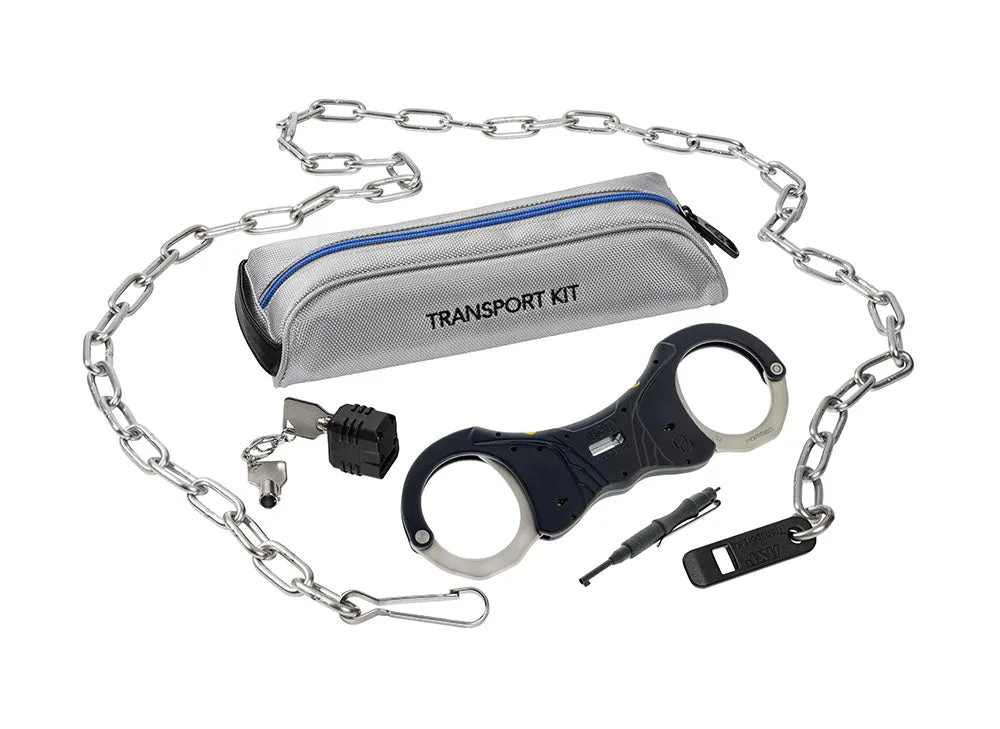
Transport Kit, Chain
Who should choose which
Best for
- Corrections officers who need to prepare subjects for transport, booking, or court
- Duty officers already carrying chain handcuffs who want a secure transport add-on
- Buyers who want a proven design recognized by a public safety product award
Not for
- Officers who carry hinged handcuffs and need a guaranteed fit without checking compatibility
- Situations requiring maximum rigidity during a high-control escort
- Aviation security roles where a belt version may be more suitable