Hobby Components Target / Prototyping / ZIF Bundle FAQ
What is included in the Hobby Components Target / Prototyping / ZIF Bundle?
The bundle contains a prototyping/programming board designed for use with Atmel ATMega48P, ATMega168P, and ATmega328P microcontrollers. The board features a 24x12 0.1" grid prototyping area that matches the pin-out of these devices, plus additional pads.
Which microcontrollers are compatible with this board?
The board is specifically designed for the Atmel ATMega48P, ATMega168P, and ATmega328P microcontrollers. Its 24x12 0.1" grid prototyping area is laid out to match the pin-out of these devices.
What is the prototyping area size on the board?
The board has a 24x12 grid prototyping area. This means there are 24 columns and 12 rows of pads, providing a standard prototyping layout for your projects. For spacing and connection details, please follow the supplied product instructions.
What does 'ZIF' refer to in the bundle name?
ZIF stands for Zero Insertion Force. While the bundle name includes 'ZIF', the supplied information does not specify a ZIF socket or mechanism on this particular board. The board is described as a prototyping/programming board with a grid area and additional pads.
Is this bundle suitable for beginners in electronics?
This bundle is ideal for anyone working with the listed Atmel microcontrollers who needs a dedicated prototyping board with a matching pin-out grid. Beginners comfortable with these specific microcontrollers will find the board's layout helpful for prototyping and programming.
Product Evidence
-
Hobby Components Target / Prototyping / ZIF Bundles: The Hobby Components Target / Prototyping / ZIF Bundle includes a prototyping/programming board designed for Atmel ATMega48P, ATMega168P, and ATmega328P microcontrollers. Confirms the board's purpose and compatible chips, so you know it fits your project before purchase.
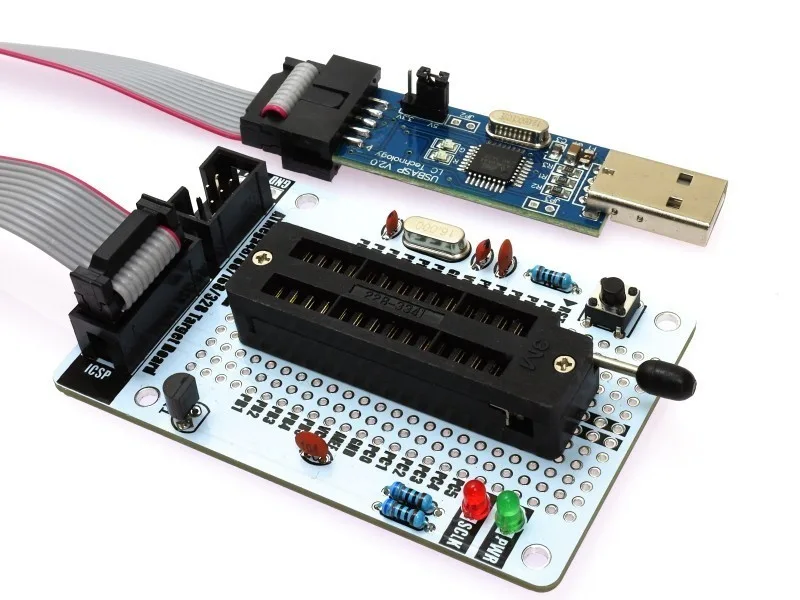
Hobby Components Target / Prototyping / ZIF Bundles
-
Hobby Components Target / Prototyping / ZIF Bundles: The board features a 24x12 0.1" grid prototyping area laid out to match the pin-out of these devices, plus additional pads. The grid size and spacing allow you to prototype circuits that align directly with the microcontroller's pins, saving wiring effort.