Two Screens or One?
The Hollyland Pyro7 is a 7-inch wireless transceiving monitor that can act as a transmitter, receiver, or standalone monitor. It's available as a single unit or as a dual-kit that pairs two monitors together. Choosing between them comes down to how many monitoring positions you need to cover at once and whether you want the flexibility to switch roles on the fly.
This comparison focuses on the two real options: the single Hollyland Pyro7 (product ID 1924424) and the Hollyland Pyro7 Dual 7" Wireless Transceiving Monitor Kit (product ID 1924428). We'll look at what each package includes and which production scenarios each serves best.
What Each Package Includes
-
Hollyland Pyro7 7" Wireless Transceiving Monitor: The single Hollyland Pyro7 is one 7-inch, 1500-nit touchscreen monitor with TX, RX, and monitor modes. It includes HDMI 1.4b and 3G-SDI input/output, and supports Broadcast Mode (one TX to up to four receivers). A single unit is enough when you need one wireless monitoring point—on-camera for a focus puller, or at a director's station—and you already have another monitor or transmitter elsewhere.
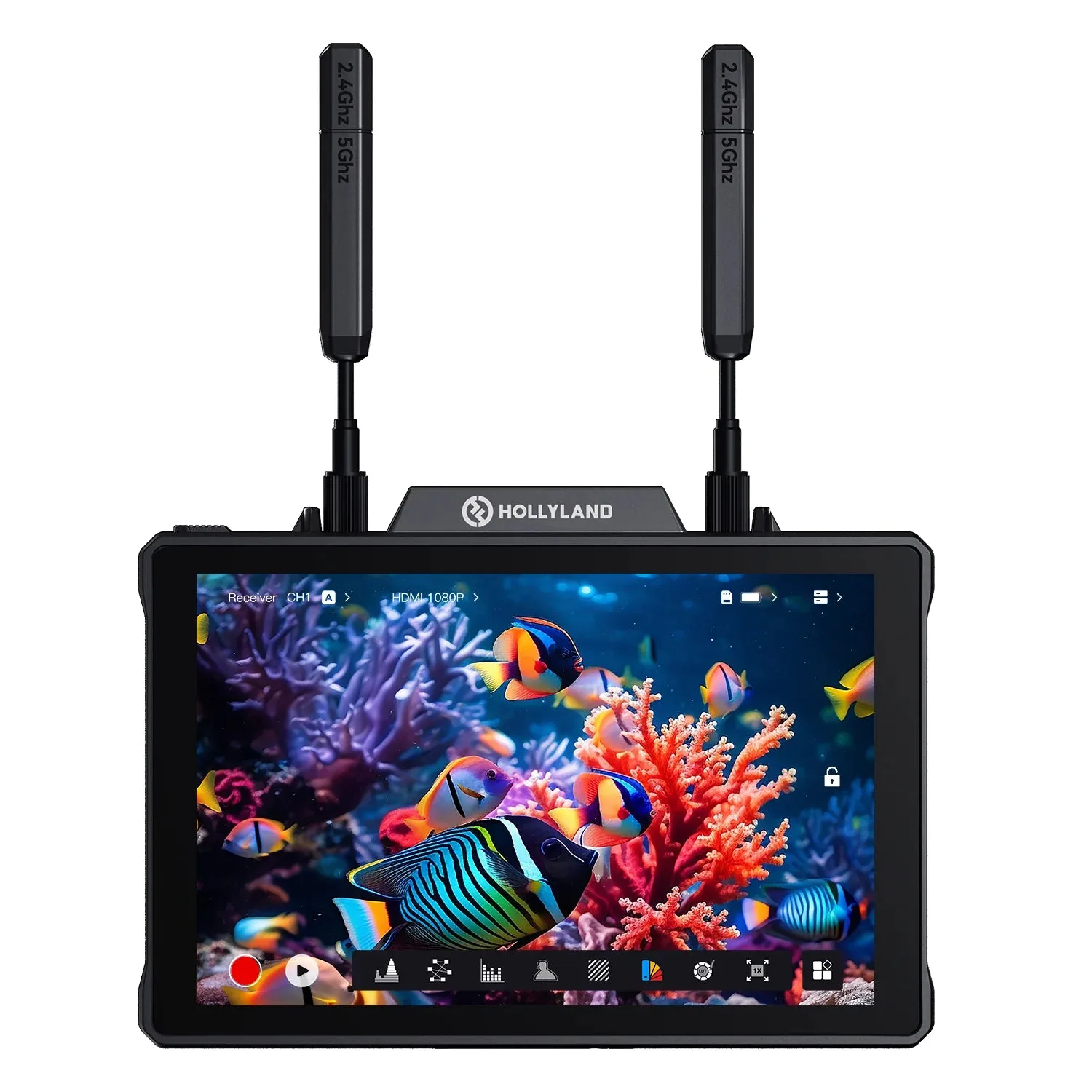
Hollyland Pyro7 7" Wireless Transceiving Monitor
-
Hollyland Pyro7 Dual 7" Wireless Transceiving Monitor Kit: The Hollyland Pyro7 Dual Kit includes two Pyro7 monitors, five paddle antennas, two 32GB SD cards, two D-Tap power cables, a USB-C OTG adapter, and a carrying case. The kit gives you two complete wireless transceiving monitors out of the box, so you can set up both a camera-side transmitter and a viewing monitor without buying extra gear.
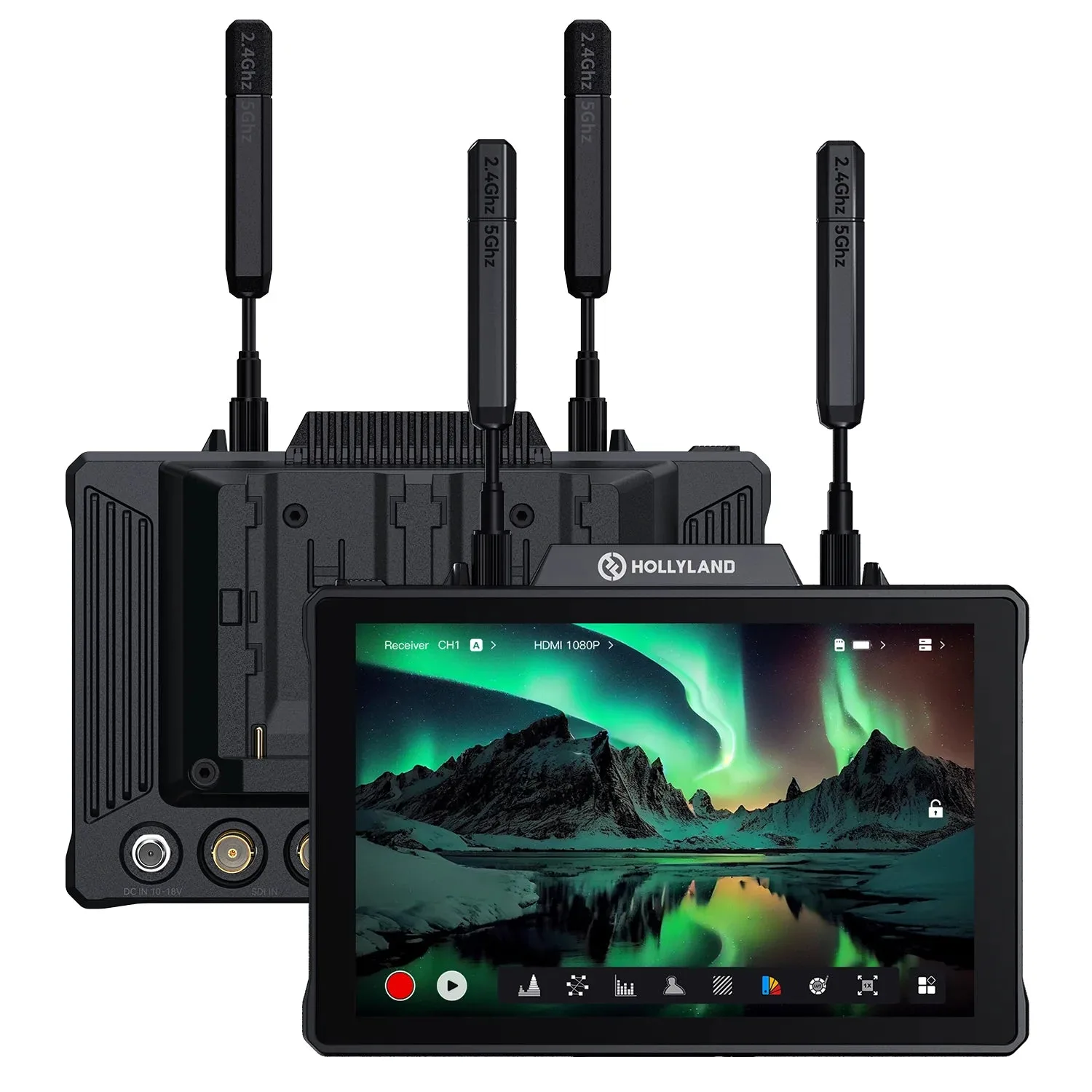
Hollyland Pyro7 Dual 7" Wireless Transceiving Monitor Kit
Single Pyro7 vs Dual Kit: Key Differences
- Number of screens: Single: one 7-inch monitor. Kit: two 7-inch monitors, each with the same 1920x1200 resolution and 1500-nit brightness.
- Flexibility on set: With the kit, you can assign one monitor as a transmitter on the camera and the other as a receiver at a director's station, client village, or video village. The single unit forces you to choose one role and pair it with another device.
- Broadcast Mode support: Both the single unit and each monitor in the kit support Broadcast Mode, sending one transmitter feed to up to four receivers. The kit gives you a second receiver built-in; the single unit needs you to supply your own additional receivers.
- Included accessories: The kit adds extra antennas, SD cards, power cables, and a case. The single unit includes only the monitor and its basic accessories (not separately itemized in the supplied evidence).
- Cost: The single Pyro7 (USD 709.66) is significantly less than the dual kit (USD 1245.30). The kit saves you from buying a second monitor separately, but only if you actually need two screens.
When the Single Pyro7 Makes Sense
The single Hollyland Pyro7 is the right choice if you already own a separate monitor or transmitter and just need to add one wireless viewing point. For example, you might use it as a director's monitor fed from a Pyro H or Pyro S transmitter, or as an on-camera monitor for a focus puller when paired with a separate receiver.
It's also the budget-friendly entry point into the Pyro ecosystem. The single unit gives you the same 1500-nit screen, touch controls, and monitoring tools (waveform, focus assist, zebra, false color, 3D LUT, image overlay) as the kit's monitors, but at a lower upfront cost.
When the Dual Kit Is Worth It
The Hollyland Pyro7 Dual Kit shines when you need two wireless monitoring positions immediately. Small to mid-size crews can set up one monitor on the camera as a transmitter and the other at a director's or client's station without buying extra gear. The kit also includes the extra antennas and power cables you'd otherwise need to purchase separately.
Because each monitor can operate as a transmitter, receiver, or monitor, the kit adapts to changing roles throughout a shoot. You could use both as on-camera monitors for a two-camera setup, or assign one as a transmitter and the other as a receiver for a simple wireless video link. The included carrying case makes it easy to transport both units together.
Compatibility and Ecosystem
Both the single Pyro7 and each monitor in the dual kit work within the Pyro ecosystem. They can pair with Pyro H and Pyro S transmitters (and receivers) as long as firmware and video formats match. The supplied evidence confirms that Pyro 7 can pair within the Pyro ecosystem, including Pyro H and Pyro S.
The monitors include HDMI 1.4b and 3G-SDI input, output, and loopout, supporting common cinema workflows. However, the supplied information does not cover 4K wireless transmission or latency below 60ms, so if those are requirements, a different system (like Teradek Bolt) may be a better fit.