What This Comparison Covers
Honey crystals and liquid honey both come from the same source, but their physical form changes how you use them. This comparison looks at Prince of Peace Honey Crystals (a dry honey product) and standard liquid honey, using only what the label tells you. The goal is to help you choose the format that fits your kitchen habits, not to declare one universally better.
Neither form is more natural or healthier by default—both are real honey. The differences are about convenience, solubility, storage, and mess.
What Prince of Peace Honey Crystals Are
Prince of Peace Honey Crystals are a dry honey made from cane syrup and honey. The label says it offers all the health benefits of liquid honey without the water. It is non-hygroscopic, meaning it does not absorb moisture from the air and clump, and it is instantly soluble in hot or cold drinks.
The 24oz (684g) container gives you a powder that dissolves without stirring for long, unlike liquid honey that can be thick and sticky.
Product Facts at a Glance
-
Prince of Peace Honey Crystals, 24oz: Prince of Peace Honey Crystals contain cane syrup and honey. No artificial additives. The ingredient list is short and familiar, so you know what you are adding to your tea or recipe.
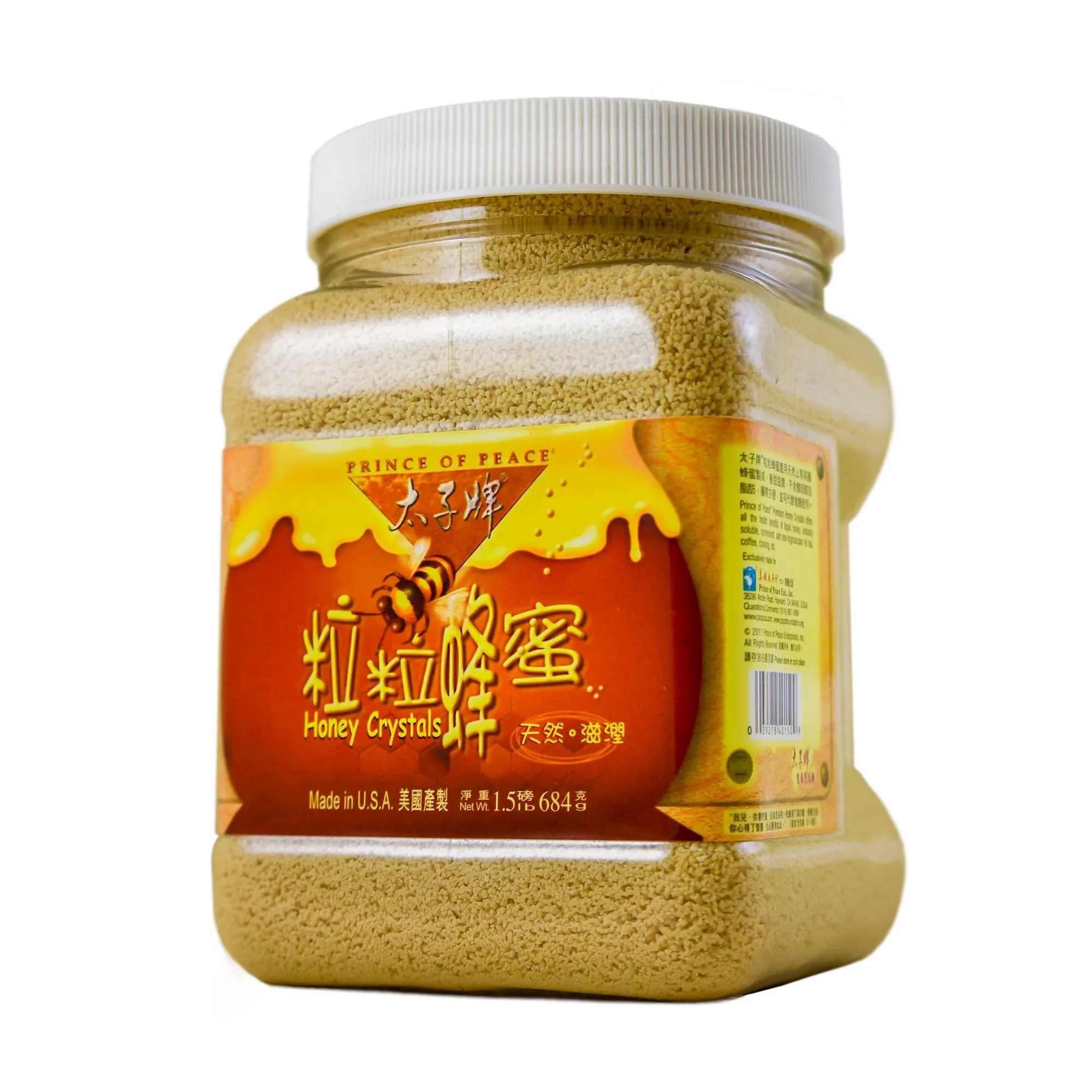
Prince of Peace Honey Crystals, 24oz
-
Prince of Peace Honey Crystals, 24oz: Instantly soluble, convenient, and non-hygroscopic for tea, coffee, cooking, etc. This is the main practical difference from liquid honey: no waiting for it to dissolve, no sticky drips, and it stays free-flowing in the jar.
Honey Crystals vs Liquid Honey: Key Differences
The table below compares the two forms based on the evidence available. Liquid honey here refers to typical filtered honey sold in jars.
- Convenience: Honey crystals pour and measure like sugar. No sticky spoons or drips on the counter. Liquid honey requires careful pouring and often leaves a residue.
- Solubility: Honey crystals dissolve instantly in hot or cold liquid. Liquid honey dissolves more slowly in cold drinks and can sink to the bottom.
- Storage: Honey crystals are non-hygroscopic, so they do not absorb moisture and harden. Liquid honey can crystallize over time and needs gentle warming to return to liquid.
- Shelf life: Both have a very long shelf life when stored properly. Honey crystals should be kept in a cool place (as the label advises). Liquid honey should be kept sealed and away from moisture.
- Taste and use: Both provide honey flavor. Honey crystals work well in dry rubs, baking mixes, and instant drinks. Liquid honey is better for spreading on toast or drizzling over yogurt.
When Honey Crystals Make More Sense
Honey crystals are a strong choice if you regularly sweeten hot or cold beverages and want zero waiting time. They also work well in baking where you want even distribution without extra moisture. The non-hygroscopic property means you can keep the container in your pantry without worrying about clumping, even in humid climates.
Because they measure by volume like granulated sugar, you can substitute them directly in recipes that call for honey by weight (the conversion is roughly 1:1 by volume, but check the recipe).
When Liquid Honey Is the Better Fit
Liquid honey is preferable when you want the texture and spreadability of honey—on toast, in yogurt, or as a glaze. It also works better in recipes where the honey's water content is part of the chemistry, such as in some marinades or dressings.
If you already own a jar of liquid honey and are happy with how you use it, there is no pressing reason to switch. The crystals are a convenience upgrade, not a necessity.
What the Label Does Not Tell You
The Prince of Peace label does not specify a recommended shelf life after opening, nor does it give detailed storage instructions beyond 'store in a cool place.' It also does not include a scoop or measuring guide, so you will need your own teaspoon or tablespoon.
If you need exact nutritional comparisons or a specific honey varietal (like clover or manuka), the label only states 'honey' without a floral source. For most everyday uses, this is not a problem, but it is worth noting if you have a preference.