Placement decides whether a sachet earns its spot
A scent sachet is a small, passive freshener: it releases scent into the air around it, so where you put it matters more than how hard you press it into service. The Honeysuckle Scent Sachet is supplied as a single Standard option and is described as providing 60 days of long-lasting scent anywhere you want to freshen, including cars, lockers and closets. That gives you a clear planning window and a short list of places where a sachet makes sense.
The trade-off is equally clear. A sachet is not a room spray and not a plug-in; it works in enclosed or semi-enclosed spaces where air moves slowly past it. Put it in a large open room and you will likely notice very little. Put it where clothes, linens or gear sit still for hours, and the scent has somewhere to accumulate.
What the Honeysuckle Scent Sachet is built for
-
Honeysuckle Scent Sachet: Provides 60 days of long-lasting scent anywhere you want to freshen: cars, lockers, closets and more. This is the manufacturer's stated duration and the list of intended spots, so it sets a realistic replacement rhythm and tells you which spaces to prioritize.
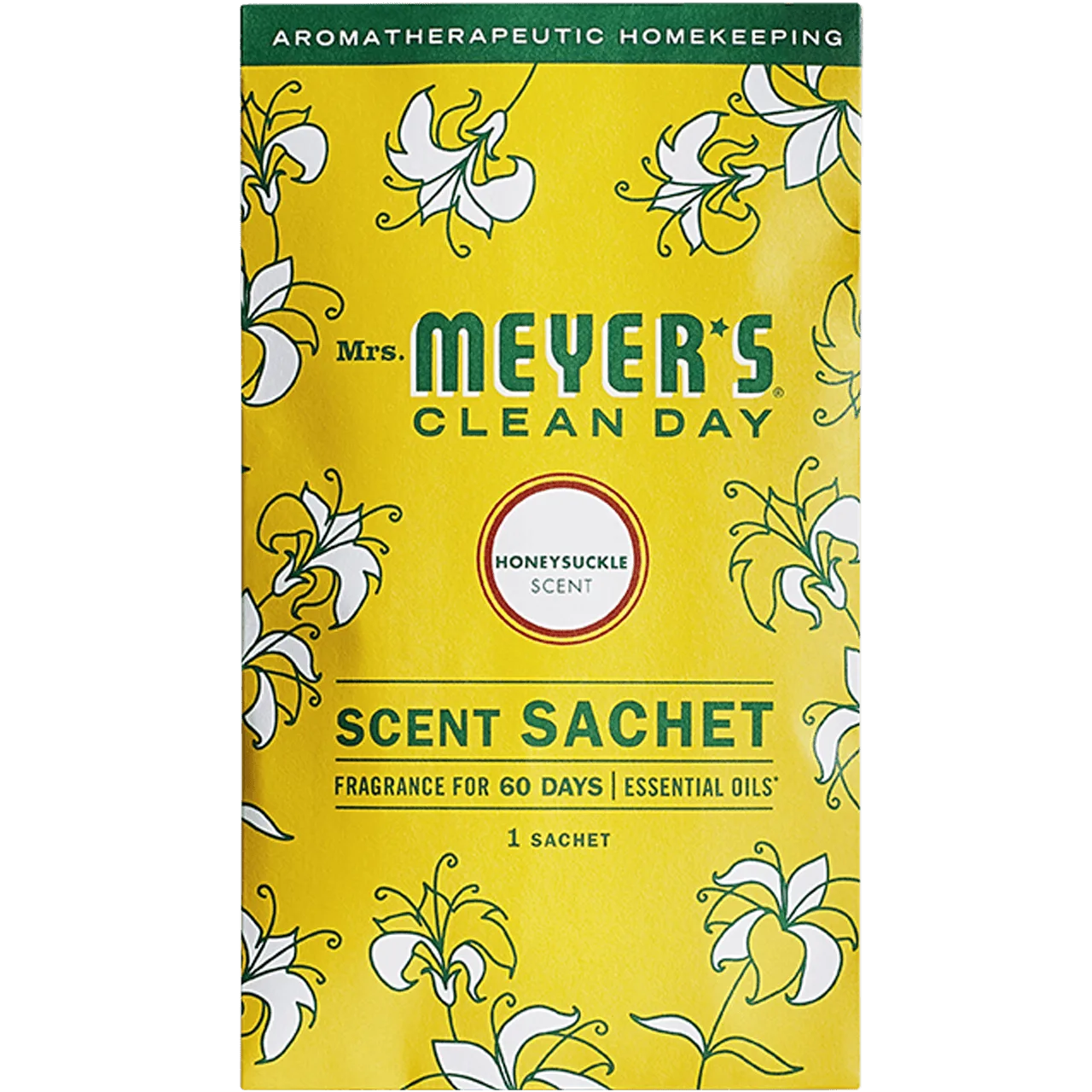
Honeysuckle Scent Sachet
-
Honeysuckle Scent Sachet: Made from repurposed wood, essential oils and other thoughtfully chosen ingredients. The wood base is why this is a passive, slow-release sachet rather than a spray; it needs to sit in place, not be applied to surfaces.
-
Honeysuckle Scent Sachet: Garden-fresh Honeysuckle is a tempting sweet scent—a charming mix of flowers and fruits. Scent strength and character affect placement: a sweet floral-fruity profile suits closets and drawers, but you may want it farther from food or work surfaces.
Where to put scent sachets so you actually notice them
Match the spot to the way air moves. The best placements are small, enclosed and used daily, so the scent meets you when you open the door rather than drifting away unnoticed.
- Closets: Place the sachet among hanging clothes or on a shelf where it is not crushed. Closet sachet placement works because the door stays closed and scent builds up between openings. Keep it off direct contact with fabrics if you want to avoid any oil transfer.
- Drawers: A drawer freshener sachet belongs in a drawer you open regularly, such as a sock, linen or T-shirt drawer. Leave a little space around it so air can reach the wood, and avoid overpacking the drawer.
- Cars: The supplied record lists cars as an intended use. Choose a spot where the sachet will not slide underfoot or block controls, and where it is not in direct sun for long periods.
- Lockers and gym bags: Lockers are also named in the supplied description. A locker or a closed gym bag is a good match because the space is small and sealed; check the sachet periodically since gear can shift against it.
- Small storage spaces: Craft bins, guest-room dressers and seasonal storage boxes benefit from a sachet. Skip large open rooms, where a single sachet is unlikely to make a noticeable difference.
How many sachets per room is realistic
There is no supplied guidance on how many sachets to use per room, so treat this as a planning decision rather than a rule. The practical approach is to count enclosed zones, not square footage. One closet is one zone; a bedroom with a closet, a dresser and a linen cupboard is three zones. If you want each of those to smell fresh, plan one sachet per zone.
For a single large room, one sachet is unlikely to be enough to notice, and adding several starts to look expensive for a passive product. If the goal is whole-room fragrance, a room freshener is the better tool; keep the sachet for the drawers and closets inside that room. This is also where the price helps: at the catalog price of USD 3.19 against a comparison price of USD 4.49, buying a few sachets to cover several small zones is a reasonable way to spend.
A simple placement routine for the 60-day window
The supplied record gives a 60-day scent claim but no operating instructions, so keep the routine basic and let the sachet do the work.
- 1. Pick enclosed spots first: Start with the closet, drawer or locker you open most often. Those give the clearest feedback on whether the scent is working for you.
- 2. Give it breathing room: Set the sachet where air can reach it rather than burying it under folded clothes or heavy gear.
- 3. Note the start date: The 60-day claim is your replacement marker. Write the date on the calendar so you are not guessing when the scent fades.
- 4. Check at the halfway point: Around 30 days, open the closet or drawer and judge for yourself. Scent perception varies, so your nose is the final test, not the label.
- 5. Replace when the scent stops registering: The 60-day figure is the stated duration; if you notice it fading earlier in a hot car or a frequently opened drawer, replace on your own schedule.
Trade-offs to weigh before you buy
The Honeysuckle Scent Sachet is a low-cost, low-effort freshener, but it is not a universal solution. It is passive, so it will not fill a large room or neutralize a strong odor source; if the real problem is a smelly drain or a pet area, a sachet is the wrong tool. It is also a scented product made with essential oils, and the supplied record does not include care, safety or compatibility instructions. That means you should not assume it is safe for every surface or every household; keep it away from direct contact with fabrics and finished surfaces until you have checked the packaging, and keep it out of reach of children and pets.
What the record does confirm is useful: a 60-day scent claim, a repurposed-wood base, a sweet floral-fruity Honeysuckle scent, and intended use in cars, lockers and closets. It is also described as cruelty-free and Leaping Bunny certified, which matters if animal testing is part of your buying decision. If you want a straightforward drawer-and-closet freshener and you are comfortable planning one sachet per enclosed zone, this is a sensible buy. If you need room-wide fragrance or odor removal, choose a product built for that job instead.