Start with what the steel actually does
The WÜSTHOF Ikon 10" Honing Steel is made for honing, not sharpening. Its job is to realign the edge of a knife that has gradually dulled from use, and the catalog notes that a few strokes of both sides of the knife over the steel help maintain the sharpness of a good blade. That distinction matters for care: you are maintaining a rod that realigns edges, not restoring a worn edge.
The same catalog record recommends a Diamond Steel or a Ceramic Steel to restore the sharpness of particularly blunt knives. So if your knife is past the point of realignment, the answer is a different tool, not more pressure on the Ikon steel. Keep that boundary in mind as you clean and store it.
What the Ikon 10" record confirms
-
Ikon 10" Honing Steel: The WÜSTHOF Ikon 10" Honing Steel is made for exceptional honing of your knives. This is the tool's intended role, so care should protect the rod surface used for honing rather than treat it as a sharpening tool.
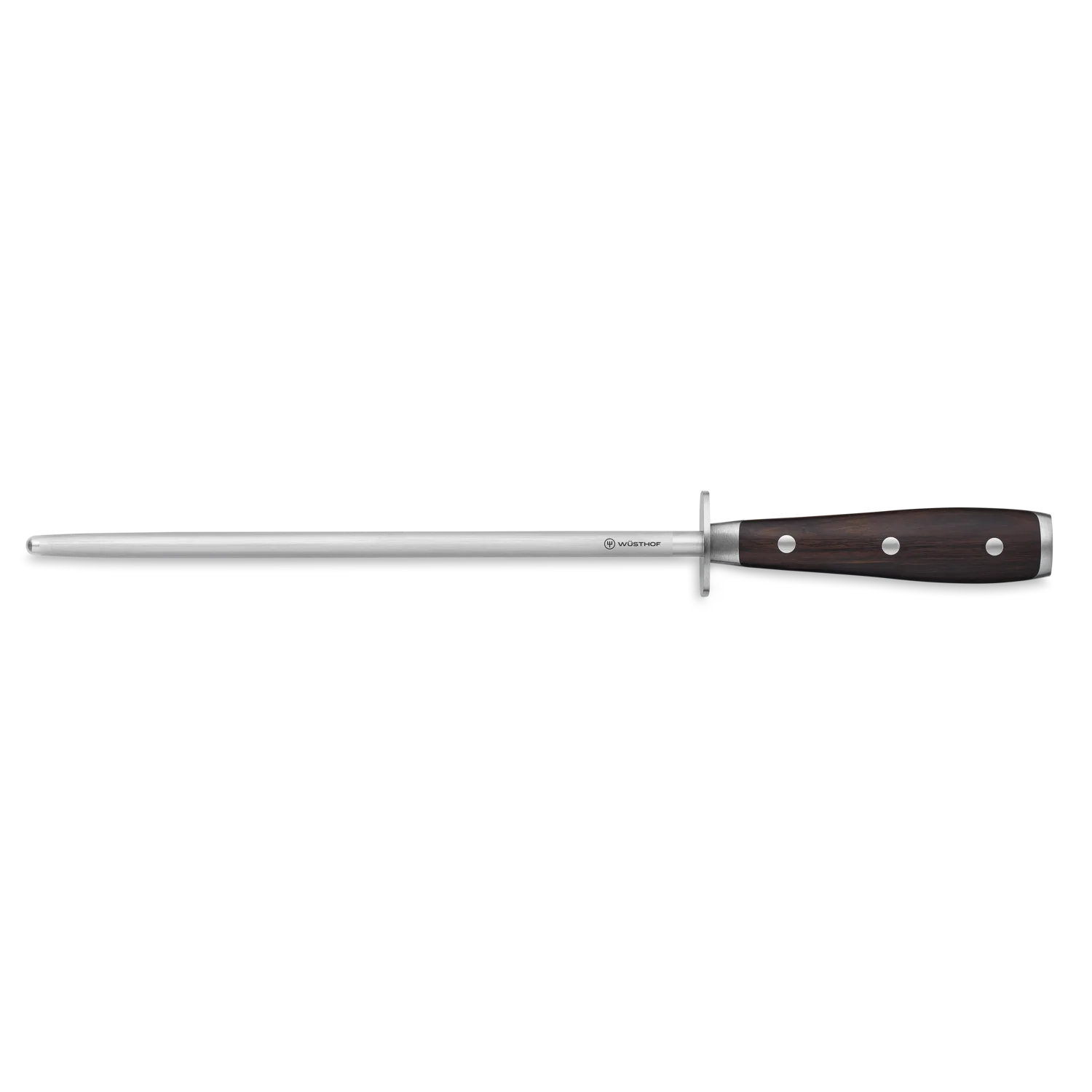
Ikon 10" Honing Steel
-
Ikon 10" Honing Steel: A few strokes of both sides of the knife over the honing steel will help maintain the sharpness of a good blade. Regular light use is the maintenance pattern the catalog describes, which shapes how often you clean and inspect the rod.
-
Ikon 10" Honing Steel: The catalog recommends a Diamond Steel or a Ceramic Steel to restore the sharpness of particularly blunt knives. This tells you when the Ikon steel is the wrong tool, so you do not overwork it trying to sharpen a blunt edge.
A simple cleaning routine after honing
The supplied record does not include a manufacturer cleaning procedure, so treat these as practical habits rather than official instructions. The goal is to remove steel dust and food residue without altering the rod surface.
- Wipe after each use: A dry or barely damp cloth removes the fine metal particles left from honing. Wipe along the rod rather than scrubbing across it.
- Wash with mild soap when needed: If the rod feels tacky or has food residue, wash it with mild dish soap and water, then dry it immediately. The record does not specify dishwasher suitability, so hand washing is the safer default.
- Dry before storing: Moisture left on the rod can affect the surface over time. Dry it fully with a soft towel before it goes back in a drawer or block.
- Inspect the rod surface: Look for buildup or damage along the honing surface. A clean, dry rod is the baseline for consistent honing.
Storage that protects the rod and the edge
Store the Ikon 10" Honing Steel where it will not knock against other tools. Its length makes it prone to catching on drawer edges or being used as a divider for other knives, which is exactly the kind of contact that can damage the rod surface. A dedicated slot in a knife block or a separate protected space is better than a crowded drawer.
Keep it dry. The supplied record does not confirm a specific storage container or wall mount for this steel, so choose a spot that keeps it clean, dry, and away from moisture. If you store it near the sink, dry it before it goes back.
When maintenance turns into replacement
The catalog does not give a replacement interval for the Ikon 10" Honing Steel. Use these checkpoints to decide whether the rod still does its job, and remember that a blunt knife is not automatically a sign that the steel is worn out.
- The rod surface is visibly damaged: Deep gouges or a worn, uneven surface can prevent consistent contact with the edge. The record does not specify a repair option, so replacement is the practical route.
- Honing no longer improves the edge: If a few strokes no longer help maintain sharpness, check whether the knife is simply too blunt. The catalog recommends a Diamond Steel or Ceramic Steel for particularly blunt knives, so try the appropriate tool before replacing the rod.
- The rod is bent or the handle is loose: A bent rod cannot give a consistent honing angle. The supplied record does not confirm handle construction or repair, so treat structural damage as a replacement decision.
- You need to restore, not maintain: If your goal is to bring a dull knife back to sharp, the Ikon steel is not the tool the catalog names for that job. Keep the honing steel for maintenance and use a diamond or ceramic steel for restoration.
What the record does not confirm
The supplied product information does not include a manufacturer care procedure, dishwasher guidance, a replacement schedule, or specific storage accessories for the Ikon 10" Honing Steel. The routine above is built from the tool's stated honing role and general handling principles, not from instructions that were supplied. When in doubt, hand wash, dry fully, and store it protected.