Quick answer
Set up a hooded litter box by placing it on a level, quiet surface, adding 5–7 cm of litter, and keeping the hood on unless your cat avoids it. Scoop daily, wash the tray weekly with unscented soap, and refresh litter fully every 2–4 weeks to keep odour down.
Why a hooded box helps—and when it doesn't
A hooded box contains litter scatter and gives shy cats privacy, but it also traps smells and reduces airflow. That trade-off means you need to clean more consistently than with an open tray, not less.
Some cats dislike the enclosed feeling, especially in multi-cat homes or if they are startled by the hood movement. If your cat consistently eliminates just outside the box, try removing the hood for a week before assuming the box is the problem.
Choosing the right spot and litter depth
Place the box away from food and water, on a washable surface, and avoid dead-end corners where your cat might feel trapped. A quiet, low-traffic area works best.
Litter depth matters: too little causes sticking and odour, too much spills out when your cat digs. Start with 5–7 cm and adjust based on your cat's habits.
Step-by-step: set up, scoop, and control odour
- Position the box on a level, washable surface: Place the assembled box on a hard floor or a mat you can wipe clean. Avoid carpet, which traps odour and is harder to sanitise. Common mistake: putting it on a slippery surface that slides when your cat jumps in. Check that the box does not wobble before adding litter.
- Add 5–7 cm of litter and leave the hood on initially: Pour litter to a depth of about 5–7 cm. Keep the hood on for the first week unless your cat refuses to enter. Common mistake: overfilling, which pushes litter out through the hood seams. Mark the litter level with a piece of tape on the outside as a refill guide.
- Scoop solids at least once daily: Use the scoop to remove clumps and solids every day, and stir the litter gently to distribute moisture. Common mistake: skipping a day, which lets odour build up in the enclosed space. Scoop before you notice a smell—daily scooping is the main odour control step.
- Wash the tray weekly with unscented soap and water: Remove the hood, empty the litter, and wash the base tray with warm water and a mild unscented soap. Rinse thoroughly and dry completely before refilling. Common mistake: using bleach or scented cleaners, which can deter your cat. Keep a spare litter box so you can rotate while one dries.
- Refresh all litter every 2–4 weeks: Even with daily scooping, litter absorbs odour over time. Empty, wash, and refill completely every 2–4 weeks, or sooner if the box still smells after scooping. Common mistake: topping up old litter indefinitely. Set a phone reminder for a full litter change.
- Check the hood and handle for wear: Inspect the hood clips and handle monthly for cracks or looseness. A loose hood lets odour escape and can startle your cat. Common mistake: ignoring a cracked hood because it still sits in place. Replace damaged parts promptly to keep the enclosure effective.
Product facts
-
Enclosed Hooded Cat Litter Box with Handle & Scoop – Beige (50.5cm x 40cm): Overall size is 50.5 cm long, 40 cm wide, and 40 cm high, with a removable hood and a high-sided base tray. The removable hood lets you switch to an open tray if your cat resists enclosure, and the high sides help contain litter during digging.
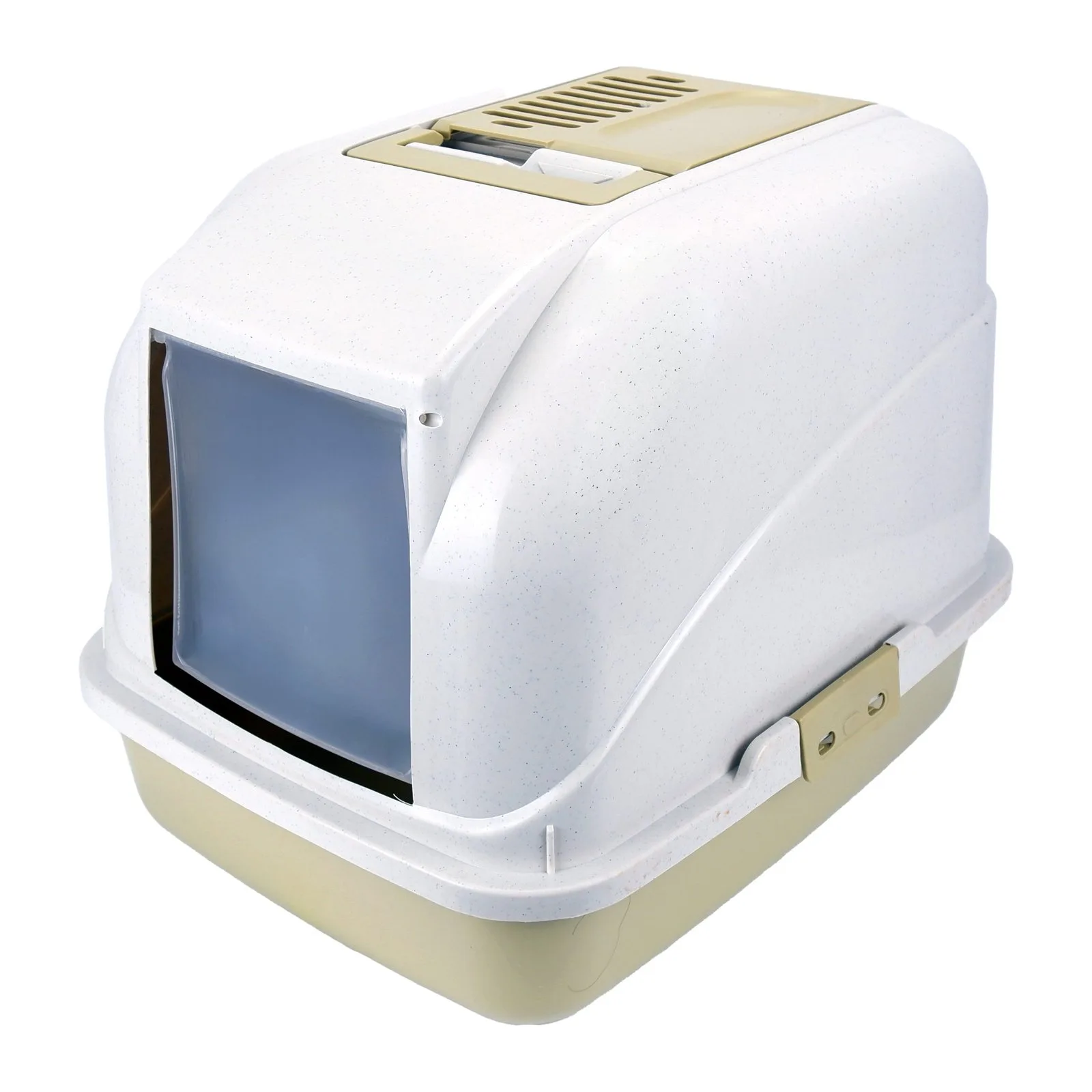
Enclosed Hooded Cat Litter Box with Handle & Scoop – Beige (50.5cm x 40cm)


