Quick answer
Host a 1970s music trivia night by setting up teams, choosing a mix of guessing and singalong rounds, and using a ready-made 1970s music trivia game to keep the pace moving. Plan for about two hours, keep questions short, and build in one or two group singalongs.
Why a 1970s music theme works for mixed-age groups
The 1970s produced a wide range of sounds, from disco and funk to arena rock and singer-songwriter ballads, so most players will recognize at least a few songs even if they were not around for the decade. That makes a 70s trivia night more forgiving than a niche-genre quiz: teams can lean on general knowledge, guesswork, and singalong memory rather than deep expertise.
The trade-off is that the decade is broad enough to overwhelm a casual crowd if you try to cover everything. Pick a few lanes, such as disco, classic rock, and TV theme songs, and let the trivia game carry the rest.
Set the room for singing, not just sitting
A music trivia night works best when people can hear the clips and see the score. Arrange seating in teams around small tables rather than rows, keep a speaker or phone dock near the host, and leave a clear space for anyone who wants to dance or act out a lyric. If you are using a phone for music, test the volume before guests arrive; a clip that is too quiet kills the energy faster than a wrong answer.
One common mistake is treating the night like a formal quiz. Leave room for table talk and laughter, and do not shush the room too often. The social buzz is part of the entertainment.
Balance trivia questions with singalong prompts
The 1970s Music Trivia Game supports two styles of play: straight trivia questions or belting out the next line of a song. Use both to keep energy up. Start with a few straightforward questions to warm up the room, then switch to singalong prompts when attention starts to dip. Teams that love to sing will carry the room, and teams that prefer guessing can still score points.
If you write your own question ideas, keep them short and avoid obscure B-sides unless you know your crowd is deep into the decade. A good rule is one easy question, one medium, and one hard per round.
Step-by-step 1970s trivia night plan
- Set a date and invite teams: Choose a two-hour window and ask guests to come in teams of three to five. Include a note that singing is encouraged but optional. Send the invite at least a week ahead so teams can form.
- Pick your format mix: Decide how many rounds will be straight trivia and how many will be singalong prompts. A simple split is three trivia rounds and two singalong rounds. Write the round order down before the night starts.
- Prepare the room and sound: Set up team tables, test your speaker or phone volume, and keep score sheets and pens on each table. Have a backup playlist ready in case a clip fails. Do a sound check with one song before guests arrive.
- Brief the rules in under two minutes: Explain how points work, when to shout an answer, and how singalong rounds are scored. Keep the explanation short so people start playing quickly. Ask one guest to repeat the rules back to confirm everyone heard.
- Run the rounds with a steady pace: Read each question once, give teams about 20 seconds to confer, then take answers. For singalong prompts, play a short clip and let teams sing the next line together. If a round drags, cut one question rather than rushing the rest.
- Close with a final singalong and scores: End with a group singalong everyone can join, then announce scores and hand out a small prize or simply applause. Thank guests and invite them to stick around for music. Keep the final song familiar so even the losing team ends on a high note.
Product facts
-
1970s Music Trivia Game: The 1970s Music Trivia Game is designed for two ways to play: trivia questions or next-line singalongs, and it works best in teams. You can run a mixed-format night without writing every question yourself, and team play keeps quieter guests involved.
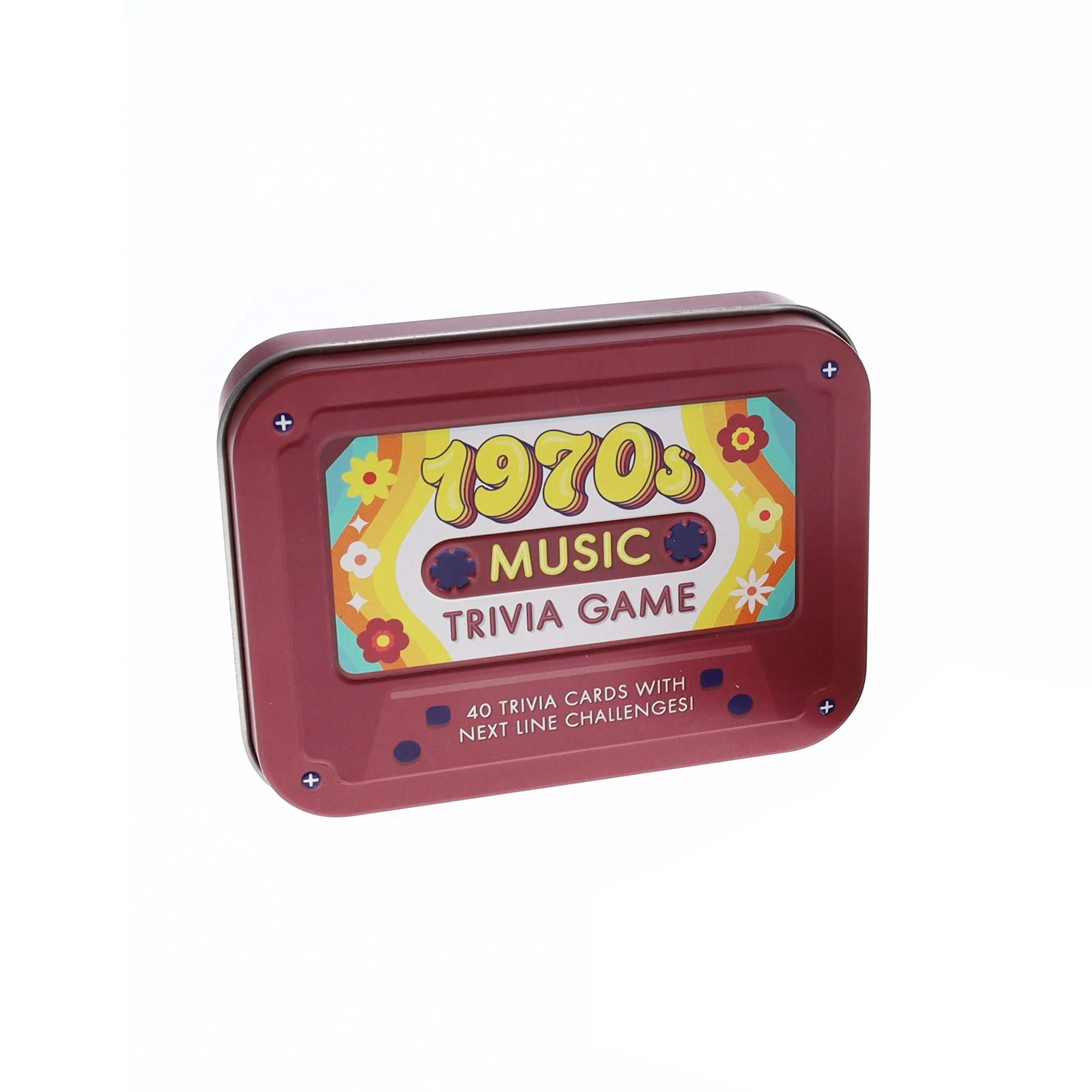
1970s Music Trivia Game