Quick answer
Start with one piece at a time on a flat surface, guide your child’s hand to the jumbo knob, and name each pet as it goes in. Keep sessions short and repeat the same simple routine to build confidence.
Why the House Pets puzzle suits very first attempts
The House Pets Jumbo Knob Puzzle has only three pieces, each with a big wooden knob sized for small hands. That means less fiddling and more successful grabs, which matters when a toddler is still learning that a puzzle piece can be lifted and replaced.
Full-color matching pictures sit underneath each piece, so the puzzle can be used two ways: as a simple put-in activity for a 1-year-old, or as a matching game for an older toddler who is ready to look for clues.
Set up for success, not for a perfect finish
A common mistake is dumping all three pieces out at once. For a first puzzle, too many choices can lead to scattering or frustration. Keep the pieces in a small basket beside the board and offer just one at a time until your child asks for more.
Another checkpoint: check that the knobs are firmly attached before each play session. The puzzle is designed for grasping, but a quick twist-and-pull check is a sensible habit with any wooden knob puzzle.
Step-by-step: using the House Pets Jumbo Knob Puzzle
- 1. Start with the board and one piece: Place the puzzle board flat on the floor or table and set out just one piece, such as the cat. Hold the knob yourself and show how it lifts out, then place it back slowly. If your child grabs or mouths the piece, that is normal exploration—keep the session short and try again another day.
- 2. Guide the first grasp hand-over-hand: Gently place your hand over your child’s hand on the jumbo knob and lift the piece together. Say the pet’s name clearly as you lift: “Cat.” Checkpoint: your child should be able to wrap fingers around the knob; if not, wait a few weeks and try again.
- 3. Name and match with the picture underneath: After lifting a piece, point to the matching picture underneath and say the pet name again. Then help your child drop the piece back into the well. Common mistake: naming too many pets at once. Stick to one name per session until your child repeats it or points.
- 4. Add a second piece only when the first is easy: Once your child can lift and replace one piece with little help, add a second piece. Keep the third piece nearby but out of reach until the two-piece routine feels calm. If your child scatters the pieces, return to one piece for a few days—scattering is a sign of overwhelm, not failure.
- 5. Turn it into a simple pet-name game: Ask, “Where’s the dog?” and let your child point to or lift the dog piece. Praise the attempt, then say the name again as they place it. Checkpoint: use the same three pet names each time so your child hears consistent words.
- 6. End on a successful note: Stop while your child is still engaged—after one or two successful placements is enough. Put the pieces back in the board together and say goodbye to the pets. A short, happy session is more useful than a long one that ends in frustration.
Product facts
-
House Pets Jumbo Knob Puzzle - 3 Pieces: Extra-thick wooden puzzle with three big pieces and jumbo wooden knobs for easy grasping. The thick pieces and large knobs give small hands a clear grip, so your child can focus on lifting and placing rather than pinching a thin edge.
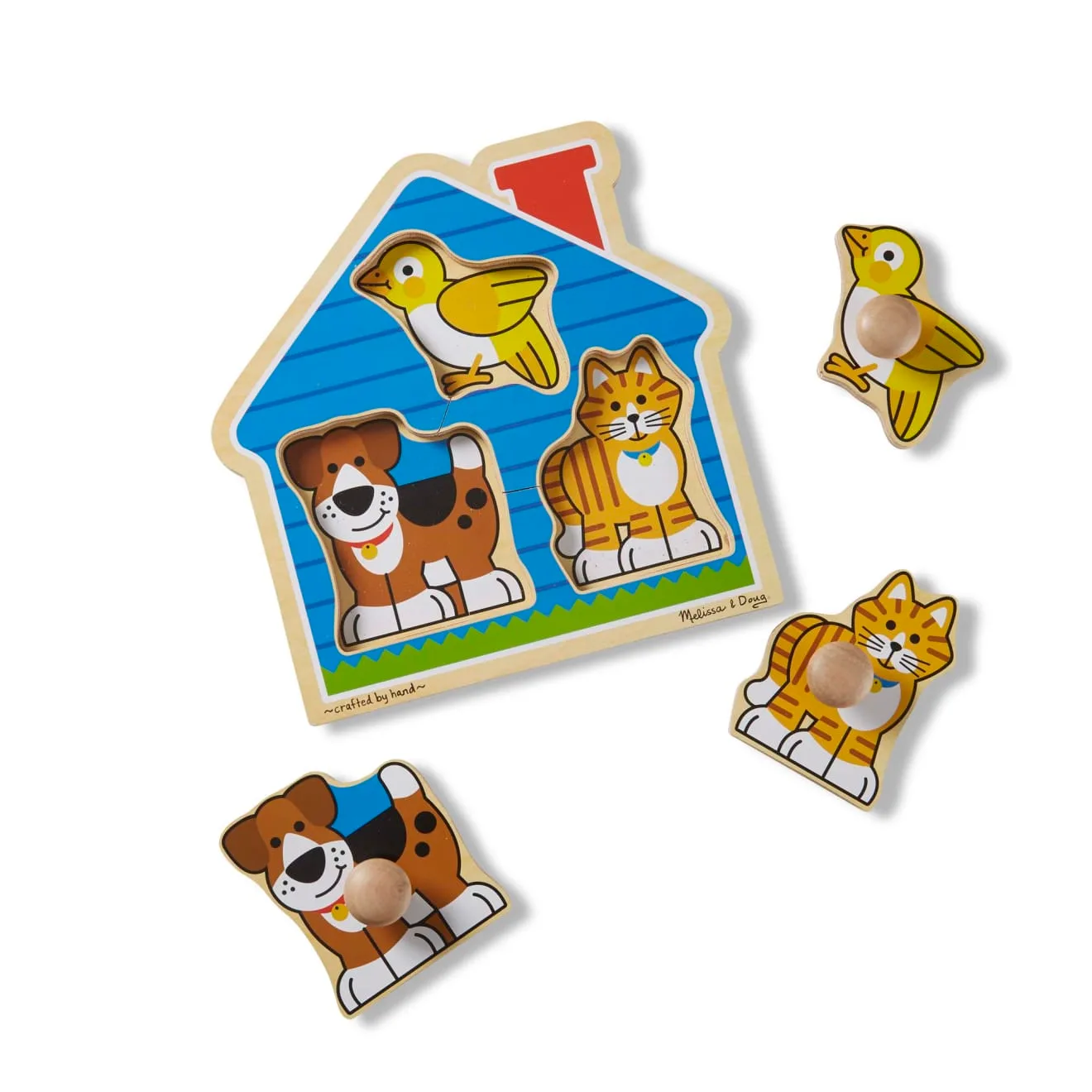
House Pets Jumbo Knob Puzzle - 3 Pieces
-
House Pets Jumbo Knob Puzzle - 3 Pieces: Full-color, matching pictures appear underneath each piece. You can use the pictures as a visual cue when teaching pet names and matching, then remove the cue as your child gains confidence.