Why Add Juice to Smoothies?
Using a cold-pressed juice like #4 A Down to Earth Blend in a smoothie is an easy way to add vegetable nutrition without extra prep. The carrot, celery, beetroot, and lemon base brings a savory-sweet flavor that pairs well with fruits and greens. Because the juice is already blended, it saves you from chopping and juicing whole vegetables while still delivering a concentrated source of vitamins A, C, and K plus minerals.
This approach works well for anyone who wants a quicker smoothie routine or prefers a thinner, drinkable texture. The juice replaces part or all of the liquid base (like water or milk), so you get both hydration and nutrients in one pour.
Flavor Pairing Tips
#4 A Down to Earth Blend has an earthy, slightly sweet taste from beetroot and carrot, with a bright finish from lemon and celery. To balance the earthiness, pair it with sweet fruits like banana, mango, or apple. For a greener smoothie, add a handful of spinach or kale — the mild greens won't overpower the juice's flavor.
If you prefer a creamier texture, blend the juice with a frozen banana or a scoop of yogurt. For a more tart profile, increase the lemon component or add a splash of lime. The juice itself contains about 23.6 g of sugar per serving (mostly from the fruits and vegetables), so additional sweetener is usually unnecessary.
Simple Smoothie Recipe Ideas
Here are two easy ways to use the juice in a smoothie, based on the 375 ml single-serving bottle size. Each recipe uses the whole bottle or a portion, depending on your desired consistency.
Berry Beet Boost: Blend the entire 375 ml bottle of #4 A Down to Earth Blend with frozen mixed berries and 1/2 a frozen banana, following the product instructions for quantities. The berries add antioxidants and a deep purple color, while the banana provides natural sweetness and a creamy texture. This makes one large or two smaller servings.
Green Citrus Refresher: Blend the juice with a handful of spinach, the juice of half an orange, and a few ice cubes, following the product instructions for the amount of juice. This yields a lighter, thinner smoothie that’s still nutrient-dense. If you want more protein, add a tablespoon of chia seeds or a scoop of unflavored protein powder.
What the Label Tells You
-
#4 A Down to Earth Blend: One serving is 375 ml. The juice contains 523 kJ of energy, 2.7 g protein, 24.6 g carbohydrates (23.6 g sugars), and 120 mg sodium per serve. Knowing the serving size helps you portion the juice correctly for your smoothie. The sugar content is from whole fruits and vegetables, not added sugar, so it fits into a balanced diet.
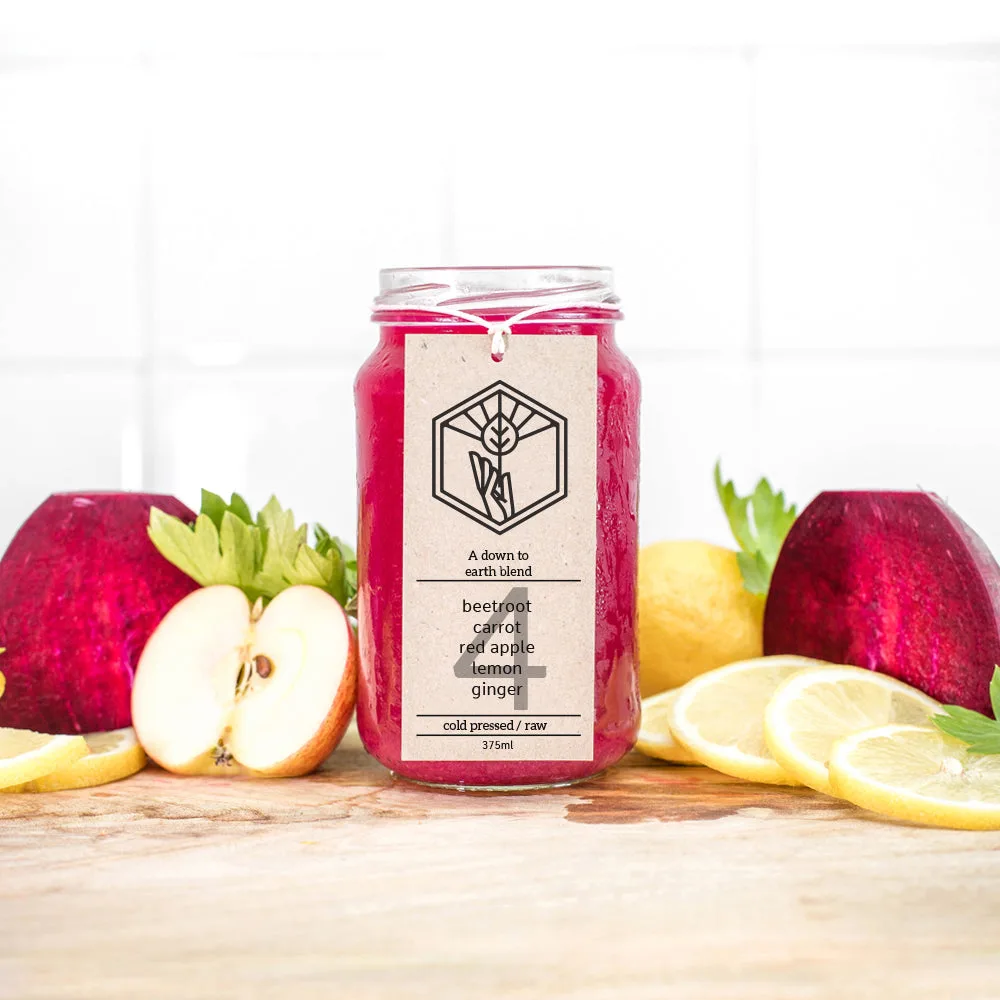
#4 A Down to Earth Blend
-
#4 A Down to Earth Blend: Ingredients: Carrot, Red Apple, Celery, Lemon, and Beetroot. The blend is labeled with icons for Detox, Energy, and Antioxidants. These ingredients determine the flavor profile and potential pairing options. The antioxidant and energy descriptors give context for when you might use this smoothie — for example, before a workout or as a midday pick-me-up.
Texture and Consistency Adjustments
Because the juice is thin, your smoothie will be thinner than one made with milk or yogurt. To thicken it, use frozen fruit (like banana, mango, or berries) instead of fresh. You can also add a quarter of an avocado or a tablespoon of nut butter for creaminess. If the smoothie is too thick, add a splash of water or more juice until it reaches your preferred consistency.
The juice is best used cold, so keep it refrigerated until you blend. Since each bottle is a single serving, you can use the whole bottle for one smoothie or split it across two days — just store the opened bottle in the fridge and use within the recommended timeframe for best quality.
What the Label Does Not Specify
The product label does not provide specific instructions for blending or heating, so treat the juice as a ready-to-drink ingredient. Do not boil or cook the juice, as heat may degrade some of the natural vitamins. The nutritional information is based on the juice alone; if you add other ingredients, the total calories and nutrients will change accordingly.
If you have dietary concerns or medical conditions (such as kidney stones due to oxalates from beetroot), consult a healthcare professional before making this juice a regular part of your diet. The information here is for general guidance and does not replace personalized medical advice.