What This Product Is (and Isn't)
AK Interactive Kerosene Leaks and Stains is an enamel weathering product designed specifically for creating realistic kerosene spill effects on aircraft models. It is not intended for oil or grease stains, so keep that in mind when planning your weathering approach. The 35ml bottle contains a ready-to-use mixture that can be blended with other enamel colors and thinned with AK Interactive White Spirit.
Product Facts
-
AK Interactive: Kerosene Leaks and Stains (35ml Bottle): This is an enamel product. It can be blended with other enamel colors and diluted with White Spirit. You can adjust the color intensity and consistency to match different fuel types or spill sizes.
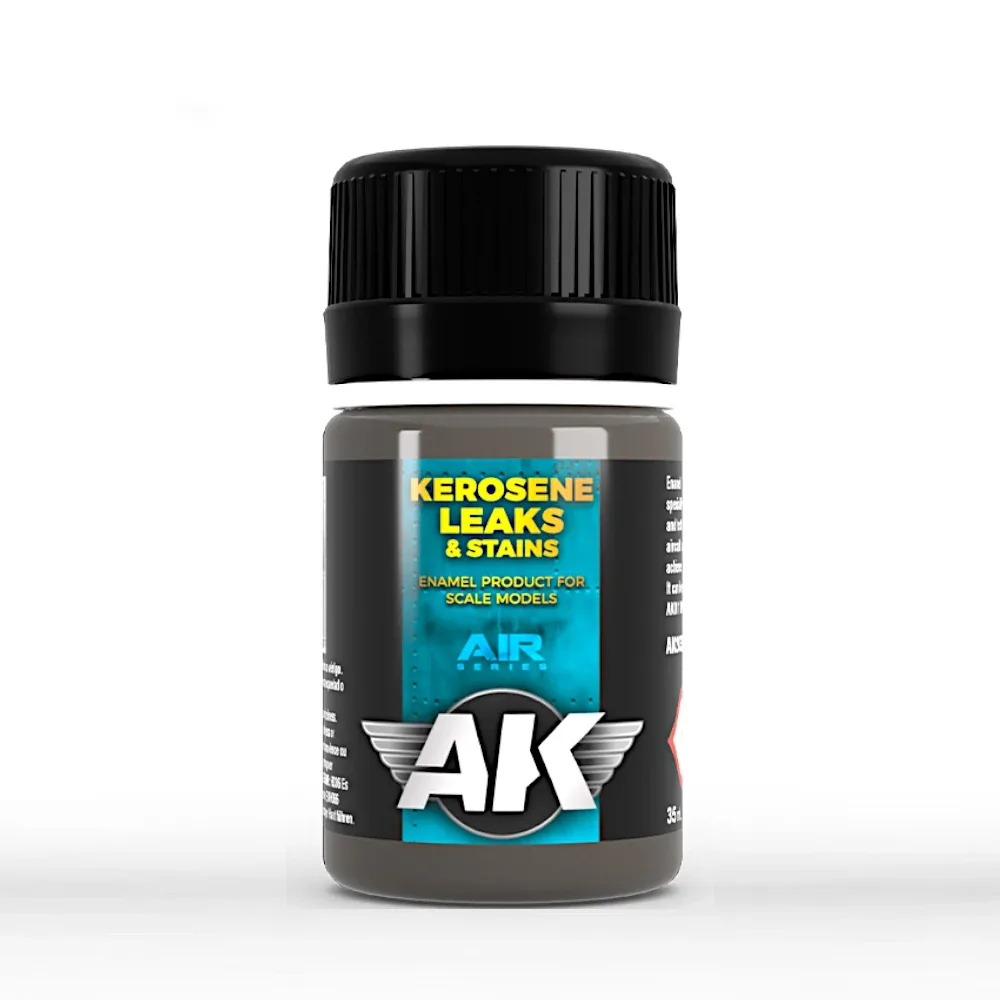
AK Interactive: Kerosene Leaks and Stains (35ml Bottle)
-
AK Interactive: Kerosene Leaks and Stains (35ml Bottle): This product is good mainly to make kerosene spilled effects only with a great realism. It is purpose-built for aircraft fuel stains, so you get a convincing result without mixing custom washes.
-
AK Interactive: Kerosene Leaks and Stains (35ml Bottle): Comes in a 35ml bottle. A small bottle goes a long way for targeted weathering; one bottle will cover many models.
How to Apply Kerosene Leaks and Stains
These steps assume you have a fully painted and sealed model. Enamel products work best over a gloss or satin varnish to allow easy cleanup.
- Shake the bottle thoroughly: Enamel pigments can settle. Shake well to ensure an even mixture before use.
- Apply with a fine brush: Use a small, pointed brush to place the product exactly where you want the spill—along panel lines, near fuel caps, or around engine access panels on the wings or fuselage.
- Let it dry slightly: Wait a few minutes until the product becomes tacky. This allows you to manipulate the stain without it running everywhere.
- Blend and feather the edges: Dip a clean, dry brush or a sponge in White Spirit and gently stroke the edges of the spill to soften and spread the stain outward. This creates a natural, faded look rather than a hard line.
- Build up layers if needed: For a heavy fuel leak, apply a second coat after the first is fully dry. Each layer adds depth and intensity.
Tips for Realistic Results
Kerosene spills on real aircraft tend to flow backward along the airflow, so orient your stains accordingly. Start near the fuel filler cap or engine bay and let the spill trail toward the trailing edge of the wing or fuselage. Less is often more—you can always add more, but removing excess enamel requires solvent and risks damaging the paint underneath.
Because this is an enamel product, you can also mix it with other AK Interactive enamel colors (like dark brown or black) to create different fuel types or aged spills. Always test on a scrap piece first to confirm the color and behavior.