Quick answer
Apply Something Blue Aurora Powder over a fully cured, tacky gel top coat, then seal it with a second top coat to lock in the blue shift. Work in thin layers and buff lightly for a smooth, mirror-like finish.
Why the base coat decides your blue shift
Aurora powder reflects light through a fine pearlized pigment, so the surface underneath matters as much as the powder itself. A glossy, slightly tacky gel base gives the powder something to grip, while a dry or matte base leaves it patchy and dull. If you are using regular polish, you will need a no-wipe gel top coat to create that tacky layer; standard air-dry top coat will not hold the powder evenly.
When to choose powder over blue chrome gel
Powder gives a softer, shifting aurora effect rather than the hard mirror of chrome gel. It is more forgiving on uneven nail beds because you can buff it into the surface, but it also shows ridges more easily if you skip a smooth base. For a subtle something blue look, one thin layer is enough; for a stronger blue chrome nail effect, build two light layers rather than one heavy coat.
What to skip for a clean result
Avoid applying powder over wet polish or a sticky layer that has not cured—it will clump and drag. Also skip thick top coats before powder; a thick layer can pool at the sides and cause the powder to look uneven after sealing. If your powder looks grainy, the culprit is usually too much product on the applicator, not the powder itself.
Step-by-step application
- Prep and smooth the nail: Push back cuticles, lightly buff the nail plate, and wipe with cleanser. Apply a base coat and let it cure fully. Checkpoint: any ridges left now will show through the powder, so spend extra time on the surface before you start.
- Apply a gel color base: Paint one thin layer of a blue or neutral gel color and cure it. A matching blue base deepens the shift; a neutral base keeps the aurora effect lighter. Mistake to avoid: a thick base layer that pools at the edges and throws off the powder later.
- Add a tacky no-wipe top coat: Apply a thin no-wipe gel top coat and cure it just until set but still tacky. Checkpoint: if the surface is fully dry, the powder will not adhere—reapply a thin layer and cure again.
- Buff on the aurora powder: Pick up a small amount of Something Blue Aurora Powder with a silicone tool or eyeshadow applicator and buff it over the nail in circular motions. Start at the center and work outward. Mistake to avoid: pressing hard, which creates streaks rather than an even layer.
- Brush away the excess: Use a soft brush to sweep off loose powder around the cuticles and sides. Checkpoint: any powder left on the skin will cure into the top coat and look messy, so clean up before sealing.
- Seal with a top coat: Apply a thin layer of no-wipe gel top coat over the powder and cure it. For extra durability, repeat with a second thin layer. Mistake to avoid: flooding the top coat, which can dull the blue shift and cause pooling.
- Check the shift and finish: Tilt the nail under light to confirm the aurora blue shift is even. If a patch looks dull, lightly buff a little more powder on that spot and reseal. Checkpoint: if the whole nail looks flat, the top coat may have been applied too thickly—remove and redo with a thinner layer.
Product facts
-
Something Blue Aurora Powder: Something Blue Aurora Powder is a fine, pearlized pigment that reveals an aurora blue shift. The fine particle size means you can buff it into a thin, even layer without a gritty texture, which helps the blue shift read clearly under light.
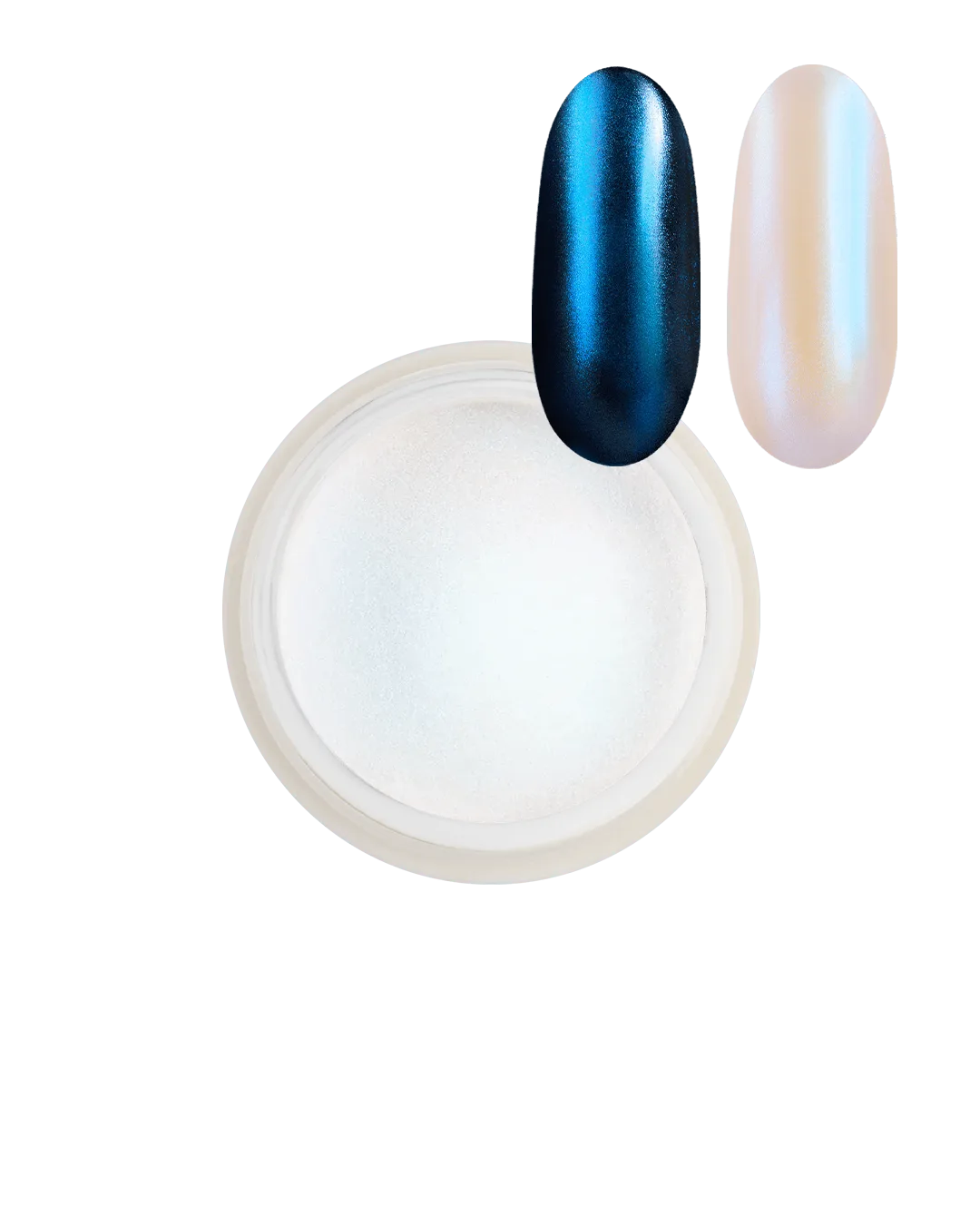
Something Blue Aurora Powder