Quick Answer
Attach the nylon streamer to your rocket's shock cord with a secure knot, fold it accordion-style, and pack it loosely so it deploys cleanly during descent.
Why Streamer Recovery Works Best for Light Rockets
A streamer recovery system is a lightweight, low-cost alternative to parachutes for smaller rockets. It creates drag to slow the rocket's descent without adding much weight, which helps keep the rocket stable during flight.
The trade-off is that a streamer doesn't slow the rocket as much as a parachute, so it's best for rockets that are light and have a sturdy airframe. On heavier rockets, the descent may be too fast and risk damage on landing.
Choosing the Right Streamer Size
Streamer size affects descent rate and visibility. A wider and longer streamer creates more drag, slowing the rocket more, but it also takes up more space in the body tube. A smaller streamer is easier to pack but may not slow the rocket enough.
For most mid-power rockets, a 2-inch by 20-inch or 3-inch by 30-inch streamer is a good starting point. If your rocket is on the heavier side, consider a 4-inch by 40-inch streamer for extra drag.
Step-by-Step Attachment Guide
- Tie the streamer to the shock cord: Thread the shock cord through the slot in the streamer, then tie a secure knot (e.g., a double overhand knot) to prevent slipping. Make sure the knot is tight and the streamer is centered on the cord. Check that the knot can't slide along the cord; if it does, the streamer may bunch up during deployment.
- Fold the streamer accordion-style: Fold the streamer back and forth in 2-3 inch sections, starting from the free end. This creates a compact bundle that will unfurl quickly when the rocket ejects the recovery system. Avoid folding too tightly; a loose fold allows the streamer to deploy without catching on the body tube.
- Pack the streamer loosely in the body tube: Place the folded streamer into the rocket's body tube, with the shock cord attached to the nose cone. Ensure the streamer is not compressed too tightly and can slide out easily when the ejection charge fires. If the streamer is packed too tightly, it may not deploy fully, causing the rocket to fall too fast. Test the fit before launch.
- Secure the nose cone and check the fit: Slide the nose cone into the body tube, ensuring the shock cord and streamer are not pinched. The nose cone should fit snugly but not be forced; if it's too tight, the ejection charge may not push it off cleanly. Perform a ground test by gently pulling the nose cone to simulate ejection; the streamer should come out easily.
- Test the deployment before launch: At the launch site, do a dry run by separating the nose cone and pulling the streamer out to confirm it unfolds correctly. This helps catch any tangles before the real flight. If the streamer tangles, refold it and repack, ensuring the folds are even and loose.
Recommended Streamer
-
Nylon Streamer: Rip-Stop Nylon Streamers come in lengths from 1.5"x16" to 4"x40" and are slotted for easy tie-on. The pre-cut slots let you thread the shock cord through quickly without needing extra hardware, and the rip-stop nylon resists tearing during deployment.
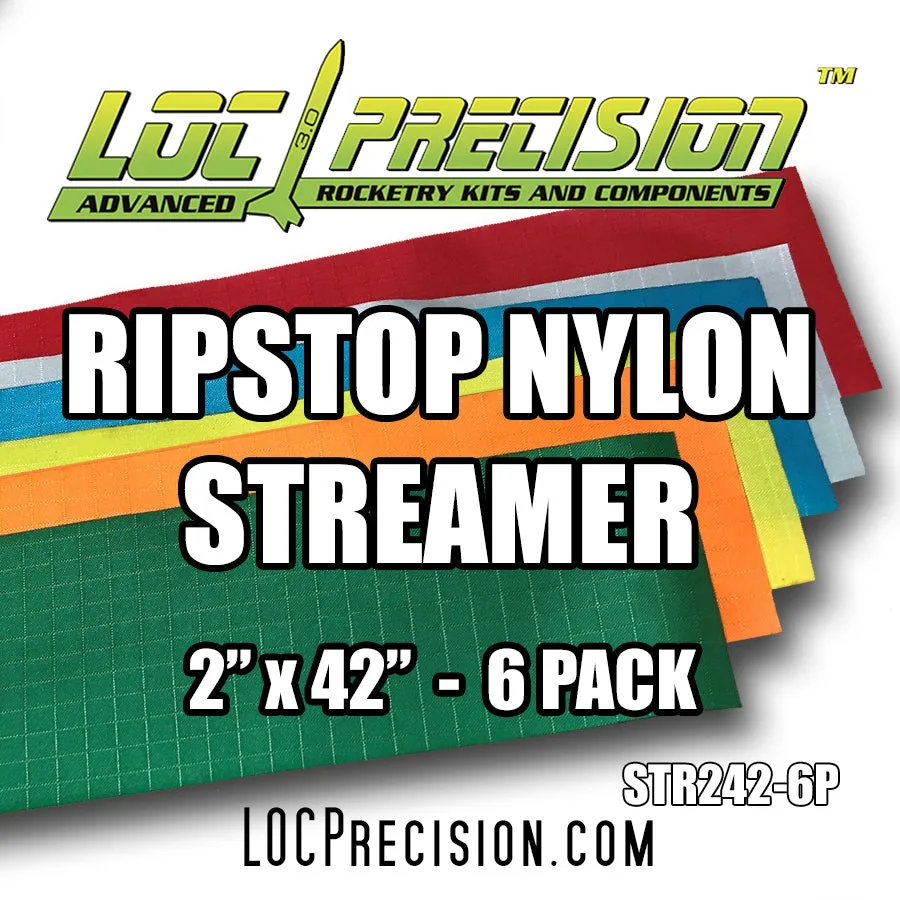
Nylon Streamer