Quick Answer
To bake with organic unbleached white flour, use it as a direct substitute for all-purpose flour in most recipes, but adjust liquid slightly and expect a denser crumb in delicate bakes like cakes and pastries.
Why Choose Organic Unbleached White Flour?
Organic unbleached white flour is milled from organic hard red wheat and is not chemically bleached, so it retains a slightly higher protein content than bleached all-purpose flour. This makes it a great choice for yeast breads and other baked goods that benefit from structure, but it can also be used for quick breads, biscuits, muffins, cookies, and cakes with minor tweaks.
Because it is unbleached and unenriched, it has a more natural color and a subtle wheat flavor. It also contains no potassium bromate, a common dough conditioner in conventional flours, so you may need to adjust mixing times or hydration slightly.
Understanding Protein Content and Gluten Development
The main difference between unbleached white flour and pastry or cake flour is protein content. Higher protein means more gluten, which gives breads a chewy texture but can make cakes and pastries tough if overmixed. For tender baked goods, handle the dough or batter gently and avoid over-kneading.
If a recipe calls for pastry flour, you can substitute unbleached all-purpose flour, but expect a slightly denser result. To mimic pastry flour, replace a couple of tablespoons of flour per cup with cornstarch to lower the protein ratio.
Step-by-Step Baking Guide
- Measure accurately: Spoon flour into a dry measuring cup and level with a knife. Do not scoop directly from the bag, as that packs flour and adds up to 20% extra, throwing off hydration. Use a kitchen scale for best accuracy (1 cup = 120g).
- Adjust liquid in bread recipes: Start with the recipe's liquid amount, but be ready to add 1-2 tablespoons of water if the dough feels stiff. Unbleached flour absorbs slightly more water than bleached, so a slack dough is normal. Add liquid gradually; the dough should be tacky but not sticky.
- Mix gently for tender bakes: For cakes, muffins, and biscuits, mix just until combined. Overmixing develops gluten and yields a tough, dense crumb. Stop when no dry streaks remain. Use a light hand; a few lumps are fine.
- Adjust rising time for bread: Allow the dough to rise until doubled, but be patient. Unbleached flour may ferment slightly slower, so give it an extra 15-30 minutes if needed. Check by pressing a finger: if the indentation stays, it's ready.
- Adapt pastry recipes: When a recipe calls for pastry flour, replace 2 tablespoons of each cup of flour with cornstarch to lower protein and mimic tenderness. Expect a slightly firmer texture. This substitution works well for pie crusts and scones.
Product Spotlight
-
Organic Unbleached White Flour (2.27kg): Bob's Red Mill Organic All-Purpose Flour is freshly milled from certified organic hard red wheat and is unbleached and unenriched, with no potassium bromate added. This flour provides reliable gluten structure for yeast breads and everyday baked goods, while its unbleached, unenriched nature means you control the additives in your baking.
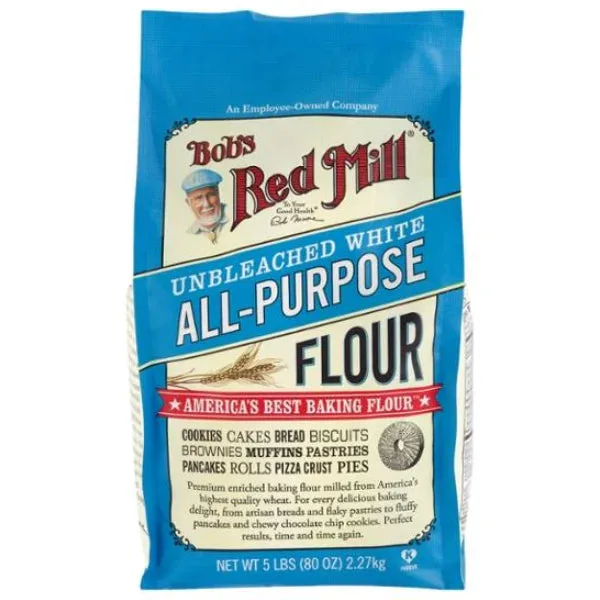
Organic Unbleached White Flour (2.27kg)