Quick answer
Wet your dog thoroughly, rub a dog shampoo soap bar between wet hands or directly on the coat to build a light lather, massage it in, then rinse completely. The key is to use less product than you think and to rinse longer than you lather.
Why a shampoo bar can be gentler than liquid shampoo
Many liquid dog shampoos rely on high-foaming surfactants that can strip natural oils if not rinsed well. A solid pet shampoo bar guide focuses on a concentrated bar that lets you control the amount of product and water, so you can avoid over-sudsing. Bars also tend to have a lower water content, which means you are paying for cleansers and oils rather than fillers.
That said, not every bar is suitable for every dog. Bars with strong essential oils may irritate sensitive skin, and bars that feel gritty can be too abrasive for puppies or dogs with skin conditions. Always check the ingredient list and do a small patch test before a full bath.
When a shampoo bar is not the right choice
If your dog has a known skin infection, open sores, or a prescribed medicated shampoo, follow your vet’s advice instead of switching to a bar. Also, dogs with very long, dense coats may need more product to penetrate to the skin, so a bar can be slower to apply. In those cases, a liquid shampoo might be more practical.
For routine maintenance baths on healthy dogs, though, a shampoo bar can be a simple, low-waste option that is easy to store and travel with.
Step-by-step dog bath routine with a shampoo bar
- Brush first: Brush your dog thoroughly to remove loose hair and dirt before wetting. This reduces tangles and lets the shampoo bar reach the skin. Common mistake: skipping brushing, which can lead to matting when water hits the coat. Check for mats behind the ears and under the collar; those areas need extra attention.
- Wet the coat completely: Use lukewarm water to wet your dog from neck to tail, parting the coat with your fingers to ensure water reaches the skin. Common mistake: using hot water, which can dry out the skin and make your dog uncomfortable. Test the water on your inner wrist; it should feel comfortably warm, not hot.
- Lather the bar: Rub the shampoo bar between wet hands to create a light lather, or gently stroke the bar directly over the coat in small sections. Start with a small amount; you can always add more. Common mistake: rubbing too vigorously, which can irritate the skin. If the bar feels dry, add a splash of water to your hands before rubbing.
- Massage into the coat: Work the lather into the coat with your fingers, focusing on dirty areas like paws, belly, and behind the ears. Avoid the eyes, ears, and mouth. Common mistake: scrubbing too hard; gentle massage is enough to lift dirt. Use a damp washcloth for the face instead of the bar.
- Rinse thoroughly: Rinse with lukewarm water until the water runs clear and no slippery residue remains. Common mistake: not rinsing long enough, which can leave soap residue that irritates the skin. Run your hand over the coat after rinsing; if it feels slick, keep rinsing.
- Towel dry and reward: Pat your dog dry with a towel and offer a treat or praise. Keep your dog warm until fully dry. Common mistake: letting your dog shake off excess water near you, which spreads soapy water; have a towel ready. Check the skin after drying for any redness or irritation; if present, consult your vet before the next bath.
Product facts
-
Paw Dog Shampoo Soap Bar.: Paw Dog Shampoo Soap Bar contains hydrating glycerin, moisturizing shea butter, and rejuvenating Calendula oil, plus licorice and mullein herbs. These ingredients support a nourishing cleanse, which is helpful if your dog’s skin tends to dry out after baths.
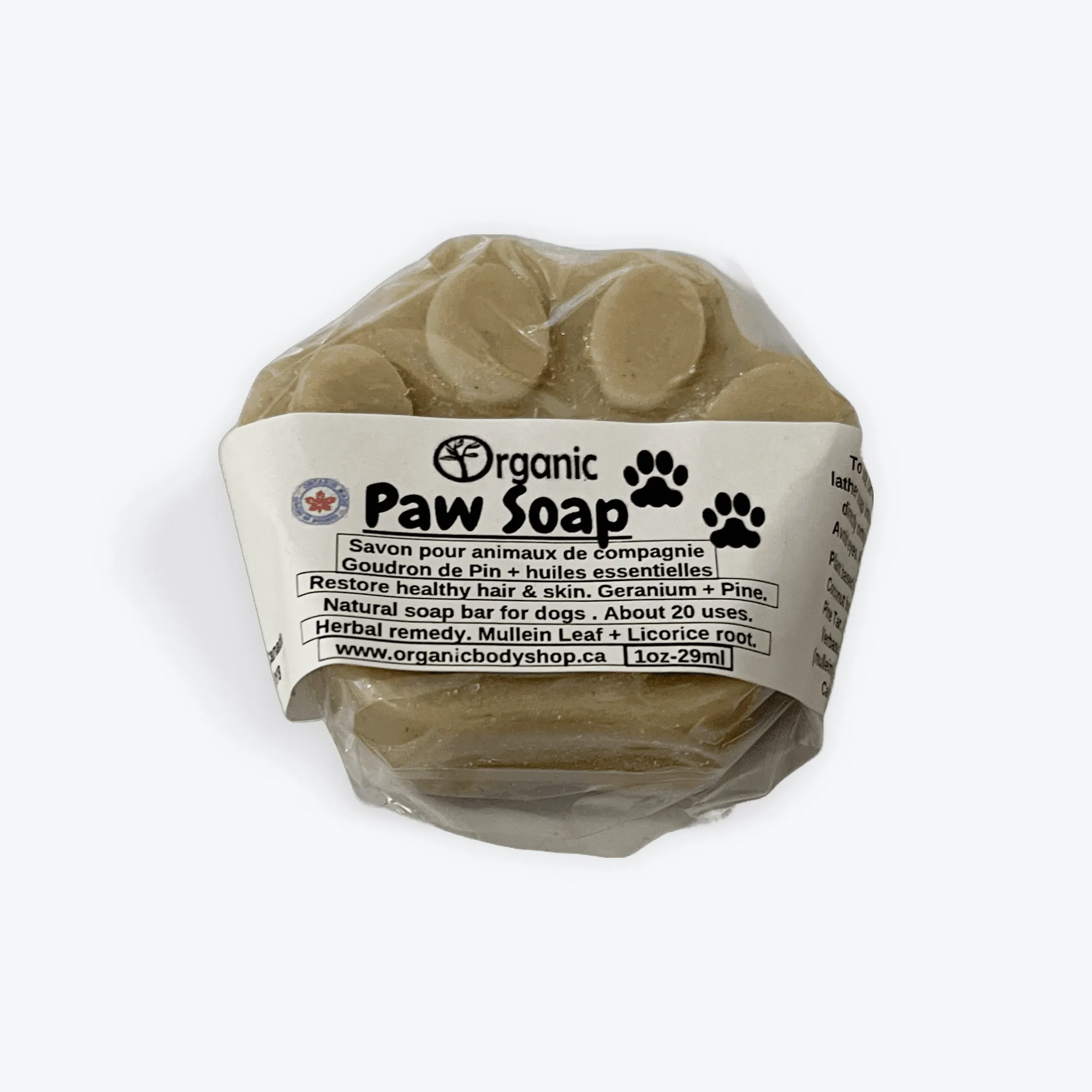
Paw Dog Shampoo Soap Bar.