Quick answer
Use the tall straight sides and large surface area of a HexClad Hybrid Deep Sauté Pan to sear meat, add aromatics and liquid, then finish covered in a low oven or on the stovetop.
Why a deep sauté pan works for braising
Braising needs a pan that can handle high heat for searing and then hold enough liquid to partially submerge the main ingredient. A standard fry pan is too shallow, and a stockpot lacks the wide base for proper browning. The Hybrid Deep Sauté Pan bridges that gap with tall straight sides and a broad cooking surface.
The 7-quart capacity is large enough for a whole chicken or a 3-pound chuck roast, yet the pan is compact enough to fit in most home ovens. The hybrid construction distributes heat evenly during the long, gentle cooking phase.
Liquid and temperature tips
Braising liquid should come about one-third to halfway up the meat — not fully submerging it. Too much liquid turns the dish into a stew; too little risks drying out the meat before it becomes tender. Stock, wine, broth, or even water with aromatics all work.
For stovetop braising, keep the heat low enough that you see an occasional bubble rather than a rolling boil. The oven method is more forgiving: set the temperature between 300°F and 325°F and let the gentle ambient heat do the work.
Steps for braising in a Hybrid Deep Sauté Pan
- Sear the meat on all sides: Heat the pan over medium-high heat with a thin layer of oil. Pat the meat dry, then add it without overcrowding. Sear each side until deeply browned — about 3–4 minutes per side. A common mistake is moving the meat too soon; it releases naturally when properly browned.
- Sauté aromatics and deglaze: Remove the meat and reduce heat to medium. Add diced onion, carrot, or garlic and cook for 2 minutes. Pour in about ½ cup of wine or broth and scrape up the browned bits with a wooden spoon. This step builds the flavor base — skipping deglazing leaves fond stuck to the pan rather than in the sauce.
- Add liquid and return the meat: Add enough stock or broth to reach one-third to halfway up the meat. Nestle the meat back in, add herbs (thyme, bay leaf), and bring the liquid to a gentle simmer. Check that the liquid level is correct — too high and you end up boiling the meat instead of braising it. If using the oven, preheat to 300°F now.
- Cover and cook low and slow: Place the lid on the pan and transfer to the oven, or keep on the stovetop over low heat. Cook until the meat is fork-tender — typically 1.5 to 2.5 hours depending on the cut. Check every 30 minutes to ensure the liquid hasn't evaporated below the one-third mark; add a splash of broth if needed. The pan's lid fits tightly, so you rarely need to add liquid during cooking.
- Rest and serve: Remove the pan from the oven and let it rest uncovered for 10 minutes. Skim excess fat from the surface if desired. The braising liquid can be served as is or reduced on the stovetop for a more concentrated sauce. A common oversight is serving too early — resting allows the juices to redistribute for a more tender bite.
Product used in this guide
-
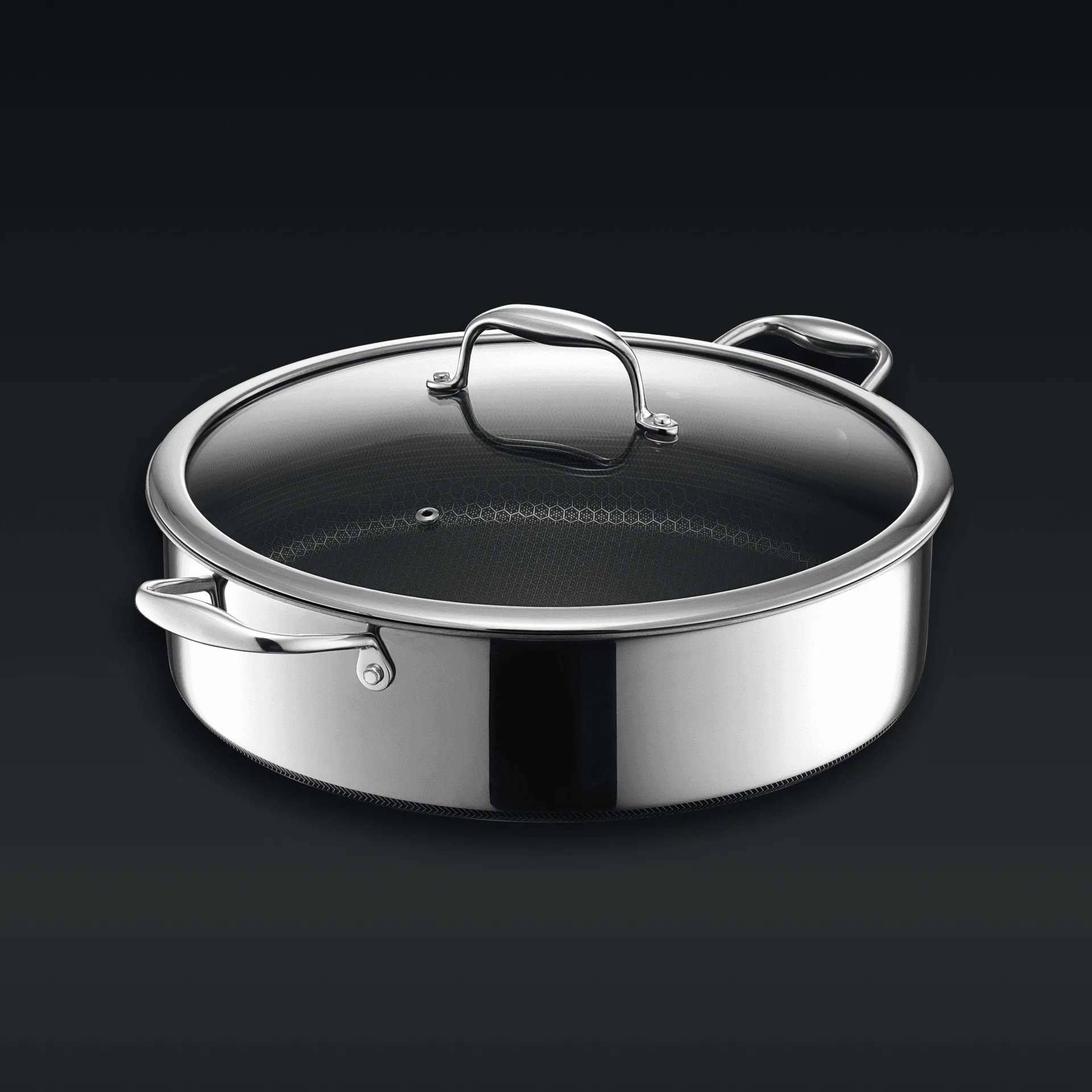
Hybrid Deep Sauté Pan/Chicken Fryer with Lid, 7-Qt: 7-quart capacity with tall straight sides and a large surface area You can sear a large cut of meat without crowding, then add enough braising liquid to cover one-third of the food without spilling.
Hybrid Deep Sauté Pan/Chicken Fryer with Lid, 7-Qt