Why oak bark tea is worth trying
If you enjoy exploring herbal teas beyond the usual leaves and flowers, oak bark offers a distinct, earthy cup. This tea comes from the bark of oak trees and has a long history of traditional use. While the flavor is not for everyone, it is a unique addition to your tea rotation.
The catalog notes that oak bark was traditionally used for conditions including colds and flus and inflammation, and is said to have cooling effects. It also reputedly is high in B12, iron and potassium and acts as an anti-inflammatory, antiseptic and astringent. Keep in mind that these are traditional claims, not proven health benefits.
How to brew oak bark tea
The catalog does not supply specific steeping times or temperatures for this product, so you will need to adjust based on your taste and equipment. Here is a practical approach that works for many bark teas.
- Measure the bark: Start with about one teaspoon of organic oak bark per cup of water. Adjust the amount based on how strong you like your tea.
- Heat the water: Bring fresh, filtered water to a boil. Bark needs hot water to release its compounds, so use water that is fully boiling.
- Steep and taste: Pour the boiling water over the bark and let it steep. Because bark is denser than leaves, it may take longer to extract flavor. Taste periodically until you reach a strength you enjoy.
- Strain and serve: Strain the tea into your cup. You can drink it plain or add a touch of honey or lemon to balance the earthy flavor.
Flavor expectations and balancing tips
Oak bark tea has a strong, woody, and slightly bitter flavor. It is not a delicate floral tea; it is robust and grounding. If the bitterness is too much, try steeping for a shorter time or using less bark. Adding a slice of lemon or a small amount of honey can also help round out the taste.
Because this is a bark tea, you may need to experiment with steeping time more than with leaf teas. Start with a shorter steep, taste, and then continue steeping if you want more depth. This way, you avoid an overly bitter cup.
What the catalog confirms about organic oak bark
-
Organic Oak Bark Tea: This product is premium organic oak bark, sourced from Poland. Knowing the origin helps you understand the product's provenance and quality.
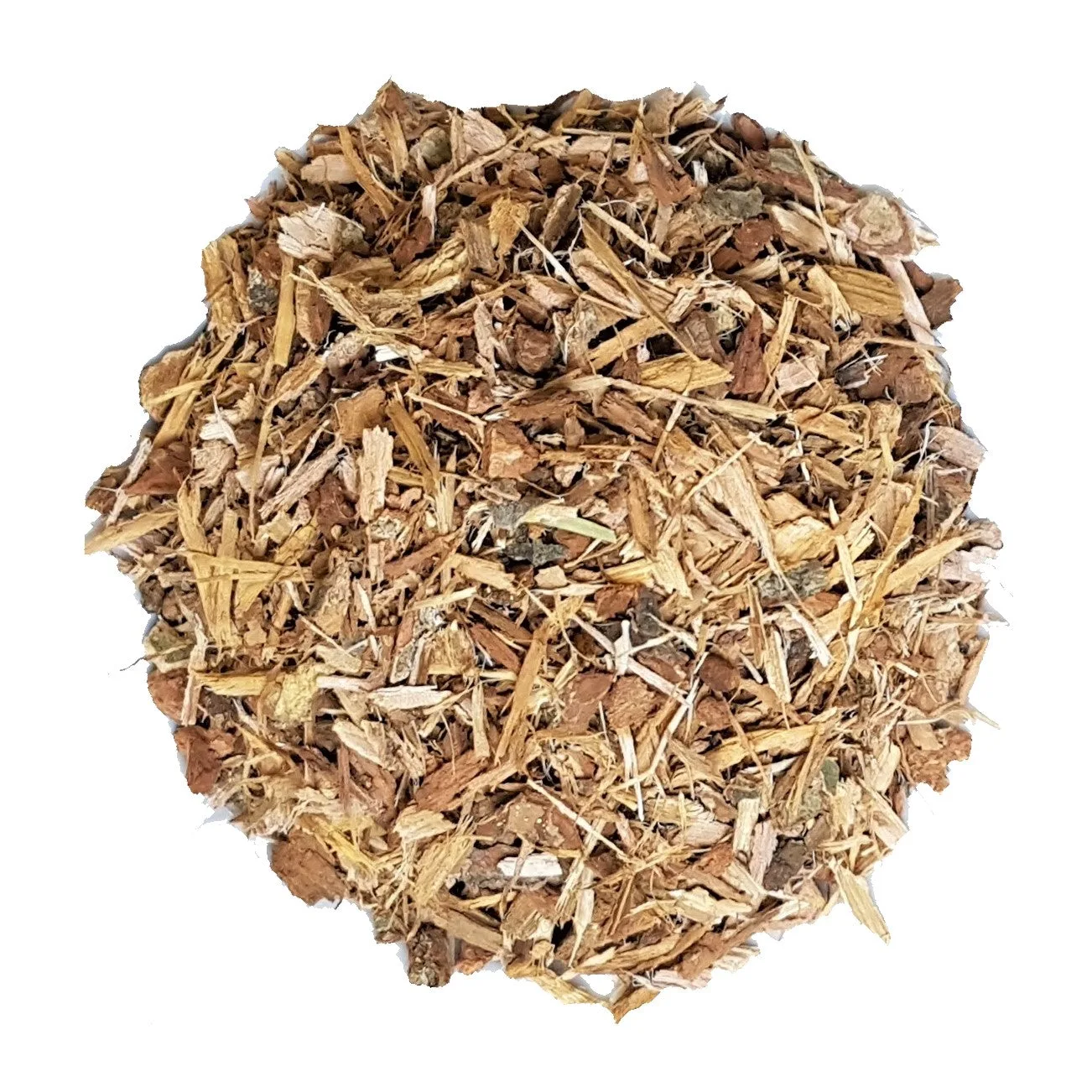
Organic Oak Bark Tea
-
Organic Oak Bark Tea: The catalog mentions traditional uses for colds, flus, and inflammation, and describes it as having cooling effects. This gives context for why people historically drank oak bark tea, but it is not a claim of effectiveness.
-
Organic Oak Bark Tea: It is reputedly high in B12, iron, and potassium. If you are interested in mineral content, this is a notable feature, though it is not a verified nutritional claim.
Choosing the right size for your tea habit
The organic oak bark tea is available in 50g, 100g, and 200g sizes. If you are new to oak bark tea, the 50g size is a good starting point to test your preference. If you already know you enjoy it, the larger sizes offer better value per gram.
Consider how often you plan to brew. A daily cup will go through a 50g bag fairly quickly, so a larger size may be more practical. For occasional tasting, the smallest size is sufficient.
Safety and limitations to keep in mind
The catalog includes a disclaimer that information on traditional uses is for educational purposes only and is not intended as medical advice. It also advises checking with a health care practitioner before self-administering herbs, especially if you are pregnant, have health concerns, or are on medication.
The supplied information does not include specific brewing instructions, so you will need to rely on general bark tea practices. Also, the traditional uses are not verified health benefits, so approach them with curiosity rather than expectation.