Quick answer
Start by auditing what you already own, then build around two or three bra shapes you actually wear and a small set of underwear that matches your real routine. Aim for roughly seven to ten pieces total, in colors that work with your clothes, and replace anything that digs, slips, or sits unworn. A lingerie capsule wardrobe works best when every piece has a clear job, not when it looks impressive in the drawer.
A capsule wardrobe for lingerie is not about owning less for its own sake. It is about opening a drawer and knowing that every bra and pair of underwear in it fits, feels good, and works with what you wear. That usually means fewer pieces than you think, chosen with more care than you are used to.
This guide walks through seven ordered steps, from the first honest audit to the final swap-in. Each step includes the mistake that quietly derails most drawers, so you can avoid rebuilding the same clutter six months from now.
Step 1: Audit what you already own
Empty the drawer onto a flat surface and sort into three piles: wear often, wear sometimes, and never wear. Be honest about the third pile. If a bra has been sitting untouched for a year, the reason is usually fit, discomfort, or a color that clashes with your clothes, and none of those problems fix themselves.
Pay attention to repeats. If three bras are the same shape in different colors, you have already voted with your habits. That shape is your foundation, and the capsule should be built around it rather than around a fantasy version of your wardrobe.
- Try each bra on for thirty seconds before deciding. Memory is unreliable about band tightness and strap slip.
Step 2: Set a realistic piece count
Most people do well with five to seven bras and five to seven pairs of underwear in active rotation, plus a small reserve for laundry day. That range covers daily wear, a workout or two, and one occasion piece without forcing you to do laundry every third evening.
The exact number matters less than the ratio. If you wear bras five days a week, you need enough to rotate so each one rests between wears. Underwear needs more turnover for hygiene, so lean toward the higher end of the range there.
- Count laundry cycles, not drawer space. If you wash weekly, seven pairs of underwear is a practical floor.
Step 3: Choose your bra shapes by neckline and routine
Work backward from your clothes. A low-cut top needs a demi or plunge shape, a high-neck knit works with almost anything, and a backless or strapless dress needs its own solution. Two or three shapes usually cover a full week: one everyday bra, one lower-coverage option for open necklines, and one wireless or soft option for long days.
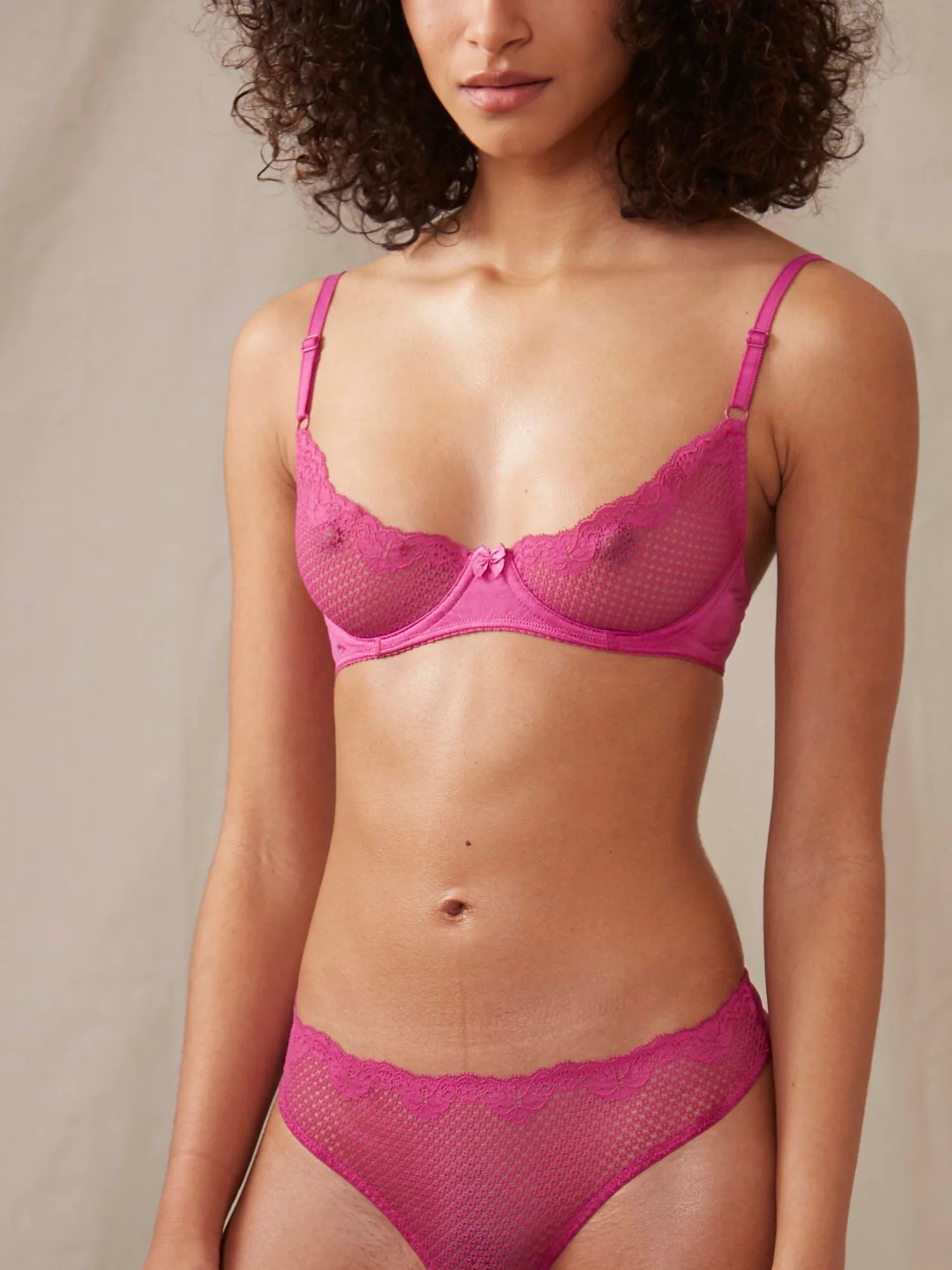
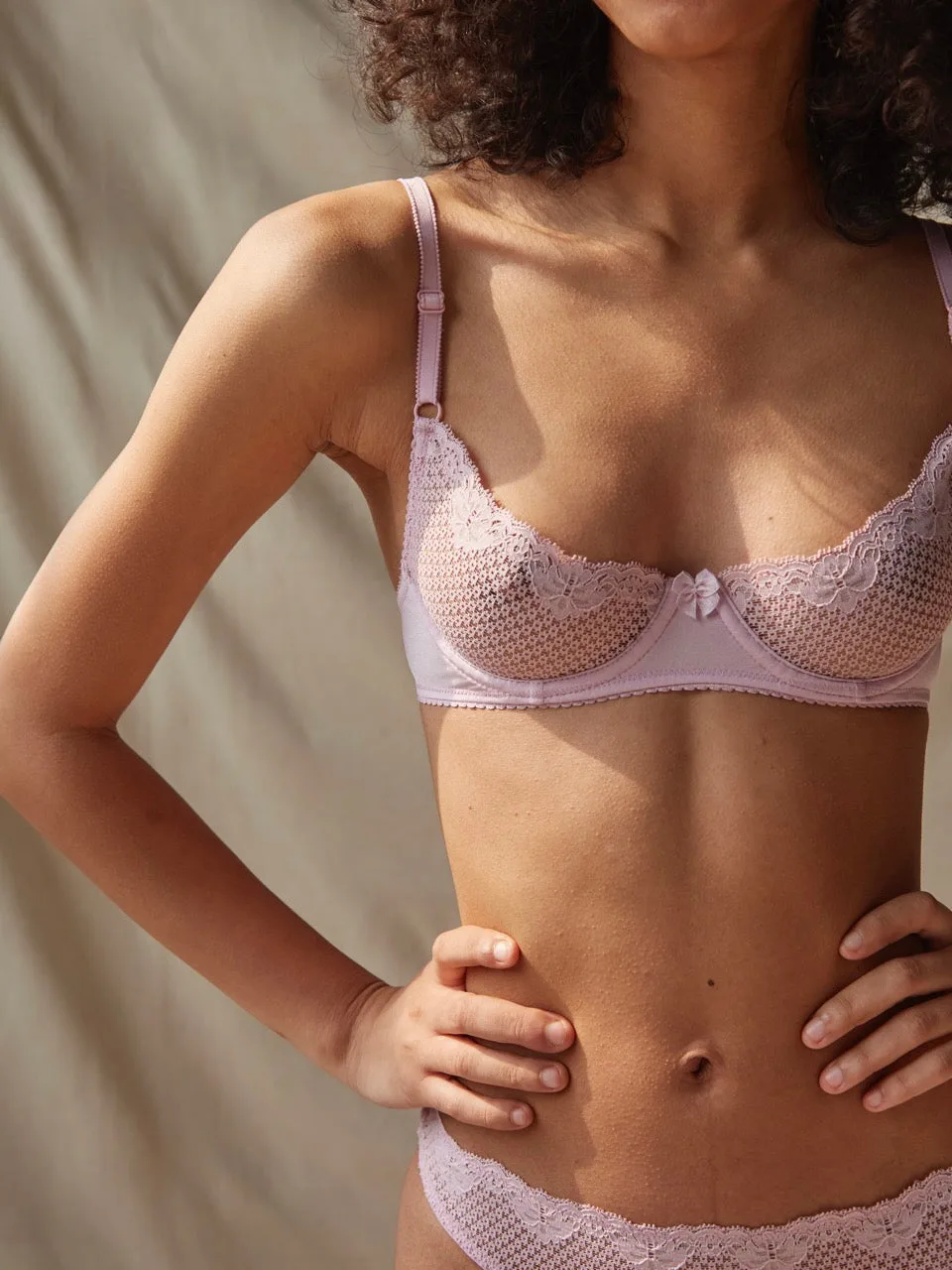
This is where a demi bra earns its place. The https://timpalingeriecn.com/products/alice-demi-bra-sale-94ac6208aed76f9852aa7f64-1422755Alice Demi Bra - Sale uses a single panel of soft lace with no middle seam, which keeps the cup smooth under thinner fabrics while still giving gentle lift. Note that it is final sale, so confirm your size before ordering.
- Match shape to neckline first, color second. A bra that shows above a neckline gets worn once and then buried.
Step 4: Pick a coverage level you will actually wear
Coverage is personal, but the capsule rule is simple: choose the level you reach for on a normal Tuesday, not the one you admire in photos. If you prefer a smooth surface under fitted tops, a lightly padded style may suit you better than an unlined one. If you want the lightest possible feel, stay unlined.
For smaller busts that want a rounder shape without a heavy feel, the Alice Padded Bra is designed for A to C cups with light foam padding and a crochet lace overlay. It keeps the low-cut silhouette while adding a little volume, so it can replace both a padded and a lace bra in one slot.
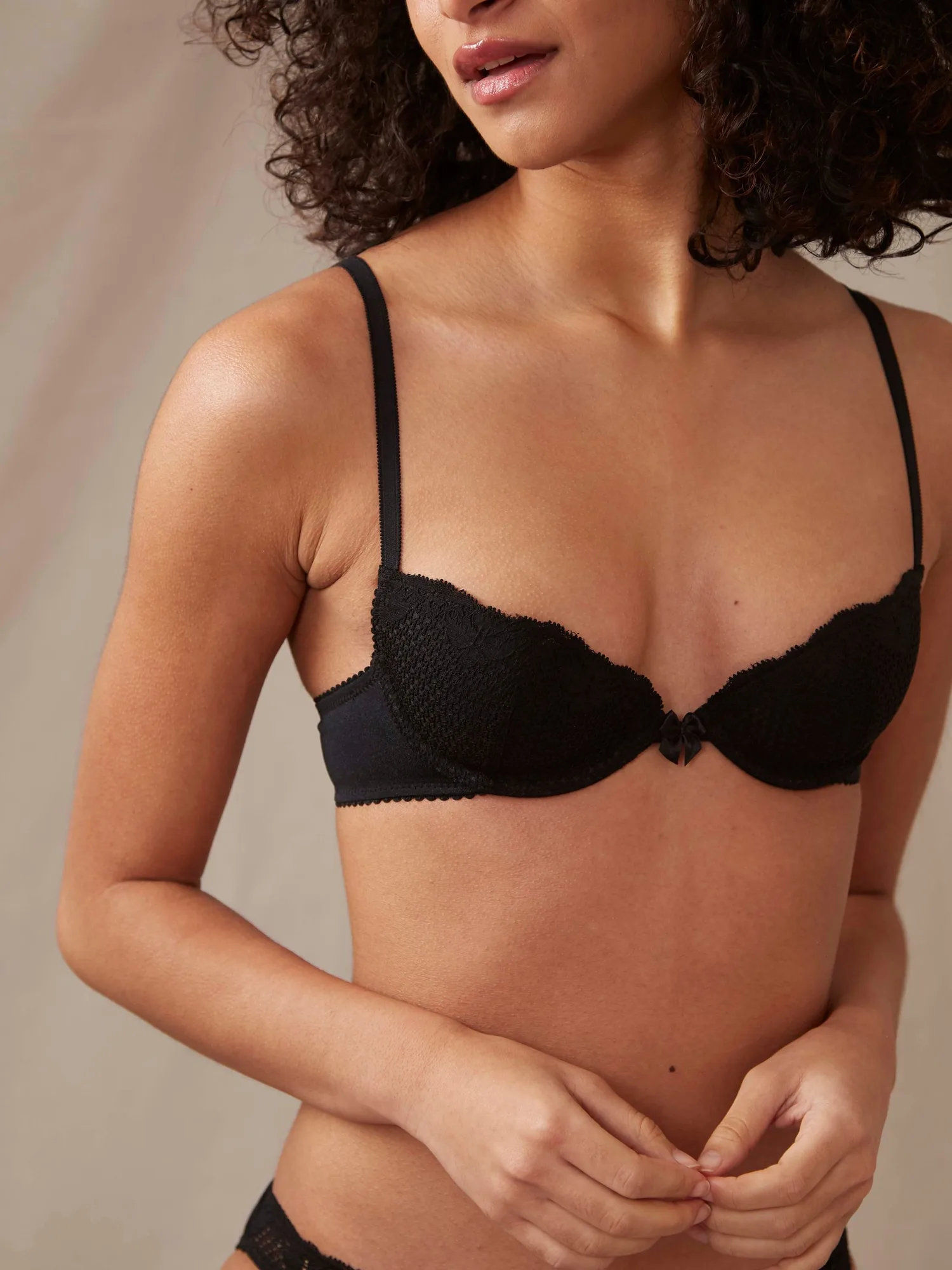
Alice Padded Bra
- If you are between coverage levels, keep the lighter one for daily wear and let the other be your occasion piece.
Step 5: Build the underwear layer around fabric and fit
Underwear is where fit complaints usually start, so treat sizing notes seriously. The Alice Brazilian runs small, so size up. It combines a low-rise cheeky cut with a soft crochet lace back panel and an opaque stretch microfiber front, which makes it a reasonable bridge between a brief and a thong in one drawer.
Keep two or three cuts at most. A cheeky or Brazilian for everyday, a thong for close-fitting clothes, and a brief for comfort days covers nearly every outfit without decision fatigue. All panties are final sale for hygiene reasons, so check the size chart before you commit.
- Wash new underwear once before wearing. It settles the fabric and shows you the true fit.
Step 6: Limit your color palette
Two neutrals plus one color is the easiest formula to maintain. Pick neutrals that match your skin tone or your most-worn clothing, then add a single color you genuinely enjoy. This keeps every bra compatible with most outfits and stops the drawer from splitting into pieces that only work with one top.
If you wear a lot of white and light knits, a skin-tone set does more work than a black one. Black is useful for dark clothing and for evenings, but it is not automatically the most versatile choice.
- Hold each piece against your three most-worn tops before buying. If it clashes with all three, leave it.
Step 7: Fill gaps, then stop
After the first six steps, you will usually see one or two clear gaps: a wireless option for long days, or a plunge for a specific dress. Fill only those gaps, then close the drawer. A capsule fails when it becomes a slow accumulation again.
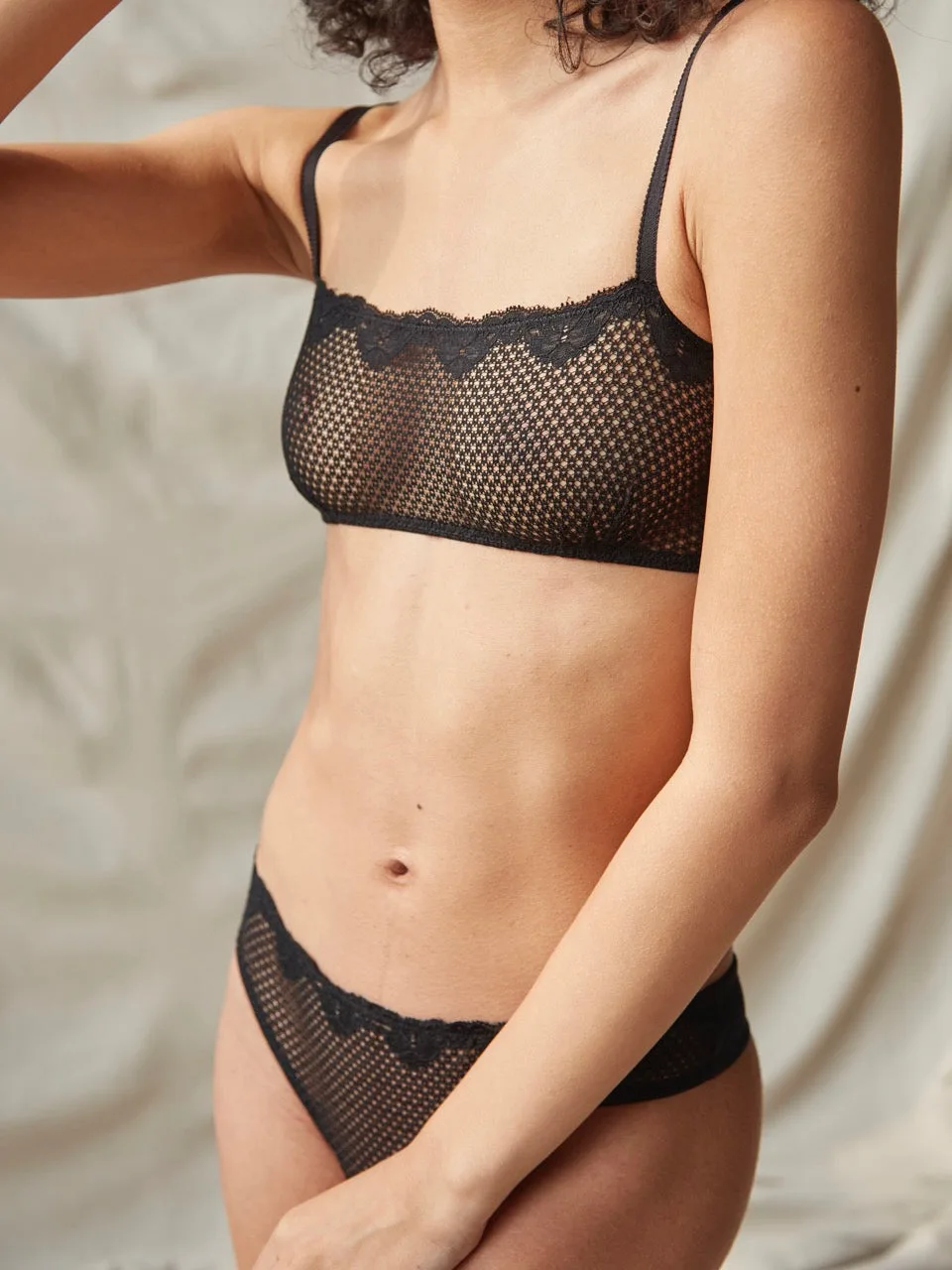
For the wireless slot, the Alice Bandeau bra takes the signature stretch lace into a straight-across, wire-free silhouette with fully adjustable sewn-on straps, which addresses the slipping that plagues most bandeaus. It is built for smaller busts, so it works as a comfort piece rather than a support piece.
- Set a one-in, one-out rule for the first year. It keeps the capsule honest.
Your seven-step capsule checklist
- Audit the drawer: Sort everything into wear often, wear sometimes, and never wear. Note which shapes repeat in the first pile. Checkpoint: if you cannot remember the last time you wore it, it does not enter the capsule.
- Set your numbers: Aim for five to seven bras and five to seven pairs of underwear in rotation, adjusted for how often you do laundry. Checkpoint: enough pieces that nothing is worn two days in a row.
- Choose two or three bra shapes: Pick one everyday bra, one lower-coverage shape for open necklines, and one wireless or soft option. Checkpoint: each shape must match at least three outfits you wear regularly.
- Lock in coverage: Decide between unlined and lightly padded based on what you reach for on a normal day, not on special occasions. Checkpoint: if you hesitate between the two, keep the lighter one for daily wear.
- Choose two underwear cuts: A cheeky or Brazilian for everyday and a thong for close-fitting clothes covers most wardrobes. Checkpoint: read sizing notes, since some styles run small.
- Limit the palette: Two neutrals plus one color keeps every piece compatible with most of your clothing. Checkpoint: test each piece against your three most-worn tops.
- Fill gaps and stop: Add only the one or two pieces that solve a real outfit problem, then close the drawer. Checkpoint: one in, one out for the first year.
Timpa pieces that fit a capsule
- Alice Demi Bra - Sale: Single-panel soft lace cups with no middle seam, soft underwire support, and gentle lift without padding. The seamless cup keeps a smooth line under thin tops, making it a strong everyday demi for a capsule.
- Natacha Demi bra: Double-layered lightweight mesh creates a moiré effect and the Timpa swoop-and-lift shape without foam padding. A smoother alternative to lace for people who want the same silhouette in a more everyday texture.
- Alice Brazilian: Low-rise cheeky Brazilian with a crochet lace back panel and opaque stretch microfiber front; runs small, so size up. One cut that bridges brief and thong, which reduces how many underwear styles you need to keep.
- Alice Padded Bra: Designed for smaller busts (A-C cups) with light foam padding and a crochet lace overlay in a half-cup style. Adds smooth volume without gapping, so it can cover both the padded and the lace slot in a small capsule.
A lingerie capsule wardrobe is less about a perfect list and more about a repeatable filter: does it fit, does it feel good, and does it work with what you actually wear? Work through the seven steps once, fill only the real gaps, and the drawer stays useful instead of crowded.