Quick answer
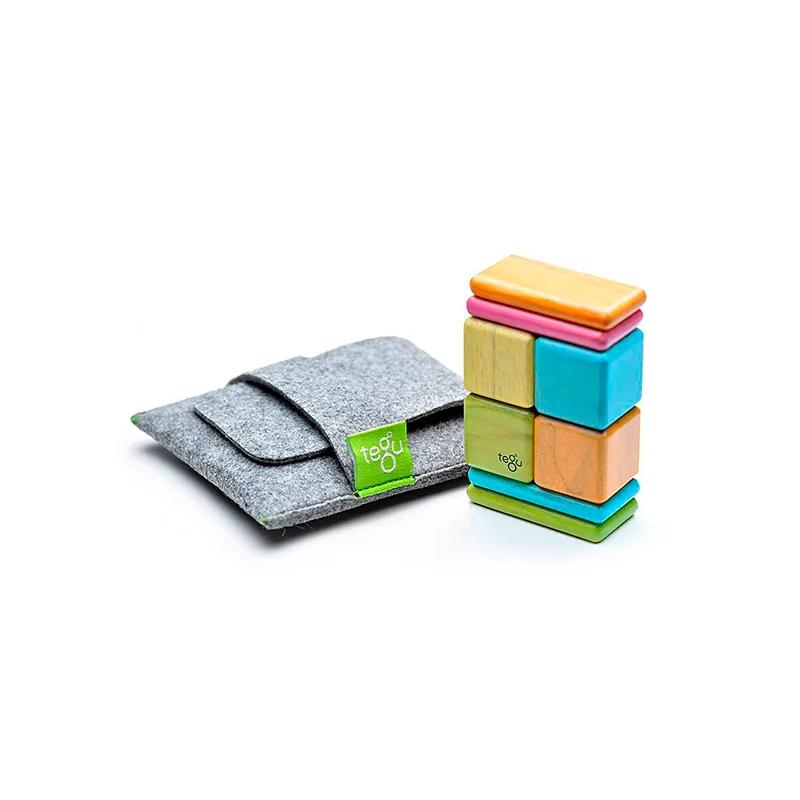
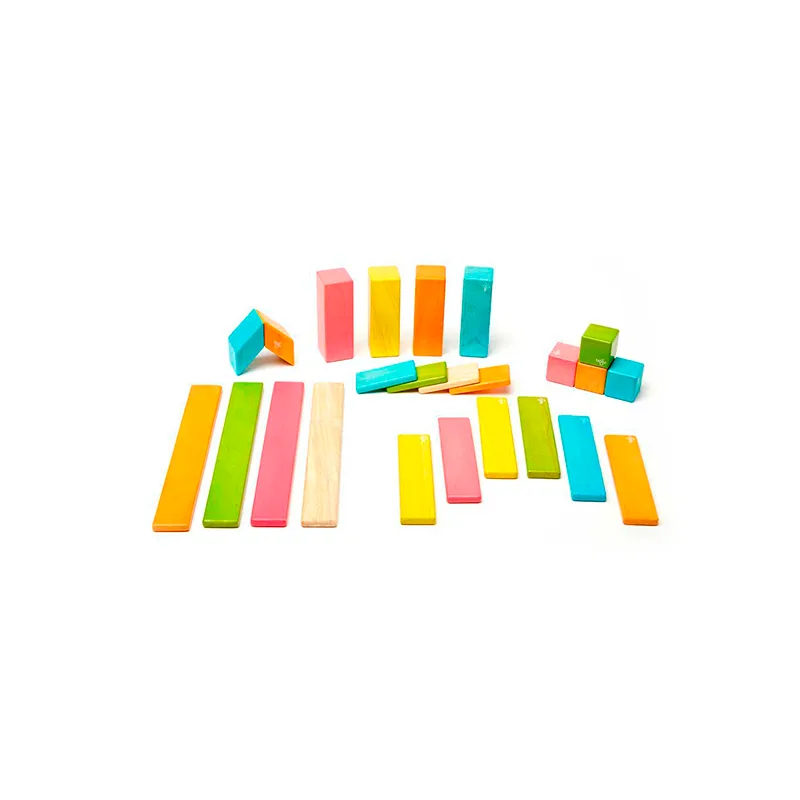
Build a magnetic racer by making a flat chassis first, then adding a raised cabin and a front bumper. Use long planks for the frame, cubes at the corners, and columns as uprights. Tegu magnets hold the joints, but they only pull in one direction, so keep every piece flat on the table until the chassis is square. The 24-Piece Set has enough shapes for one solid racer, and the Pocket Pouch works for a smaller version.
Pick the right block shapes before you start
A racer needs a long, low base, so sort your pieces by shape first. Long planks give you the length, short planks close the ends, and cubes act as corner joints where two directions meet. Columns are your uprights for the cabin or spoiler, and parallelograms add an angled nose if you want a faster look.
If you only have a Pocket Pouch, you get 8 blocks in 2 shapes: 4 cubes and 4 short planks. That is enough for a compact racer, but you will not have long planks or columns, so plan for a short, wide body instead of a long one.
Lay the chassis flat and check the corners
Put two long planks parallel on the table, then bridge them with short planks at both ends. The magnets will snap the pieces together, but they will not stop the frame from twisting. Press down on all four corners and look along the length of the chassis. If one corner lifts, rotate that plank 180 degrees and try again.
This is the step where most builds fail. A chassis that looks fine on the table can be slightly rhomboid, and every piece added on top will lean. Fix it now rather than later.
Add the cabin and front bumper
Stand two columns upright on the chassis, one on each side, about a third of the way back from the front. Cap them with a short plank to make a roof. If the columns feel loose, move them inward by one block width so the roof plank can reach both tops without pulling them together.
For the bumper, place a single cube at the very front, centered. A cube here gives the nose a blunt, sturdy end that survives a crash into a sofa leg. If you want a pointed nose, swap the cube for a parallelogram, but expect the front to be less stable.
Test the roll and adjust the weight
Push the racer gently across a smooth floor. A good build rolls in a straight line for at least a few feet. If it veers, the chassis is probably still twisted, or one side is heavier because you added a column on only one side. Add a matching column on the opposite side to balance it.
Tegu blocks do not include wheels, so this racer slides rather than rolls on true axles. That is a design limitation of the system, not a flaw in your build. On hardwood or tile it glides well; on carpet it will stop quickly.
Build steps at a glance
- Sort your shapes: Separate long planks, short planks, cubes, and columns into piles so you can see whether you have enough for a chassis plus a cabin. Checkpoint: if you have fewer than four long planks, build a short, wide racer instead of a long one.
- Build the flat chassis: Place two long planks parallel, then connect them at both ends with short planks. Press all four corners flat against the table. Checkpoint: sight down the length of the chassis. Any visible twist means you should rotate a plank and rebuild before adding height.
- Add corner cubes: Set a cube on top of each corner where the long and short planks meet. These cubes lock the two directions together and give the body a solid feel. Common mistake: stacking cubes in the middle of the chassis instead of the corners, which adds weight without adding stiffness.
- Raise the cabin: Stand two columns on the chassis, one per side, and cap them with a short plank. Keep the columns at the same distance apart as the roof plank is long. Checkpoint: if the roof pulls the columns inward, move the columns one block width farther apart.
- Fit the front bumper: Center a single cube at the front edge of the chassis. This gives the racer a blunt nose that holds up to collisions. Common mistake: using a parallelogram as a nose on a first build, which looks sharp but tips sideways easily.
- Test and balance: Slide the racer across a smooth floor. If it curves, check the chassis for twist and make sure both sides have the same number of blocks. Next step: swap the roof plank for a mega plank to make a longer, heavier racer, then compare how far each one slides.
Which Tegu set to build with
-
24-Piece Set Magnetic Wooden Blocks Tegu Classics: The 24-Piece Set includes 24 blocks in 6 shapes: 4 medium columns, 4 mega planks, 6 long planks, 4 short planks, 4 cubes, and 2 parallelograms. This is the best single set for a full-size racer because it has both long planks for the chassis and columns for the cabin.
-
Original Pocket Pouch Magnetic Wooden Blocks 8 pieces: The Original Pocket Pouch includes 8 blocks in 2 shapes: 4 cubes and 4 short planks. Use it for a small racer you can build and rebuild in a restaurant or on a plane, but expect a shorter body with no upright cabin.