Quick answer
To build a cedar raised bed with routed side boards, use the Cedar Routed Side Board 21 in. x 3 3/8 in. as your shortest board, then follow a simple assembly sequence that ensures snug joints and a level structure.
Why choose routed side boards?
Routed side boards have a decorative profile milled into one face, giving your raised bed a finished look without extra trim. The 21-inch board from Greenes Fence is the shortest option in their cedar plank line, making it ideal for small beds or for filling gaps in custom layouts. Its untreated cedar resists rot naturally and can be left as-is or painted.
Board size and compatibility
The Cedar Routed Side Board measures 15/16 inch thick by 3 3/8 inches tall by 21 inches long. Because it is shorter than standard planks, you will need more boards per course or use it only for the short sides of a rectangular bed. Pair it with longer routed boards to maintain a consistent profile across all sides.
Steps to build your cedar raised bed with routed side boards
- Plan your bed dimensions and board count: Decide the outer dimensions of your raised bed. For a 4x4 bed using 21-inch routed boards, you will need two boards per side per course (each side = 42 inches). Multiply by the number of courses (typically 2-3) to get your total board count. Add corner posts of 4x4 pressure-treated or cedar lumber. Sketch your layout first; a 4x4 bed requires at least 16 boards per course if using only 21-inch planks.
- Cut corner posts to height: Cut four 4x4 posts to your desired bed height plus 6-8 inches for ground penetration. For a 12-inch-tall bed, cut posts to 18-20 inches. Routed boards are 3 3/8 inches tall, so three courses will give you roughly 10 inches of interior height. Common mistake: cutting posts too short. Always add extra length for sinking into the ground.
- Assemble the first course of boards: Place your corner posts at the bed corners. Attach the first routed board to the outside face of each post using 2-inch deck screws. Start with one long side, then attach the short sides. Use a level to ensure the first course is perfectly horizontal. Check that the routed profile faces outward for a clean look; this is easy to mix up on the first board.
- Stack and attach subsequent courses: Stack the second course of boards directly on top of the first, staggering the joints so they do not align with the course below. Screw each board into the posts. Repeat for the third course if needed. Staggering joints adds strength; if you skip this, the bed may twist over time.
- Finish and fill the bed: Once all courses are attached, check that the top is level. If desired, paint or stain the untreated cedar. Line the bottom with landscape fabric to prevent soil loss, then fill with your garden mix. Untreated cedar will weather to a silver-gray; staining now will preserve the original color longer.
Product facts
-
Cedar Routed Side Board 21 in. x 3 3/8 in. RCPBRB21: Our Shortest Board for Your Planter Box. It is made from untreated cedar wood and can be painted or stained to any color of your choosing or left in its natural state. Size: 15/16" (thick) x 3 3/8" (height) x 21" (length). Because this board is only 21 inches long, it is best used for the short sides of a small raised bed or as a filler piece; you will need multiple boards per course to complete a standard 4x4 bed.
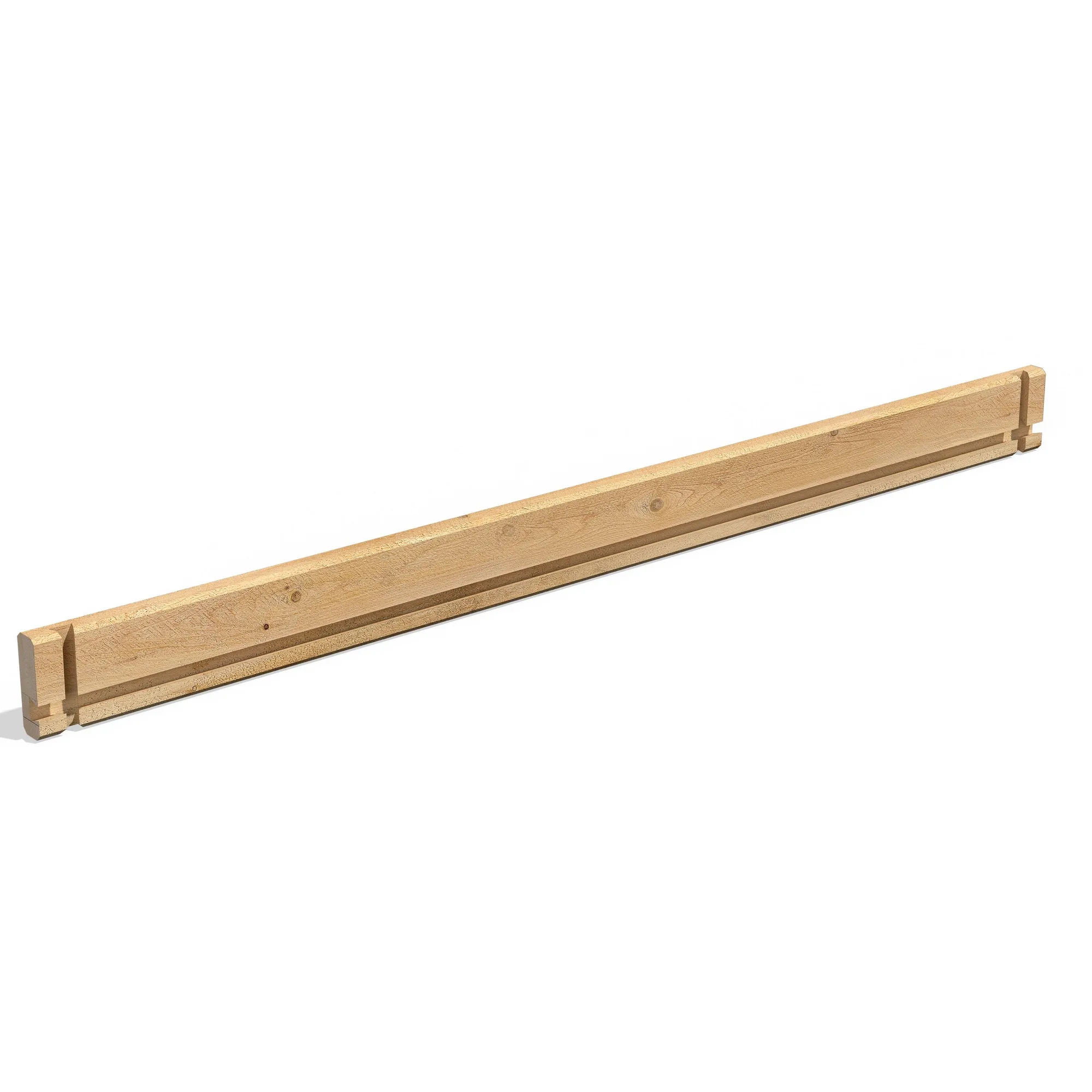
Cedar Routed Side Board 21 in. x 3 3/8 in. RCPBRB21