Quick answer
To build and experiment with Engino fluid dynamics models, start with a compatible Engino set such as the Discovering STEM Technology of Machines: How Cars Work or the Discovering STEM Mechanics Gears & Worm. Follow the included booklet to assemble a model that involves air or water flow, then test variables like speed or resistance. Always check that moving parts spin freely before adding fluid, and keep the build on a water-resistant surface.
Engino building sets turn abstract physics into hands-on play, and fluid dynamics is one of the most exciting topics to explore. Whether you are a parent, teacher, or hobbyist, this guide walks you through building and experimenting with models that demonstrate how air and water create motion, drag, and lift.
You do not need a dedicated fluid dynamics kit to get started. Many Engino sets include mechanisms—like gears, worm drives, and wheels—that can be adapted to test fluid behavior. The steps below focus on practical builds and experiments you can run with common Engino parts, plus tips to avoid frustration.
Choose the right Engino set for fluid dynamics experiments
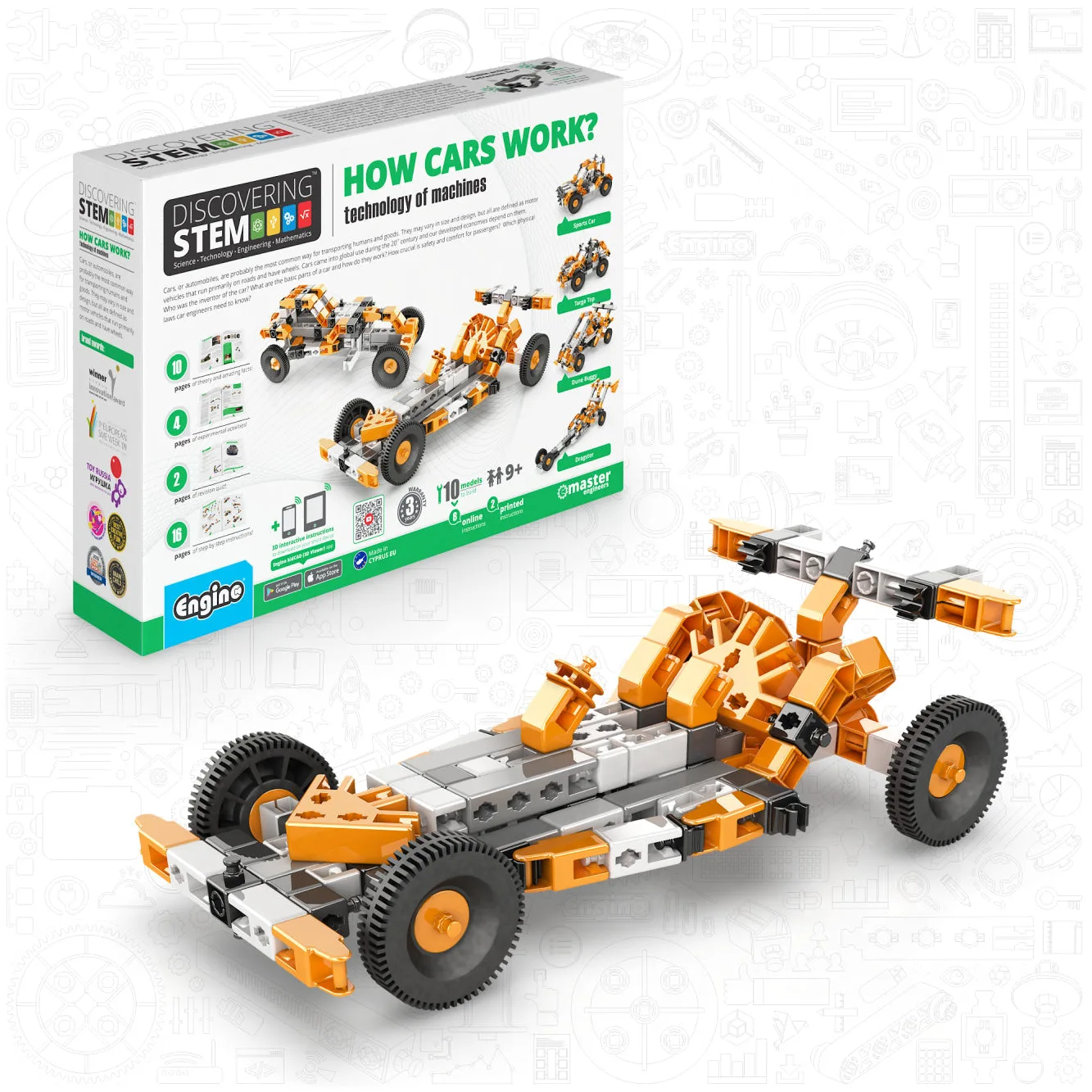
Not every Engino set is designed for fluid dynamics, but several include components that work well for air- or water-based tests. The Discovering STEM Technology of Machines: How Cars Work set is a strong starting point because its 10 models explore motion, friction, and gearboxes—concepts that directly relate to how fluids create drag or propulsion. For experiments with rotational speed and torque, the Discovering STEM Mechanics Gears & Worm set offers 12 models that demonstrate gear ratios and worm drives, which you can pair with a fan or water wheel.
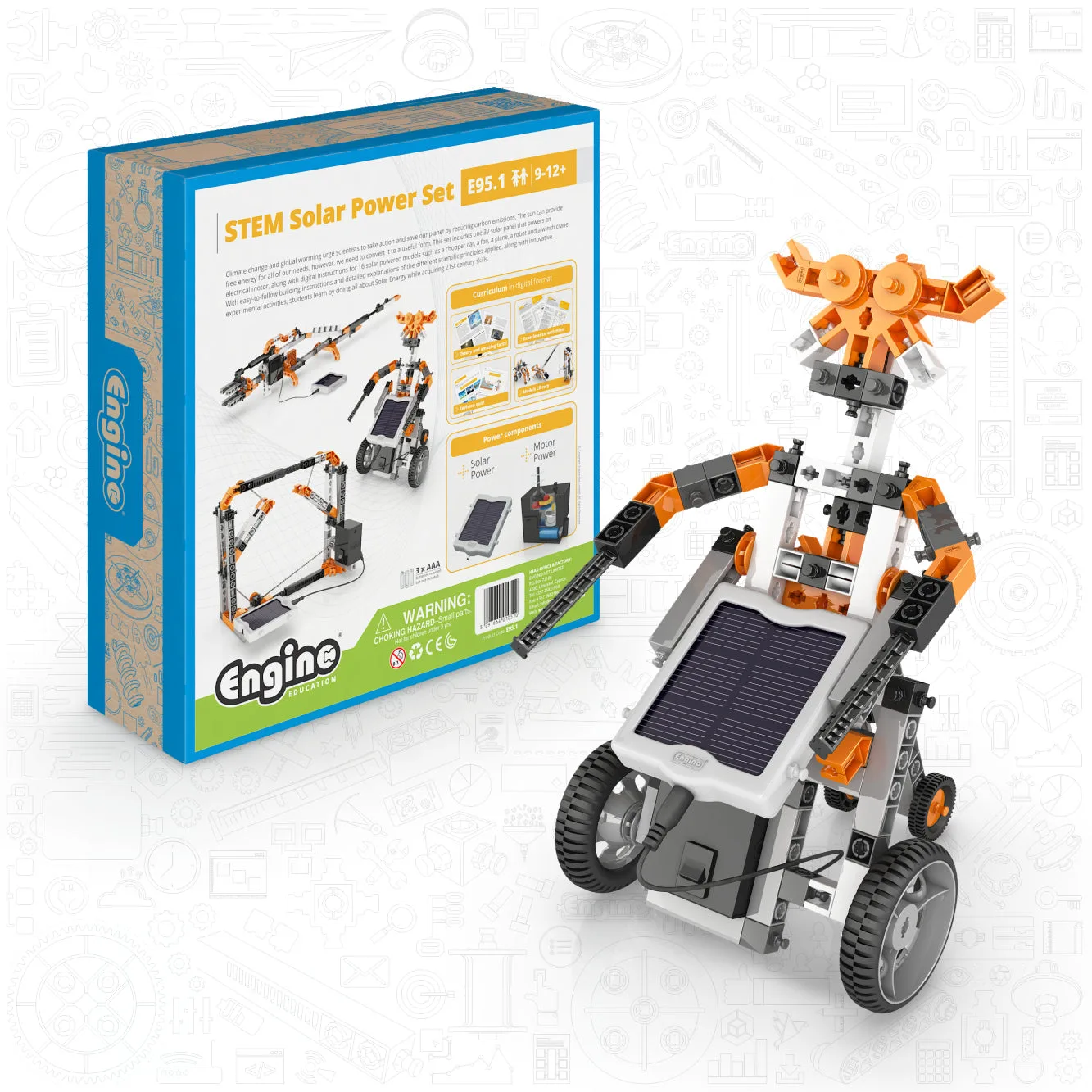
If you want to introduce renewable energy, the STEM Solar Power Complete Building Set includes a 3V solar panel, DC motor, and 142 precision-fit components. While it focuses on solar electricity, you can use its motor and structural parts to build a fan or paddle wheel that moves air or water, making it a versatile option for fluid dynamics experiments.
- Check the recommended age range: most fluid dynamics builds suit ages 9+ due to small parts and complex mechanisms.
- Look for sets with a motor or solar panel if you want powered experiments; manual sets work for passive flow tests.
Build a model that interacts with air or water
Start with a simple mechanism from your set’s booklet, such as a car or a gear train. To adapt it for fluid dynamics, attach a lightweight paddle, fan blade, or paper sail to a rotating axle. For example, in the How Cars Work set, you can replace the rear wheels with a paddle wheel and place the model in a shallow tray of water. The gearbox will then transfer the water’s force to the axle, demonstrating how fluid resistance can drive motion.
When building, follow the snap-fit instructions carefully. Engino’s system is designed for quick assembly, but misaligned parts can cause friction that ruins your experiment. Always test that the axle spins freely by hand before adding any fluid. If you are using the Gears & Worm set, try building a worm drive that lifts a small cup of water—this shows how rotational speed converts to linear motion.
- Common mistake: forcing parts together. If a connector does not snap easily, check orientation—do not bend it.
- Checkpoint: spin the axle with your finger. It should rotate smoothly for at least two full turns without wobbling.
Set up a controlled experiment
A good fluid dynamics experiment changes one variable at a time. Decide whether you are testing air or water. For air, use a small fan or hairdryer on a low setting; for water, use a baking dish with 2–3 cm of water. Place your model so the fluid hits the paddle or sail consistently. Measure the result—how far the model travels, how fast the axle spins, or how much water the worm drive lifts—using a stopwatch and ruler.
Record your baseline result, then change one thing: the fluid speed, the paddle size, or the gear ratio. For instance, swap a small gear for a larger one and see how the output speed changes. The Gears & Worm booklet explains how gear ratios trade force for speed, which is exactly what you will observe. Repeat each test three times to average out random variation.
- Use a level surface: tilt can cause the model to drift and skew results.
- Keep water away from the solar panel and motor unless they are specifically designed for wet environments.
Troubleshoot common problems
If your model does not move, first check for mechanical binding. Remove the paddle or sail and spin the axle again. If it still sticks, look for over-tightened connectors or a gear that is pressed too hard against another. In the How Cars Work set, the gearbox can jam if the gears are not seated properly; the booklet’s diagrams show the correct spacing. Another common issue is a paddle that is too heavy or too large, which can stall a small motor. Trim it down or use lighter material.
If the model moves but results are inconsistent, your fluid flow may be uneven. For air tests, move the fan farther away and aim it at the center of the paddle. For water tests, make sure the water is still before each trial. Also, check that the model’s frame is rigid—flexing wastes energy and reduces repeatability.
- Common mistake: ignoring friction. A drop of silicone lubricant on plastic axles can help, but avoid oil near water experiments.
- Checkpoint: if the model works by hand but not with fluid, the fluid force is too weak—increase speed or paddle area.
Extend the learning with real-world connections
Once your basic experiment works, connect it to real engineering. The Amusement Park Set includes motor-powered rides like the Ferris wheel and London Eye, which rely on gear trains and support structures to rotate smoothly against air resistance. You can build a small Ferris wheel and measure how long it takes to stop when the motor is off—a direct look at drag. The Solar Power set lets you power a fan with sunlight, showing how renewable energy can drive fluid motion.
For older students, challenge them to design a model that lifts a weight using water pressure or wind. The Creative Builder sets, such as the 15 Multimodel Set or the 10 Multimodel Set, provide a variety of frames and wheels that can be repurposed. Remember that fluid dynamics is about trade-offs: bigger paddles catch more fluid but add weight, and higher gear ratios increase speed but reduce force.
- Ask learners to predict outcomes before each test, then compare with results.
- Document experiments with photos or a simple table to build a portfolio.
Step-by-step: build and run a fluid dynamics experiment
- Select a base model and identify a rotating axle: Choose a simple build from your Engino set, such as a car or gear train. Locate an axle that spins freely and can be extended outside the frame. Checkpoint: the axle should turn by hand without grinding or wobbling.
- Attach a paddle, fan, or sail to the axle: Use lightweight materials like cardstock or thin plastic. Secure it so it rotates with the axle and does not hit the frame. Common mistake: making the paddle too heavy—this stalls small motors.
- Set up a controlled fluid source: For air, use a fan on a fixed setting. For water, fill a tray with 2–3 cm of water and place the model so the paddle is submerged. Checkpoint: the fluid should hit the paddle consistently, not splash randomly.
- Run a baseline test and record results: Measure how far the model travels, how fast the axle spins, or how much water is lifted in 10 seconds. Repeat three times. Use a stopwatch and ruler for quantitative data.
- Change one variable and retest: Adjust fluid speed, paddle size, or gear ratio. Keep everything else the same. Record the new result. Common mistake: changing multiple variables at once—you won’t know what caused the difference.
- Analyze and explain the trade-offs: Compare results. Did a larger paddle increase force but reduce speed? Did a higher gear ratio increase speed but reduce lifting capacity? Connect findings to real-world examples like wind turbines or water wheels.
Engino sets that support fluid dynamics experiments
- Engino Discovering STEM Technology of Machines: How Cars Work, Building Toys for Kids Ages 9+ (10 Models to Build): Build 10 functional models, from city cars to dragsters, while exploring the science behind motion, friction, gearboxes, and safety systems. The included booklet combines theory, experiments, and quizzes. The gearbox and wheel mechanisms can be adapted with paddles or sails to test fluid resistance, and the booklet provides a structured way to introduce variables.
- Engino Discovering STEM Mechanics Set- Gears & Worm: Engineering Toys for Kids Ages 9+ (12 Models to Build): Young engineers explore gear ratio, force-speed trade-offs, bevel and crown gears, rack-and-pinion, and worm drives while building real working machines. The booklet teaches how gears reduce or increase speed, change force, and transfer motion. Worm drives are excellent for lifting water slowly, and the gear ratio experiments directly relate to how fluid force can be converted into different speeds.
- Engino STEM Solar Power Complete Building Set, Learn Renewable Energy, For Kids Ages 9–12+ (16 Solar Models to Build): Includes a 3V solar panel, DC motor, and 142 precision-fit ENGINO components, allowing learners to build, experiment, and understand how sunlight can be converted into electricity to power real mechanical models. The solar panel and motor can power a fan or paddle wheel for fluid dynamics tests without batteries, and the large component count supports custom builds.
Building and experimenting with Engino fluid dynamics models turns abstract physics into memorable, hands-on learning. Start with a set that matches your learner’s age and interests, follow the steps above, and let curiosity guide the variables. With a bit of patience and a focus on one change at a time, you will create experiments that stick.