A great https://kindaero.store/products/knife-set-97190https://kindaero.store/products/knife-set-97191https://kindaero.store/products/knife-set-97194https://kindaero.store/products/knife-set-97195knife set is the backbone of any well-functioning kitchen. Whether you are a home cook who prepares meals nightly or an occasional weekend chef, having the right blades can transform your cooking experience. But with so many options on the market, it is easy to feel overwhelmed. Do you need a full block of knives, or can you get by with just a few essentials? The answer depends on your cooking style, budget, and the types of dishes you prepare most often.
In this guide, we will walk you through the key knives every kitchen should have, how to choose between different blade styles like chef knife, santoku, and carving knife, and how to build a set that fits your needs without wasting space or money. By the end, you will know exactly which knives to prioritize and how to care for them so they last for years.
Start with the Essentials: The Core Three Knives
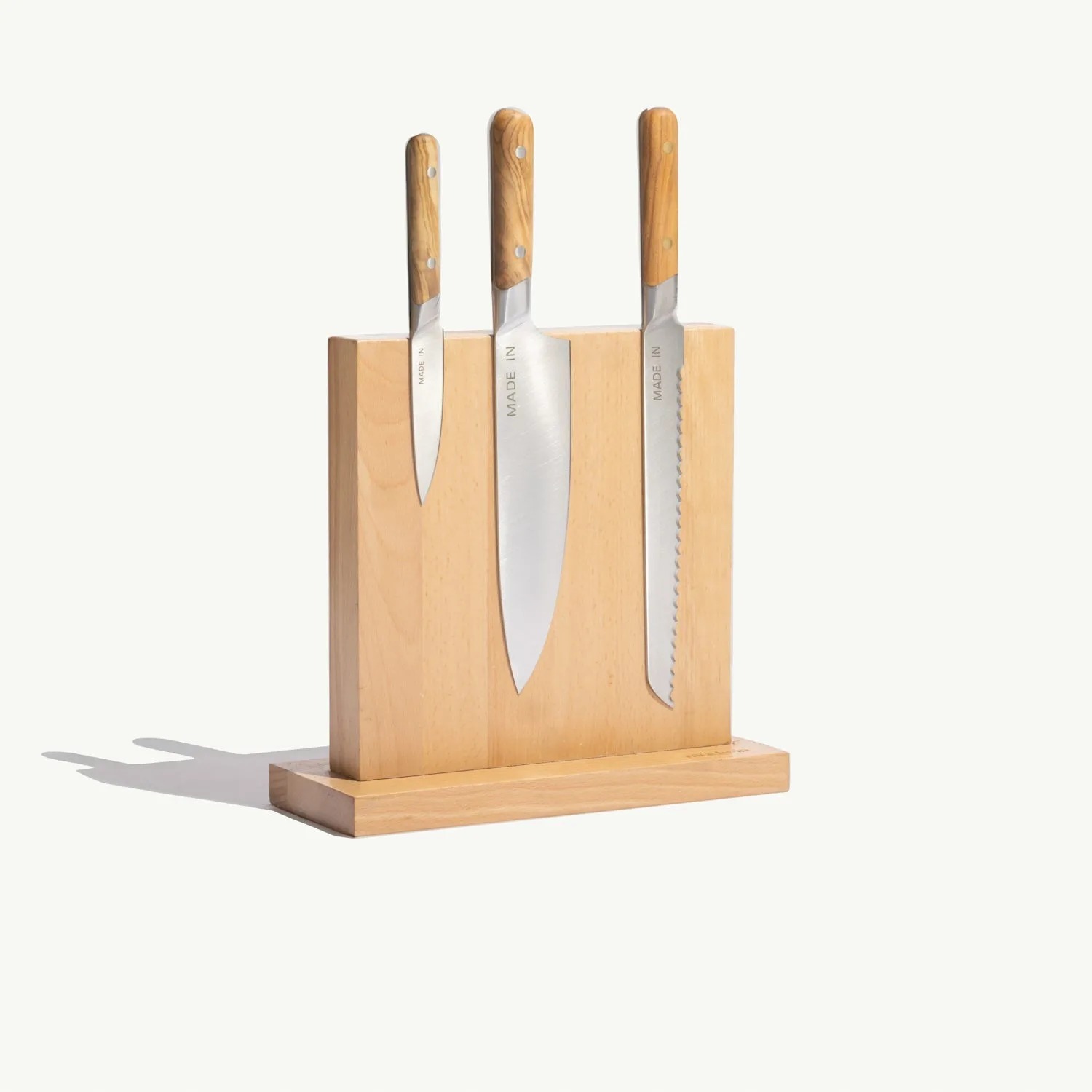
Every knife set should begin with three versatile blades: a chef knife, a paring knife, and a serrated bread knife. The chef knife is your workhorse, ideal for chopping vegetables, slicing meat, and mincing herbs. A good chef knife typically has an 8-inch blade that provides balance and control. For those who prefer a lighter, more agile feel, a santoku knife is an excellent alternative. Its shorter, wider blade and granton edge help reduce friction, making it perfect for slicing, dicing, and mincing with precision.
The paring knife is your go-to for small, intricate tasks like peeling fruit, deveining shrimp, or trimming herbs. A 3- to 4-inch blade gives you maximum control. Finally, a serrated bread knife handles crusty loaves, delicate cakes, and even tomatoes without crushing them. Together, these three knives cover 90% of everyday kitchen tasks. If you are building a set from scratch, start here.
- Chef knife: 8-inch blade for general chopping and slicing
- Santoku: 5-7 inch blade with granton edge for precision cutting
- Paring knife: 3-4 inch blade for peeling and detail work
- Serrated bread knife: 8-10 inch blade for bread and soft produce
Expand Your Set with Specialty Knives
Once you have the core three, consider adding specialty knives for specific tasks. A carving knife is essential for roasts, poultry, and larger cuts of meat. Its long, thin blade allows you to create thin, even slices without tearing the meat. For deboning chicken or fish, a boning knife with a flexible blade gives you the control to follow bones closely and reduce waste.
A utility knife sits between a paring knife and a chef knife in size and is great for slicing sandwiches, cheese, or medium-sized produce. If you work with a lot of seafood, a fillet knife is a smart addition. Specialty knives expand your capabilities and make advanced cooking techniques easier, but they are not necessary for everyday cooking. Only add them if you regularly prepare the dishes they are designed for.
- Carving knife: 8-12 inch blade for roasts and poultry
- Boning knife: 5-6 inch flexible blade for deboning
- Utility knife: 4-6 inch blade for sandwiches and cheese
- Fillet knife: 6-9 inch thin blade for fish
Chef Knife vs Santoku: Which One Is Right for You?
One of the most common debates among home cooks is chef knife versus santoku. Both are versatile, but they have distinct differences. The chef knife has a curved blade that allows for a rocking motion, which is ideal for chopping herbs and mincing garlic. It is typically heavier and longer, giving you more leverage for dense vegetables and meat. The santoku, on the other hand, has a flatter edge and a shorter blade, which makes it better for push-cutting and slicing. Its granton edge (the dimples along the blade) reduces sticking, so food slides off easily.
If you often rock your knife while chopping, a chef knife may feel more natural. If you prefer a straight up-and-down motion or work with lots of vegetables, a santoku could be your best friend. Many home cooks eventually own both, but if you are starting out, think about your most common cutting style. Either way, investing in a high-quality version of either knife will elevate your cooking.
- Chef knife: curved blade, rocking motion, heavier, longer
- Santoku: flat edge, push-cutting, lighter, granton edge
How Many Knives Do You Really Need?
A common mistake is buying a massive knife block with 15 or more knives, only to use three of them regularly. A well-curated knife set of five to seven knives is more than enough for most home cooks. Start with the core three, then add a carving knife if you roast meat often, a boning knife if you break down poultry, and a utility knife for everyday slicing. Beyond that, you are entering specialty territory.
Quality matters far more than quantity. A single high-end chef knife will outperform a dozen cheap blades. Look for knives made from high-carbon stainless steel, which holds an edge longer and resists rust. Full tang construction (where the blade extends through the handle) provides better balance and durability. If you are building a set gradually, invest in the best knife you can afford for each category.
- Start with 3-5 essential knives
- Add specialty knives only as needed
- Prioritize quality over quantity
- Look for high-carbon stainless steel and full tang
Caring for Your Knife Set to Ensure Longevity
Even the best knife set will dull quickly without proper care. Always hand wash your knives with mild soap and warm water, then dry them immediately. Never put them in the dishwasher, as the heat and detergent can damage the blade and handle. Store knives in a magnetic strip, knife block, or blade guards to protect the edges and prevent accidents.
Regular honing with a honing steel realigns the blade edge between sharpenings. Depending on use, sharpen your knives every few months with a whetstone or professional service. A sharp knife is safer than a dull one because it requires less force and reduces the risk of slipping. With proper maintenance, a quality knife set can last a lifetime.
- Hand wash and dry immediately
- Store in a block, strip, or guard
- Hone weekly, sharpen every 2-3 months
- Never use glass cutting boards
Building the perfect knife set does not have to be complicated. Focus on the essentials that match your cooking style, invest in quality, and care for your blades properly. Whether you choose a classic chef knife or a versatile santoku, the right kitchen knives will make every meal preparation faster, safer, and more enjoyable. Ready to upgrade your kitchen? Explore our selection of premium knives and start building your ideal set today.