Quick answer
For black tie, wear a white dinner jacket with black tuxedo pants, a white dress shirt, and a black bow tie. Keep the jacket’s lapels and trousers in matching black silk to tie the look together, and reserve it for evening events.
Why a white dinner jacket works for warm-weather black tie
A white dinner jacket is a classic alternative to a black tuxedo jacket for evening events in warm climates or summer months. The lighter color reflects heat and feels less formal than head-to-toe black, yet it remains appropriate for black tie when styled correctly. The key is to treat it as a tuxedo jacket—not a casual blazer—so pair it with formal trousers and accessories.
The contrast between an ivory or white jacket and black trousers is what makes this look distinctive. It works best at outdoor weddings, garden parties, and resort settings where a full black tuxedo might feel heavy. Avoid wearing it to traditional indoor black tie events after Labor Day, as it can read as out of season.
Common mistakes to avoid with a white dinner jacket
One frequent error is treating the white jacket as a separate sport coat and pairing it with mismatched trousers or a colored shirt. For black tie, the trousers should be black tuxedo pants with a satin or grosgrain stripe that complements the jacket’s lapels. Another mistake is choosing a jacket with notch lapels; peak lapels are the standard for dinner jackets and add formality.
Also, resist the urge to wear a long tie or a colored bow tie. A black bow tie in silk or a subtle texture keeps the outfit grounded. Finally, pay attention to fabric: a lightweight wool or wool-silk blend breathes better than heavy polyester, and it drapes more elegantly.
Step-by-step: building your white dinner jacket outfit
- Start with the jacket: Choose a white or ivory dinner jacket with peak lapels and a single button closure. Ensure it fits well at the shoulders and allows comfortable movement. Common mistake: sizing up too much for a relaxed look—the jacket should still look tailored. Check that the jacket covers your waistband when buttoned.
- Pair with black tuxedo trousers: Wear black trousers with a satin or grosgrain stripe that matches the jacket’s lapel material. The trousers should have a clean, straight drape. Common mistake: using regular black dress pants without a stripe—they lack the formal finish. Ensure the stripe color and width complement the lapels.
- Add a formal shirt and bow tie: Opt for a white dress shirt with a wing collar or turndown collar, and a black self-tied bow tie. Skip French cuffs if you prefer a simpler look, but ensure the shirt fits closely. Common mistake: wearing a colored or patterned bow tie, which breaks black tie tradition. Tie the bow tie yourself for a natural look; pre-tied is acceptable but less refined.
- Choose minimal accessories: Keep accessories understated: black studs or buttons, a simple watch, and black patent leather or highly polished leather shoes. Avoid belts with the tuxedo; trousers should have side adjusters or suspenders. Common mistake: over-accessorizing with pocket squares or lapel pins that distract from the clean contrast. Match your shoe leather to your bow tie’s texture—patent for formal, polished calf for slightly relaxed.
- Confirm the occasion and season: Wear this outfit for evening events in spring, summer, or early fall, especially outdoors or in warm climates. For traditional indoor winter black tie, choose a black tuxedo instead. Common mistake: wearing a white dinner jacket to a formal event after Labor Day in a cold climate—it can look out of place. When in doubt, ask the host or check the invitation for dress code specifics.
Product facts
-
White Dinner Jacket Tuxedo Outfit: Ivory white jacket with silk grosgrain peak lapels and black pants included. This gives you a complete, coordinated black tie look without hunting for matching trousers.
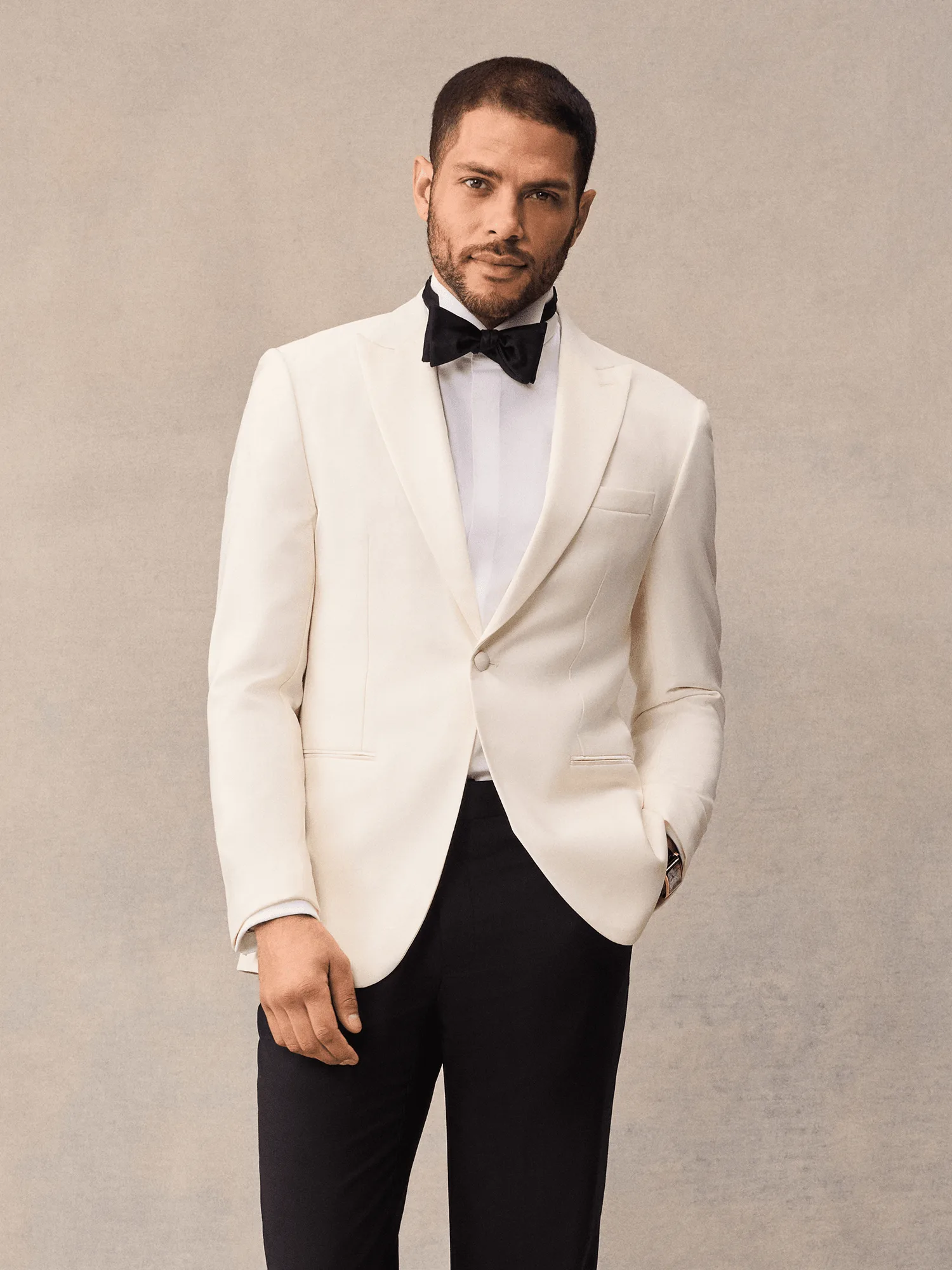
White Dinner Jacket Tuxedo Outfit