Quick Answer
To keep artificial flowers looking new for years, dust them every two to four weeks with a soft brush or cool hairdryer on low, deep clean fabric blooms in lukewarm water with a drop of mild soap, dry them upside down away from direct heat, and store them loosely wrapped in acid-free tissue in a cool, dark box. The biggest mistake is soaking silk or paper flowers or leaving them in damp conditions, which causes dye bleed, glue failure, and mildew.
Why Faux Flowers Need Different Care Than Real Ones
Real flowers want water and light; artificial flowers want the opposite. Most faux blooms are made from polyester, silk, or paper over wire stems, with dyes and adhesives holding petals in place. Water left sitting on petals can lift colour, and heat above roughly 60°C softens glue, so a radiator or sunny windowsill is the enemy of long life. Dust is the other quiet problem: it settles into petal folds and makes even good-quality stems look tired within weeks. Treat artificial flower care as a two-part routine: quick dusting often, deeper cleaning rarely.
What You Need Before You Start
Gather a soft makeup brush or clean paintbrush, a can of compressed air or a hairdryer with a cool setting, two microfibre cloths, lukewarm water, a drop of mild dish soap, a clean towel, and acid-free tissue paper for storage. For fabric flowers only, keep a spray bottle of cool water for reshaping. Avoid bleach, vinegar, alcohol, and hot water, which can strip dye or weaken glue. If your arrangement sits in a vase, check whether the vase itself is dusty before you clean the flowers, so you are not just moving dirt around.
How Often to Clean Different Types of Faux Blooms
A general schedule is enough for most homes: dust every two to four weeks, deep clean fabric flowers every three to six months, and spot clean paper flowers only when needed. If you have pets, open windows, or smoke in the house, dust weekly. Arrangements near a kitchen will collect grease and need a gentle soap clean more often. Silk and fabric flowers tolerate water better than paper or crepe versions, so check the material before you decide how to clean fake flowers. When in doubt, start with the dry method and only add water if dust remains.
Step-by-Step Artificial Flower Care Routine
- Step 1: Dry-dust from the top down: Hold each stem upside down and brush petals gently with a soft makeup brush, working from the outermost petals inward. For tight clusters, use a hairdryer on the cool setting about 20cm away or a short burst of compressed air. Common mistake: pressing hard, which bends wire stems and crushes paper petals. Checkpoint: if dust still sits in the folds, move to step 2 rather than scrubbing harder.
- Step 2: Deep clean fabric flowers only: Fill a bowl with lukewarm water and one drop of mild dish soap. Dip fabric blooms for a few seconds, swish gently, then rinse in clean cool water. Never soak paper, crepe, or glued arrangements. Common mistake: leaving stems submerged, which rusts wire and loosens glue. Checkpoint: if the water turns cloudy with dye, stop and dry immediately.
- Step 3: Dry upside down away from heat: Shake off excess water and hang stems upside down on a drying rack or towel-lined tray. Keep them out of direct sun and away from radiators, which can warp petals and soften adhesive. Common mistake: using a hairdryer on warm or hot to speed drying. Checkpoint: petals should feel dry to the touch before you reshape or store them.
- Step 4: Reshape and fluff while slightly damp: Once nearly dry, gently cup each petal between your fingers to restore its curve, and bend wire stems back into position. For crushed fabric blooms, a light mist of cool water helps them hold shape as they finish drying. Common mistake: reshaping bone-dry paper flowers, which can crack. Checkpoint: stand the arrangement in its vase and view it from a metre away to check balance.
- Step 5: Store loosely for the off-season: For artificial flower storage, wrap each stem in acid-free tissue, lay them flat in a rigid box, and keep the box in a cool, dark, dry place. Do not seal damp flowers in plastic, which traps moisture and causes mildew. Common mistake: cramming blooms into a bin bag, which flattens petals permanently. Checkpoint: label the box by colour or occasion so you can find stems without unpacking everything next season.
A Table Cover That Protects Your Display
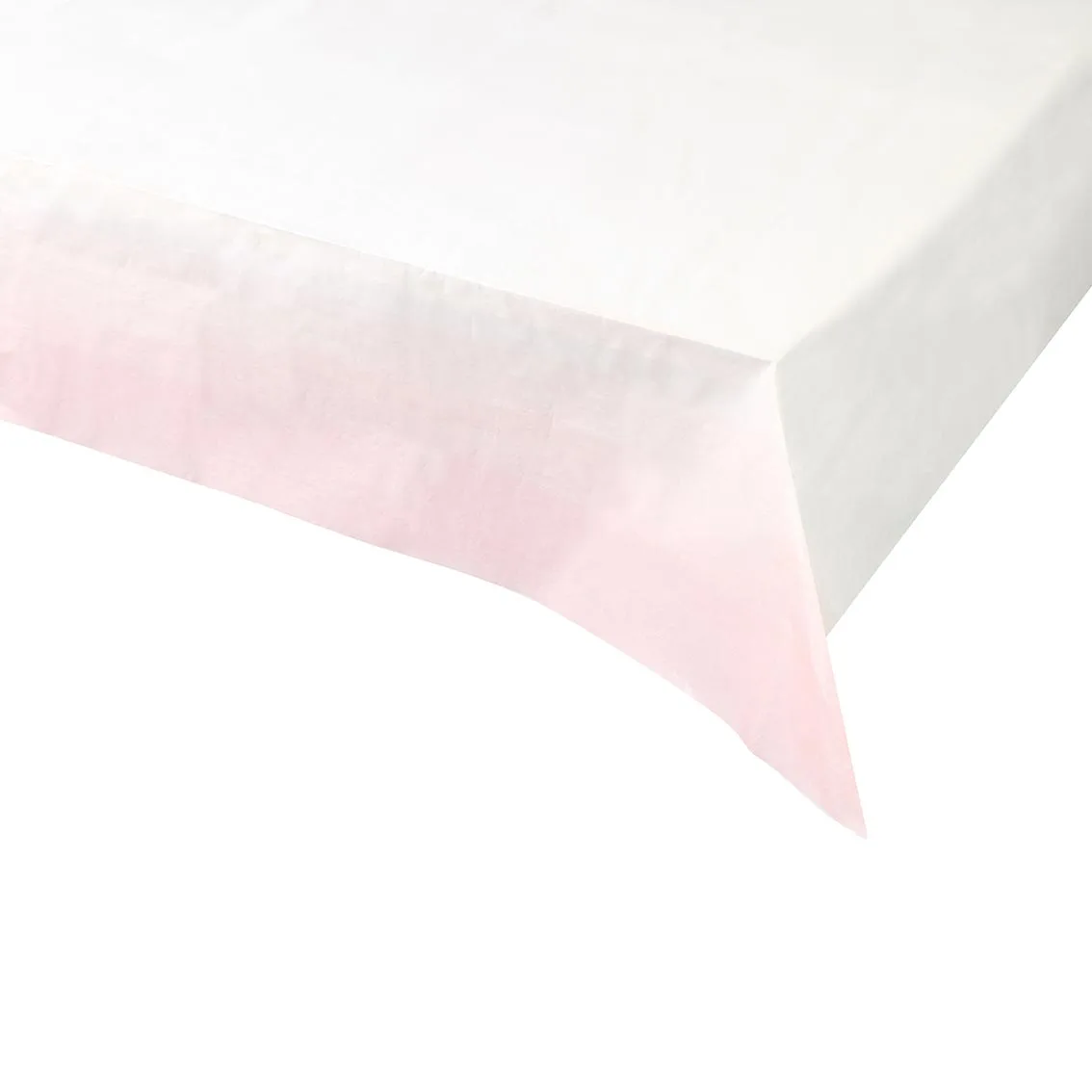
- We ♥ Pink Table Cover: The We ♥ Pink Table Cover is a 180cm x 120cm paper cover with a soft pastel pink gradient border, designed to be lightweight and disposable. If you display artificial flowers on a table that sees craft glue, water sprays, or party use, a disposable cover keeps the surface clean and lets you lift the whole arrangement without scrubbing. It also protects the table from any drips while you deep clean fabric stems nearby.