Quick answer
Wash linen bedding in cold or lukewarm water on a gentle cycle with a mild liquid detergent, then air-dry or tumble on low. Skip fabric softener and bleach, and wash less often than you think—every 7 to 10 days is plenty. Linen gets softer and more supple with each correct wash, so a little restraint goes a long way.
Sort and pretreat before anything touches the machine
Linen is durable but not invincible. Wash it separately from heavy items like jeans or towels, whose zippers and rivets can abrade the fibers. If you have a linen duvet set, unbutton or unzip the duvet cover and turn it inside out so the seams and any closures get cleaned without snagging.
Treat stains before washing: blot—don't rub—with a clean cloth, then apply a small amount of mild detergent and let it sit for 10 minutes. Rubbing spreads the stain and can rough up the weave.
Choose the right detergent and water temperature
Use a mild liquid detergent free of optical brighteners and enzymes, which can weaken linen fibers over time. Powder detergents sometimes leave residue in the weave, so liquid is the safer bet. Water temperature should be cold or lukewarm—hot water can shrink linen and set stains.
If your linen is deeply soiled, add a half-cup of white vinegar to the rinse cycle instead of bleach. Vinegar helps remove detergent residue and naturally softens the fabric without coating it.
Wash on a gentle cycle and don't overload
Select the gentle or delicate cycle with a low spin speed. Linen needs room to move in the drum; cramming it in causes friction that leads to pilling and premature wear. A good rule: the drum should be about two-thirds full, not packed.
Wash linen bedding every 7 to 10 days. More frequent washing isn't necessary and actually speeds up fiber breakdown. Spot-clean between washes when possible.
Dry smart: air-dry when you can, tumble low when you can't
Line-drying is the gentlest option and gives linen that crisp, airy finish. If you use a dryer, choose low heat and remove the bedding while it's still slightly damp. Overdrying is the fastest way to make linen feel brittle and scratchy.
Shake out each piece before drying to reduce deep wrinkles. Linen is meant to have a relaxed, lived-in look, so don't expect a perfectly smooth finish—and don't iron it unless you truly want to.
Store linen where it can breathe
Once completely dry, fold and store linen in a cool, dry place. Avoid plastic bins or vacuum-sealed bags, which trap moisture and can cause mildew. A cotton storage bag or a linen closet shelf works well.
If you're rotating bedding seasonally, wash it before storing. Oils from your skin can attract pests and cause yellowing over time.
Your step-by-step linen care routine
- 1. Pretreat and sort: Unbutton duvet covers, turn them inside out, and blot any stains with mild detergent. Wash linen separately from heavy items with zippers or rivets. Checkpoint: no rubbing stains—blot only.
- 2. Wash on gentle with mild detergent: Use cold or lukewarm water, a gentle cycle, and a mild liquid detergent. Add white vinegar to the rinse if you want extra softness. Never use bleach or fabric softener. Mistake to avoid: overdosing detergent—it leaves residue that makes linen feel stiff.
- 3. Dry low or air-dry: Air-dry when possible. If using a dryer, choose low heat and remove while slightly damp. Shake out wrinkles before drying. Checkpoint: linen should feel supple, not brittle, when dry.
- 4. Store loosely: Fold and store in a breathable cotton bag or on a shelf. Avoid plastic bins. Wash before storing for the season. Next step: rotate your linen bedding every few months to avoid permanent creases.
Products that make linen care easier
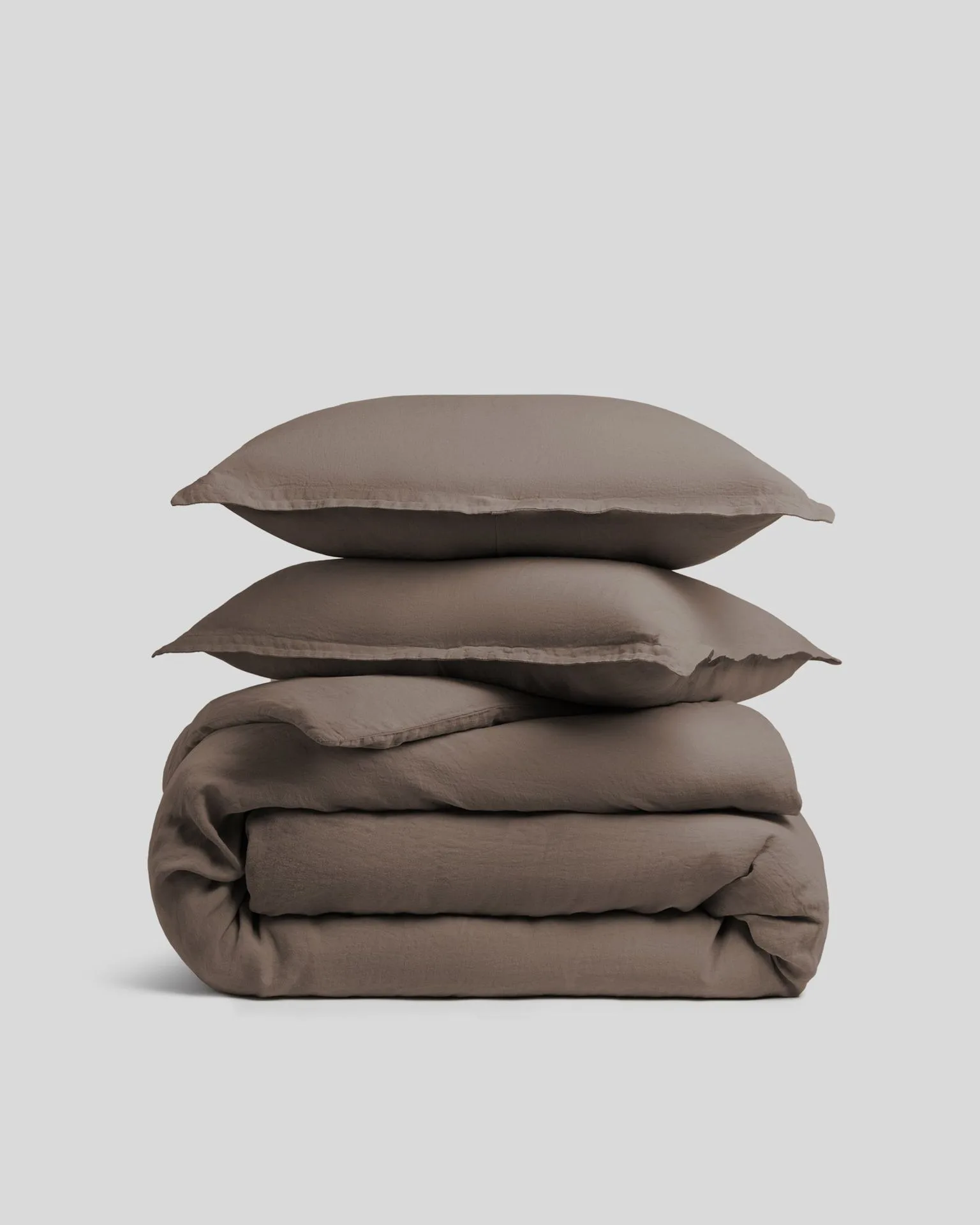
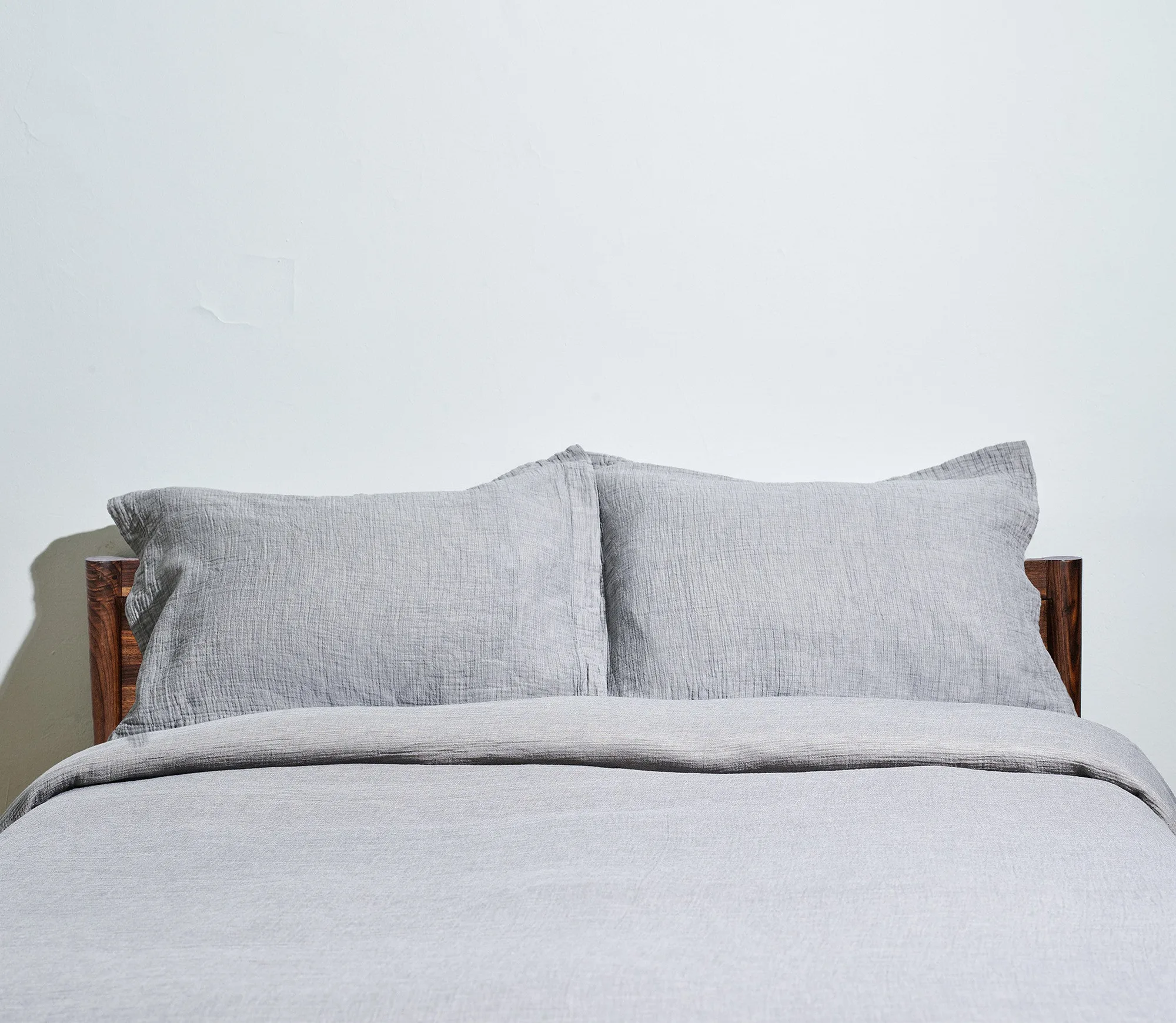
- Heritage Linen Duvet Set: Made from 100% French flax and double stonewashed for a lived-in feel. Double stonewashing means this duvet set arrives already softened, so you don't need to break it in with repeated washes—just follow the care steps to keep it that way.
- Softexture Pillow Sham: Softexture shams are made from 100% long-staple cotton with double-cloth construction and a jacquard woven finish. Long-staple cotton is strong and smooth, making these shams a low-maintenance companion to linen bedding—wash them with similar care to avoid unnecessary wear.