Quick answer
Treat your Kiondo like a structured textile: shake it out weekly, dust with a soft brush, spot-clean only when needed with a barely damp cloth, and dry it in open air away from direct heat. Then reshape it by hand while it is still slightly cool and dry, and store it filled with a pillow or blanket so the walls keep their curve. Never soak it, never machine-wash it, and never let it sit damp.
Why handwoven baskets lose their shape in the first place
A Kiondo basket holds its form because the fibers are woven tightly and the rim is built to resist flexing. Over time, three things undo that structure: moisture, weight in the wrong places, and long periods of being squashed. Damp air softens plant fibers, so a basket left in a steamy bathroom or a damp basement will start to sag at the sides. Carrying heavy loads by the rim instead of the handles stresses the weave unevenly. And storing a basket empty under a stack of boxes flattens the very curve that makes it useful.
Everyday habits that prevent most damage
You do not need a weekly deep clean. You need a weekly thirty-second reset. Shake the basket outdoors or over a bin to drop loose dust, then run a soft brush or a dry microfiber cloth around the inside and outside. Rotate what you store in it so one side does not carry all the weight for months. If you use it for laundry, line it with a cotton bag so moisture from damp towels never touches the fibers directly.
- Keep it at least a meter away from radiators, space heaters, and direct sun.
- Lift it by the handles, not the rim, when it is full.
- Air it out for an hour after bringing it in from a humid day.
How to spot-clean without soaking the weave
Most marks on a natural-fiber basket are dust, not stains. For a sticky spot, mix a drop of mild dish soap in a cup of cool water, wring a microfiber cloth until it is almost dry, and dab the spot. Work from the outside of the stain inward so you do not spread it. Then press a dry towel over the area to pull out moisture and let the basket air-dry in a shaded, ventilated spot. If the stain is oil-based or has been there for weeks, do not scrub harder; the risk of fraying the weave is higher than the benefit. In that case, accept the mark or consult a professional conservator.
Reshaping a basket that has started to lean
If the sides have bowed, you can often coax them back. Lightly mist the outside of the basket with clean water, just enough to make the fibers slightly flexible, then fill the basket firmly with cushions or rolled towels so the walls are pushed back to a round shape. Let it dry that way for a day or two in a shaded, airy room. Do not use a hair dryer or put it in the sun; fast drying makes plant fibers brittle and can cause cracking. If the rim itself is bent, that is harder to correct at home and is best left as a characteristic of a handmade piece.
Kiondo basket care steps
- Shake and dust weekly: Take the basket outside or over a bin and shake it gently. Then brush the inside and outside with a soft brush or dry microfiber cloth, working with the weave rather than against it. Checkpoint: if dust flies off easily, you are done; if it clings, the basket may be damp and needs airing first.
- Spot-clean with a barely damp cloth: Mix a drop of mild dish soap in cool water, wring a microfiber cloth until it is nearly dry, and dab the mark from the outside in. Follow with a dry towel press. Mistake to avoid: never soak the basket or put it in the washing machine, even on a gentle cycle.
- Dry in open air, away from heat: Set the basket on a towel in a shaded, ventilated spot and let it dry completely. Turn it occasionally so air reaches all sides. Checkpoint: if the fibers feel cool or clammy, it is not dry yet; do not store it until it is.
- Reshape while slightly flexible: If the sides have bowed, mist the outside lightly with water, fill the basket firmly with cushions or rolled towels, and let it dry that way for a day or two. Mistake to avoid: do not use a hair dryer or direct sun to speed drying, as this can make the fibers brittle.
- Store filled and lifted by the handles: Keep the basket in a dry room, filled with a pillow or blanket to hold the curve. When you move it, lift by the handles rather than the rim. Next step: if you store it empty, place it on a shelf where nothing can press against the sides.
About the LOCALCRAFT Kiondo basket
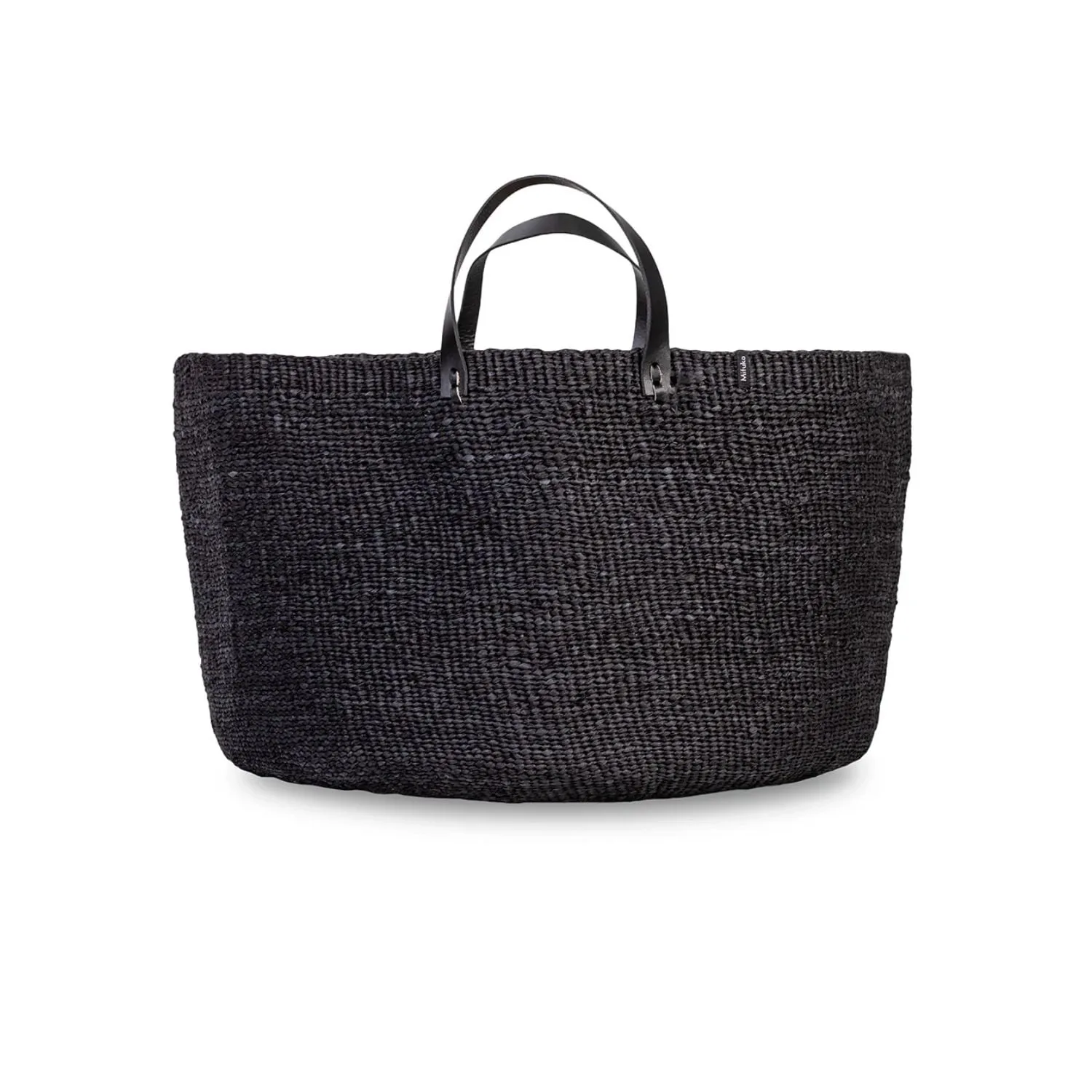
- LOCALCRAFT Kiondo - Basket black L: The Kiondo floor basket by LOCALCRAFT is handwoven in Kenya and has durable handles for carrying. Because it is handmade, slight variations in weave and shape are normal; the handles are the part you should rely on for lifting, which reduces stress on the rim.