Quick Answer
To keep your HexClad Damascus Steel Nakiri Knife in peak condition, hand wash it with mild soap and dry it immediately after each use, then store it in a knife block or on a magnetic strip. Sharpen it regularly with a whetstone to preserve the double-beveled edge.
Why Damascus Steel Needs Special Care
Damascus steel is prized for its layered pattern and extreme hardness, but that hardness also makes the blade more brittle and prone to chipping if mishandled. The high carbon content gives it excellent edge retention, but it also means the blade can rust if left wet or exposed to acidic foods for long periods. Proper care is not just about looks—it directly affects cutting performance and longevity.
Common Mistakes That Shorten Knife Life
Many people toss their nakiri knife in the dishwasher or let it soak in the sink. Dishwasher detergents are abrasive and the high heat can warp the blade. Soaking can cause water to seep into the handle and promote rust at the tang. Another mistake is using a glass or ceramic cutting board—these are harder than steel and will dull the edge quickly. Stick to wood or soft plastic boards to protect the blade.
Step-by-Step Care for Your Damascus Steel Nakiri Knife
- 1. Hand Wash Immediately After Use: Rinse the blade under warm water and apply a drop of mild dish soap. Use a soft sponge or cloth to wipe both sides of the blade, then rinse thoroughly. Dry the blade completely with a soft towel before setting it down. Never let the knife air-dry or soak in water—this is the most common cause of rust spots.
- 2. Dry and Store Properly: After drying, place the knife in a knife block, on a magnetic strip, or in a blade guard. Avoid storing it loose in a drawer where it can knock against other utensils. Storing the knife uncovered or with other metal tools can dull the edge and scratch the Damascus pattern.
- 3. Sharpen with a Whetstone When Needed: Use a 1000/6000-grit whetstone to maintain the double-beveled edge. Soak the stone for 10 minutes, then hold the blade at a 15-degree angle and draw it across the stone from heel to tip. Repeat on both sides until a burr forms, then finish with the finer grit. Do not use electric sharpeners or pull-through sharpeners—they remove too much metal and can ruin the blade geometry.
- 4. Oil the Blade Occasionally: Every few months, or if you live in a humid climate, apply a thin coat of food-grade mineral oil to the blade. Wipe off any excess before using the knife. Oil creates a barrier against moisture and helps preserve the contrast of the Damascus pattern.
Product Facts
-
Damascus Steel Nakiri Knife, 6.5": Our petite but powerful nakiri knife delivers the cutting precision you need for food prep jobs big and small. Thinner and lighter than a cleaver, its double-beveled edge and extremely hard blade forged from Damascus steel make quick work of fruits and vegetables without bruising the most delicate ingredients. The double-beveled edge and hard Damascus steel mean you can slice through tomatoes and herbs with clean cuts, but the thin profile requires careful handling to avoid bending or chipping the tip.
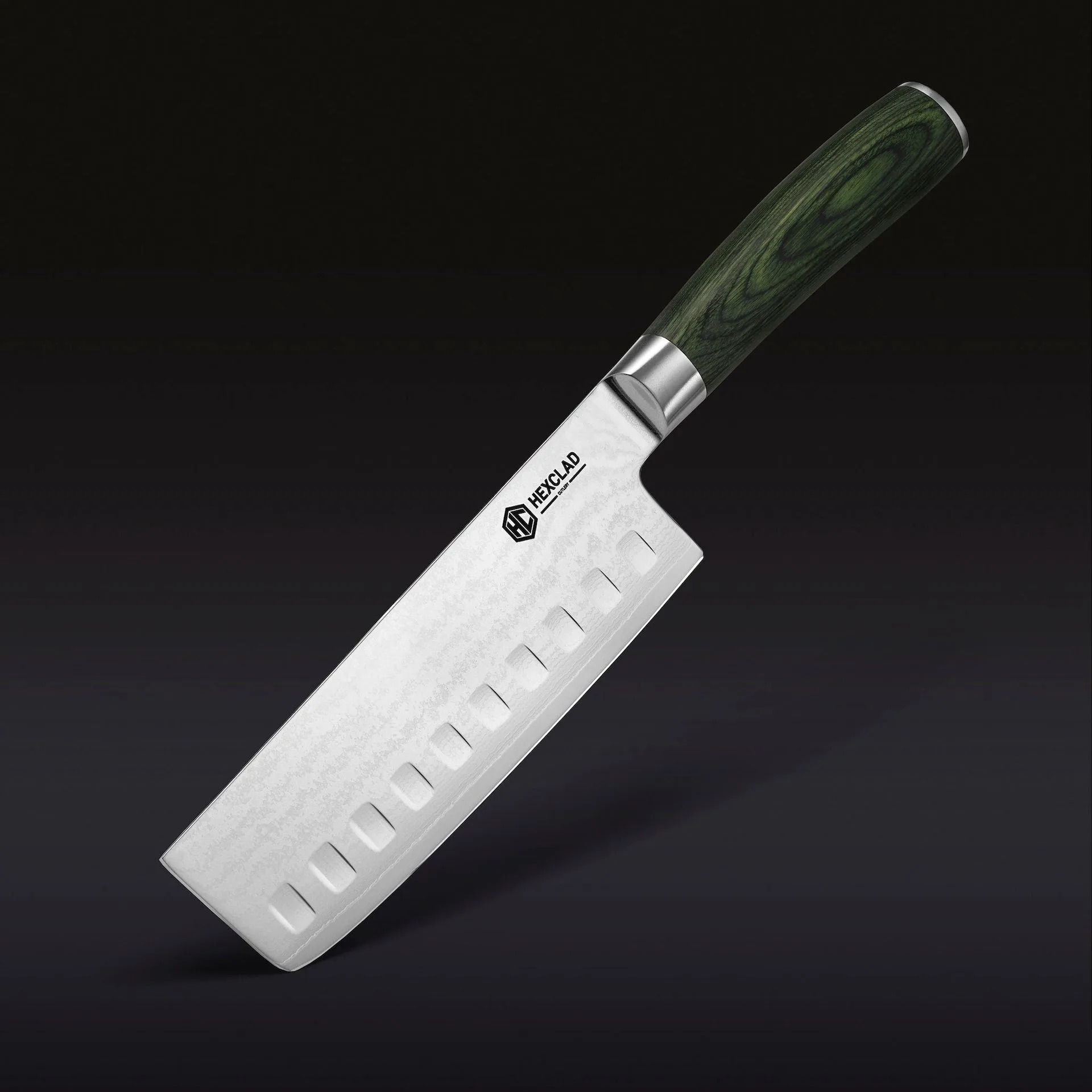
Damascus Steel Nakiri Knife, 6.5"