Why Proper Care Matters for Enamelled Cast Iron
Enamelled cast iron combines the heat retention of traditional cast iron with a smooth, non-reactive enamel surface that never needs seasoning. A well-maintained Dutch oven can last for decades, but the enamel requires a different care routine than bare cast iron. With a few simple habits, you can keep your pot looking like new and cooking evenly for years.
Daily Cleaning Routine
Cleaning your enamelled cast iron Dutch oven after each use is straightforward. Follow these steps to protect the enamel and prevent staining.
- Let the pot cool completely: Never plunge a hot enamelled pot into cold water. Thermal shock can crack the enamel. Allow the Dutch oven to cool to room temperature before washing.
- Hand wash with mild soap: Use a soft sponge or cloth with warm water and a mild dish soap. Avoid abrasive scouring pads or steel wool, which can scratch the enamel surface.
- Dry thoroughly: After washing, dry the pot completely with a soft towel. Storing it while still damp can lead to water spots or, over time, damage to the cast iron edge where the enamel ends.
- Store with care: Place a paper towel or soft cloth between stacked pots to prevent the enamel from chipping. If you store the lid on the pot, rest it upside down or use a lid holder to avoid metal contact.
Tackling Stubborn Food Residue
If food sticks or leaves a brown stain, fill the pot with warm water and a few tablespoons of baking soda. Bring it to a gentle simmer for the time recommended in the product instructions, then let it cool. Use a non-scratch sponge or a nylon brush to loosen the residue. Avoid using metal utensils or harsh chemical cleaners, as they can dull or damage the enamel finish.
What Makes This Dutch Oven Special
-
Enamelled Cast Iron Round Dutch Oven: Hand-enamelled cast iron made in France The hand-enamelled finish provides a durable, non-reactive cooking surface that resists staining and is easy to clean.
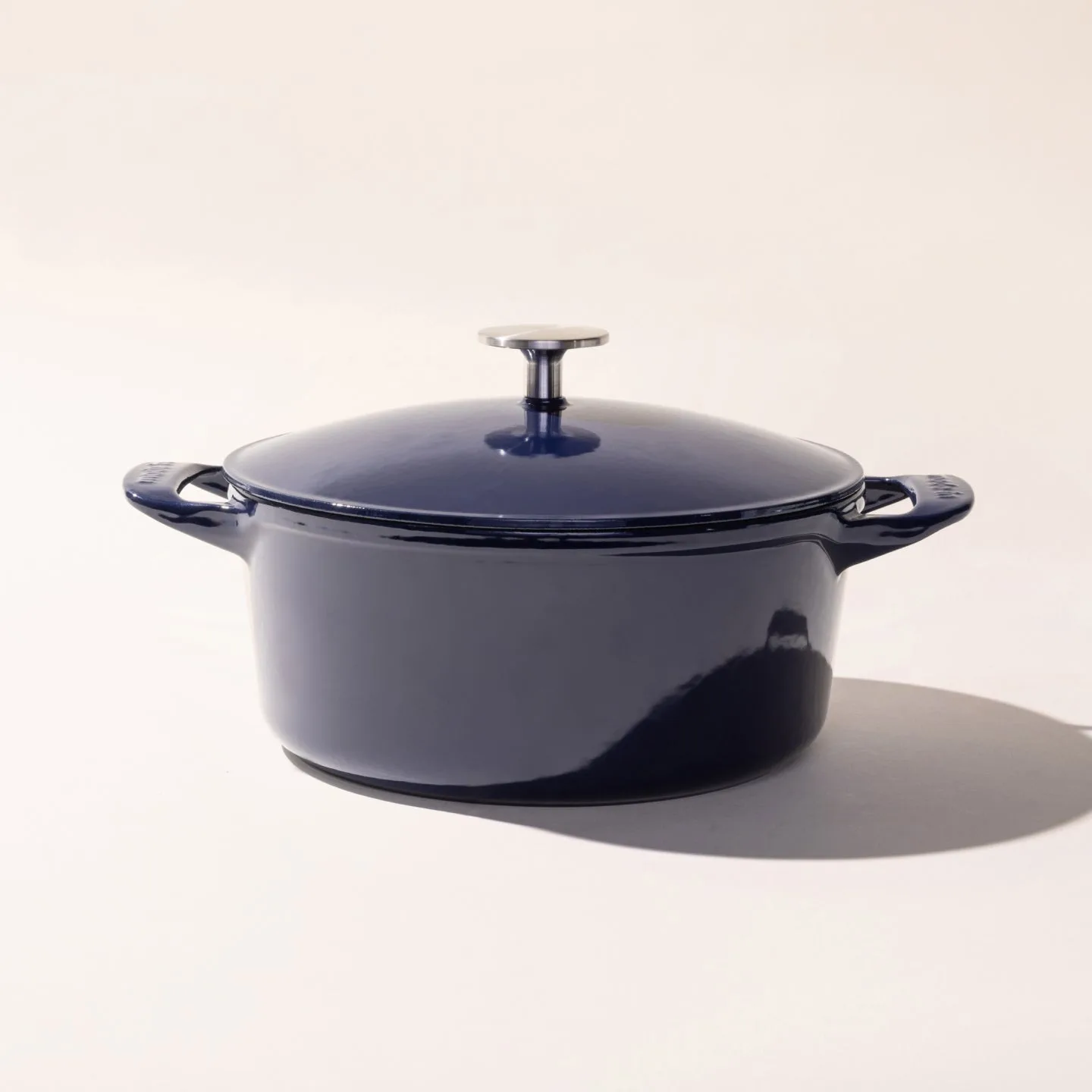
Enamelled Cast Iron Round Dutch Oven
-
Enamelled Cast Iron Round Dutch Oven: Oven safe up to 285°C You can use the Dutch oven for braising, roasting, and baking without worrying about the enamel or knob. Always check the knob material if you swap it for a custom one.
-
Enamelled Cast Iron Round Dutch Oven: Optimized for induction cooktops The flat, enamelled base works on all stovetops, including induction, so you can use the same pot on any burner.
-
Enamelled Cast Iron Round Dutch Oven: Lifetime warranty If the enamel chips or the pot develops a defect under normal use, the warranty covers it. This reflects the confidence in the build quality.
What to Avoid
To keep the enamel in top condition, avoid high-heat searing or dry heating an empty pot. Enamelled cast iron is excellent for simmering, braising, and roasting, but it is not designed for the extreme dry heat used to season bare cast iron. Also, avoid using metal utensils that can scratch the enamel; wooden, silicone, or nylon tools are safer choices.
Long-Term Maintenance and Storage
With daily care, your enamelled cast iron Dutch oven will require little extra maintenance. If you notice minor scratches or dullness over time, that is normal wear. The enamel may develop a patina from cooking oils, which does not affect performance. Store the pot in a dry cupboard, and if you live in a humid environment, place a silica gel packet inside to absorb moisture. These simple habits will keep your Dutch oven ready for decades of cooking.