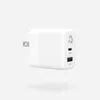
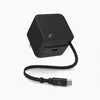
Your portable charger is a trusty companion, keeping your devices powered through busy days, long commutes, and travel adventures. But like any electronic device, it needs a little TLC to perform at its best and last for years. Proper care not only ensures reliable charging when you need it most but also protects your investment and the environment.
In this guide, we'll walk you through the best practices for maintaining your power bank's battery health, storing it correctly, and avoiding common mistakes that can shorten its lifespan. Whether you own a compact model like the CHAMP Lite Portable Charger or a high-capacity beast like the CHAMP Pro Portable Charger, these tips will help you get the most out of your device.
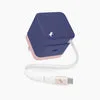
CHAMP Pro Portable Charger
Understanding Your Power Bank's Battery
Most portable chargers use lithium-ion or lithium-polymer batteries, which are efficient but have a limited number of charge cycles. A charge cycle is a full discharge from 100% to 0% and back to 100%. Over time, each cycle slightly degrades the battery's capacity, so a battery that once held 10,000mAh might eventually hold only 8,000mAh.
While you can't stop aging, you can slow it down. Understanding how your battery works helps you make informed decisions about charging habits and storage. For instance, lithium-ion batteries prefer partial discharges over full ones, and they dislike extreme temperatures.
- Aim to keep your power bank's charge between 20% and 80% for daily use.
- Avoid letting it drop to 0% regularly; deep discharges stress the battery.
Best Practices for Charging Your Power Bank
How you charge your portable charger matters. Use a quality wall charger and cable to ensure stable power delivery. For example, pairing your power bank with a WALLY Pro Wireless Magnetic Portable Wall Charger can provide efficient top-ups when you're at home or in a hotel.
Don't leave your power bank plugged in overnight or for extended periods after it's fully charged. Modern chargers have overcharge protection, but constant trickle charging can still generate heat, which is detrimental to battery health. Unplug it once it hits 100%.
- If you're not using your power bank for a while, charge it to about 50% before storing.
- Recharge stored power banks every 3-6 months to maintain battery health.
Optimal Storage Conditions
Where and how you store your portable charger significantly impacts its lifespan. Heat is the enemy of lithium batteries. Avoid leaving your power bank in a hot car, in direct sunlight, or near heat sources. Similarly, freezing temperatures can cause damage. The ideal storage temperature is between 50°F and 77°F (10°C to 25°C).
If you have multiple chargers, like the WALLY Stretch 65W Wall Charger for home and a portable model for travel, store them in a cool, dry place. Keep them away from metal objects like keys or coins to prevent short circuits, and use a protective case if you have one.
- Store your power bank in a dry environment; humidity can corrode internal components.
- Avoid storing it fully discharged or fully charged for long periods; aim for 50% charge.
Cleaning and Maintenance Tips
Dust and debris can accumulate in the ports of your portable charger, leading to poor connections or even short circuits. Regularly inspect the USB ports and gently clean them with a soft, dry brush or a can of compressed air. Never use liquids or abrasive materials.
Also, check the cable you use to charge your power bank. A frayed or damaged cable can cause inconsistent charging and potentially damage the battery. Invest in a high-quality cable like the USB-C to USB-C Cable to ensure safe and efficient power transfer.
- Clean the ports every few weeks, especially if you carry your charger in a bag or pocket.
- Replace any damaged cables immediately to avoid electrical issues.
Common Mistakes to Avoid
Many people unknowingly shorten their power bank's life. One common mistake is using a fast charger that delivers more wattage than the power bank can handle. Always check the input rating of your power bank and use a charger that matches it. For example, if your power bank supports 20W input, a WALLY SubNano 20W Wall Charger is perfect.
Another mistake is ignoring the power bank's own temperature during use. If it feels excessively hot while charging your phone, it's a sign of stress. Stop using it and let it cool down. Also, avoid dropping your power bank, as physical shocks can damage internal battery cells.
- Don't use a charger with higher wattage than your power bank's input rating.
- If your power bank gets hot, disconnect it and allow it to cool before continuing.
When to Replace Your Portable Charger
Even with the best care, every battery eventually reaches the end of its life. Signs that your power bank needs replacement include significantly reduced capacity (it doesn't charge your phone as many times as it used to), longer charging times, excessive heat during use, or physical swelling of the casing.
If you notice any of these signs, it's time for a new one. Consider upgrading to a model with higher capacity or faster charging, like the CHAMP Pro Portable Charger, which offers ample power for multiple device charges. Remember, using a damaged power bank can be a safety hazard.
- Swelling is a serious safety issue; dispose of the power bank properly.
- Recycle old power banks at designated e-waste facilities.
Taking care of your portable charger doesn't require much effort, but the benefits are substantial. By following these tips, you'll extend the life of your power bank, save money, and reduce electronic waste. Remember to store it properly, avoid extreme temperatures, and use compatible chargers. When it's time for an upgrade, explore Gonimble's range of reliable charging solutions to find the perfect match for your needs.