Quick Answer
To charge your phone faster in the car, use a car charger with higher wattage (at least 18W) and a USB-C Power Delivery (PD) port. Match the charger's output to your phone's maximum charging speed, and use a quality USB-C to USB-C cable. For dual-device charging, choose a dual-port charger that delivers adequate power to both ports simultaneously.
USB-C to USB-C cable
When you're on the road, a dead phone battery can be a real problem. Whether you're using GPS, streaming music, or just staying connected, a slow car charger can leave you frustrated. Fortunately, understanding a few key factors—wattage, port types, and cable quality—can help you charge your phone much faster while driving.
In this guide, we'll break down how car charger wattage affects charging speed, explain the difference between USB-A and USB-C ports, and give you practical steps to maximize your phone's charging rate. We'll also highlight some portable charging solutions from Nimble that can keep you powered up on the go.
Understanding Car Charger Wattage
Wattage (W) is the measure of power a charger can deliver. It's calculated by multiplying voltage (V) by amperage (A). A higher wattage means more power can be delivered to your device, which generally results in faster charging. Most modern smartphones support fast charging up to 18W, 20W, or even higher, so using a charger that matches or exceeds your phone's maximum speed is key.
Common car charger wattages range from 10W to 45W or more. For example, a 10W charger (5V/2A) will charge your phone at a standard rate, while an 18W charger (9V/2A) can significantly speed things up if your phone supports USB Power Delivery (PD) or Qualcomm Quick Charge. Always check your phone's specifications to know its maximum charging speed.
- Check your phone's maximum charging wattage in the settings or online.
- Look for car chargers that support USB Power Delivery (PD) or Quick Charge for faster speeds.
USB-C vs USB-A Ports: Which Matters for Speed?
The type of port on your car charger and your cable plays a crucial role in charging speed. USB-C is the modern standard and supports higher power delivery, often up to 100W or more. It also allows for faster data transfer and can be reversible, making it more convenient. USB-A, on the other hand, is older and typically limited to 12W (5V/2.4A) unless it supports Quick Charge technology.
For the fastest charging, you should use a USB-C to USB-C cable with a car charger that has a USB-C Power Delivery (PD) port. This combination allows your phone to negotiate the optimal voltage and current, ensuring efficient and safe fast charging. If your phone only supports USB-A charging, you can still get decent speeds, but you won't reach the full potential of a USB-C PD setup.
- Prefer car chargers with USB-C PD ports for faster charging.
- Use a USB-C to USB-C cable that supports Power Delivery.
Dual Port Car Chargers: How to Share Power Effectively
Many car chargers come with two ports, allowing you to charge two devices simultaneously. However, the total wattage is often shared between the ports. For example, a 30W dual-port charger might deliver 18W on one port and 12W on the other, or it might split the power evenly. If you need to charge two phones quickly, look for a charger that can deliver high wattage on both ports simultaneously.
When using a dual-port charger, prioritize the port that supports the fastest charging for your primary device. Some chargers have one USB-C PD port and one USB-A port, with the USB-C port being faster. If you're charging a phone and a smaller device like earbuds, you can use the slower port for the accessory and reserve the fast port for your phone.
- Check the wattage distribution of dual-port chargers to ensure both devices get adequate power.
- Use the faster port for your phone and the slower port for accessories.
Steps to Faster Car Charging
- Step 1: Check your phone's charging speed: Look up your phone's maximum charging wattage and supported fast charging protocols (like USB PD or Quick Charge). This information is usually in the user manual or on the manufacturer's website. Knowing your phone's limit prevents overbuying a charger that won't speed things up.
- Step 2: Choose a car charger with sufficient wattage: Select a car charger that can deliver at least your phone's maximum wattage. For most modern phones, an 18W or 20W charger is sufficient. If you have a high-end phone that supports 45W, consider a charger that can match that. A higher-wattage charger won't damage your phone; it will only deliver what the phone requests.
- Step 3: Use a USB-C to USB-C cable with Power Delivery: For the fastest charging, use a high-quality USB-C cable that supports Power Delivery. Avoid cheap cables that may not handle higher power levels. Connect it to the USB-C PD port on your car charger. The cable is just as important as the charger; a poor cable can bottleneck the speed.
- Step 4: If using a dual-port charger, prioritize the fast port: When charging two devices, plug your phone into the port that provides the highest wattage (usually the USB-C PD port). Use the other port for accessories like earbuds or a second phone that doesn't need fast charging. This ensures your primary device gets the fastest possible charge.
- Step 5: Monitor the charging progress: Keep an eye on your phone's battery percentage to see if it's charging at a reasonable rate. If it seems slow, check if the car charger is plugged in properly or if the cable is damaged. If you notice no improvement, try a different port or cable to isolate the issue.
Nimble Charging Solutions for On-the-Go Power
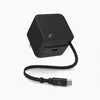
- SHAREPOWER Portable Charger: The SHAREPOWER Portable Charger from Nimble is a reliable charging solution for your on-the-go lifestyle. Designed to keep your devices powered up, this portable charger is a practical addition to your everyday carry. Even with a car charger, there are times when you need a backup power source. This portable charger ensures you can charge your phone anywhere, making it a great companion for long road trips.
- CHAMP Portable Charger: The CHAMP Portable Charger keeps your devices powered while you're on the move. Designed for everyday convenience, this compact charger is a reliable companion for travel, commutes, or days out. If you're frequently in the car, having a compact portable charger like this one means you can top up your phone even when you're not near a power outlet.
Charging your phone faster in the car isn't complicated once you understand wattage and ports. By choosing the right car charger and using a quality cable, you can significantly reduce the time it takes to power up while on the road. And for those times when you're not near a car charger, consider the SHAREPOWER Portable Charger or CHAMP Portable Charger from Nimble to keep your devices topped up wherever you go. Safe travels and happy charging!