Quick Answer
Match the battery's capacity and physical size to your project's runtime and enclosure limits. For compact, low-drain devices a 700mAh cell works well; for longer runtime or moderate current draws, step up to a 1200mAh cell.
Why Capacity and Size Matter Together
A 3.7V LiPo battery's capacity (mAh) directly affects how long your project runs before recharging. But higher capacity usually means a larger physical cell. The 700mAh 803030 cell and the 1200mAh 103040 cell illustrate this trade-off: the 1200mAh option delivers nearly 70% more capacity but occupies more space.
Your enclosure dimensions and weight budget are just as important as runtime. A battery that fits poorly can force a redesign or add unnecessary bulk.
Current Draw and Discharge Rate
LiPo batteries have a maximum continuous discharge current, often stated as a 'C' rating. If your project draws more current than the cell can safely deliver, voltage will sag and the battery may overheat. For typical microcontroller and sensor projects, a 1C discharge rate (700mA for a 700mAh cell) is often sufficient, but always check your peak load.
If your project includes motors, servos, or wireless transmitters, calculate the peak current and choose a cell that can handle it without exceeding its rated discharge.
Decision Rules for 3.7V LiPo Battery Selection
- Measure Your Envelope First: Open your project enclosure and measure the available space for the battery. The 803030 cell (roughly 8 x 30 x 30 mm) fits smaller compartments, while the 103040 cell (approx. 10 x 30 x 40 mm) needs more depth and length. Always confirm physical dimensions before ordering.
- Estimate Your Runtime Target: Divide the battery capacity (mAh) by your average current draw (mA) to get approximate runtime in hours. A 700mAh cell powering a 100mA load runs about 7 hours; a 1200mAh cell runs about 12 hours under the same load. Account for real-world efficiency losses (typically 10-20%).
- Check Peak Current Draw: List the maximum current your project will draw at any moment. Ensure the battery's discharge rating (e.g., 1C = 700mA for a 700mAh cell) exceeds this peak. For higher loads, consider cells rated for 2C or more. If peak current exceeds the cell's rating, choose a larger capacity or higher C-rate battery.
- Choose Connector and Protection: Select a battery with a connector that matches your project's power input (e.g., JST, PH, or bare wires). For safety, prefer cells with built-in protection circuits (PCM) to prevent over-discharge and short circuits. Verify connector type and polarity before soldering.
Product Facts
-
700 mAh 3.7V Lithium Polymer Li-Po li ion 803030 Rechargeable Lipo cells: 700 mAh 3.7V Lithium Polymer Li-Po li ion 803030 Rechargeable Lipo cells Its compact 803030 form factor fits tight enclosures, making it a good choice for wearable or portable projects where space is limited.
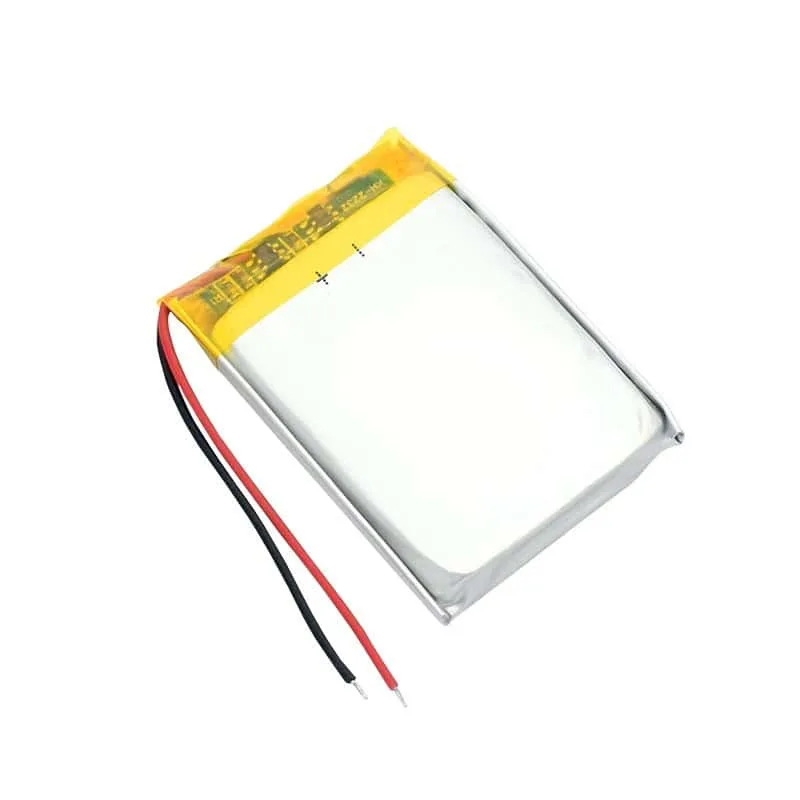
700 mAh 3.7V Lithium Polymer Li-Po li ion 803030 Rechargeable Lipo cells
-
50pcs 1200mAh 3.7V Lithium Polymer Li-Po li ion 103040: 1200mAh 3.7V Lithium Polymer Li-Po li ion 103040 Rechargeable The higher capacity supports longer runtime or devices that draw moderate current, such as sensors logging data over several hours.
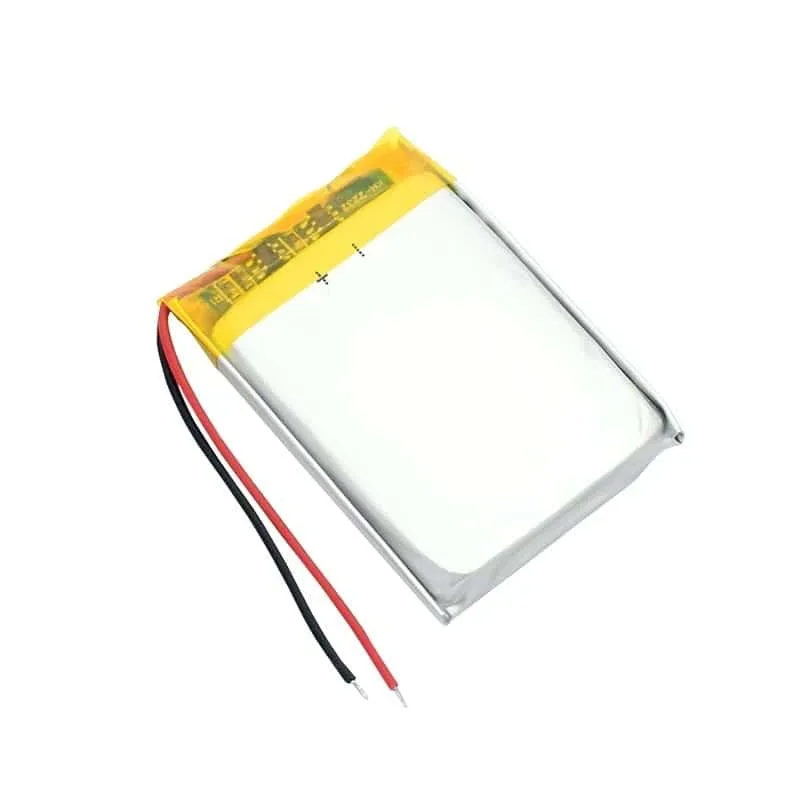
50pcs 1200mAh 3.7V Lithium Polymer Li-Po li ion 103040
Which Battery Fits Your Project?
Best For
- Compact, low-power projects like wearable sensors or small IoT devices where the 700mAh 803030 cell fits easily
- Projects needing longer runtime or moderate current draws, where the 1200mAh 103040 cell provides extra capacity without a huge size jump
Not For
- High-current applications (e.g., drones, large motors) without checking the cell's discharge rating
- Projects with extremely tight space constraints that cannot accommodate even the 803030 form factor