Start with Your Light Source and Subject
Choosing between a silver and white 43" deep umbrella comes down to the mood you want and the light you're using. Both Westcott Deep Umbrellas work with strobes, constant lights, and speedlights, so your flash or LED won't limit the choice. The real decision is contrast: silver gives you a punchier, more defined look, while white spreads softer, gentler light.
For portraits, silver bounce creates crisp highlights and deeper shadows, which can flatter strong facial features. White bounce is more forgiving, wrapping light around the subject and reducing harsh lines. If you're shooting products, silver emphasizes texture and edges, while white keeps surfaces smooth and even.
What the 43" Deep Umbrellas Offer
-
Deep Umbrella - Silver Bounce (43"): Deep profile modifier with instant setup, for use with strobes, constant lights, and speedlights. The deep shape concentrates light, giving you more control over falloff and a focused beam—ideal for portraits where you want the background to drop away.
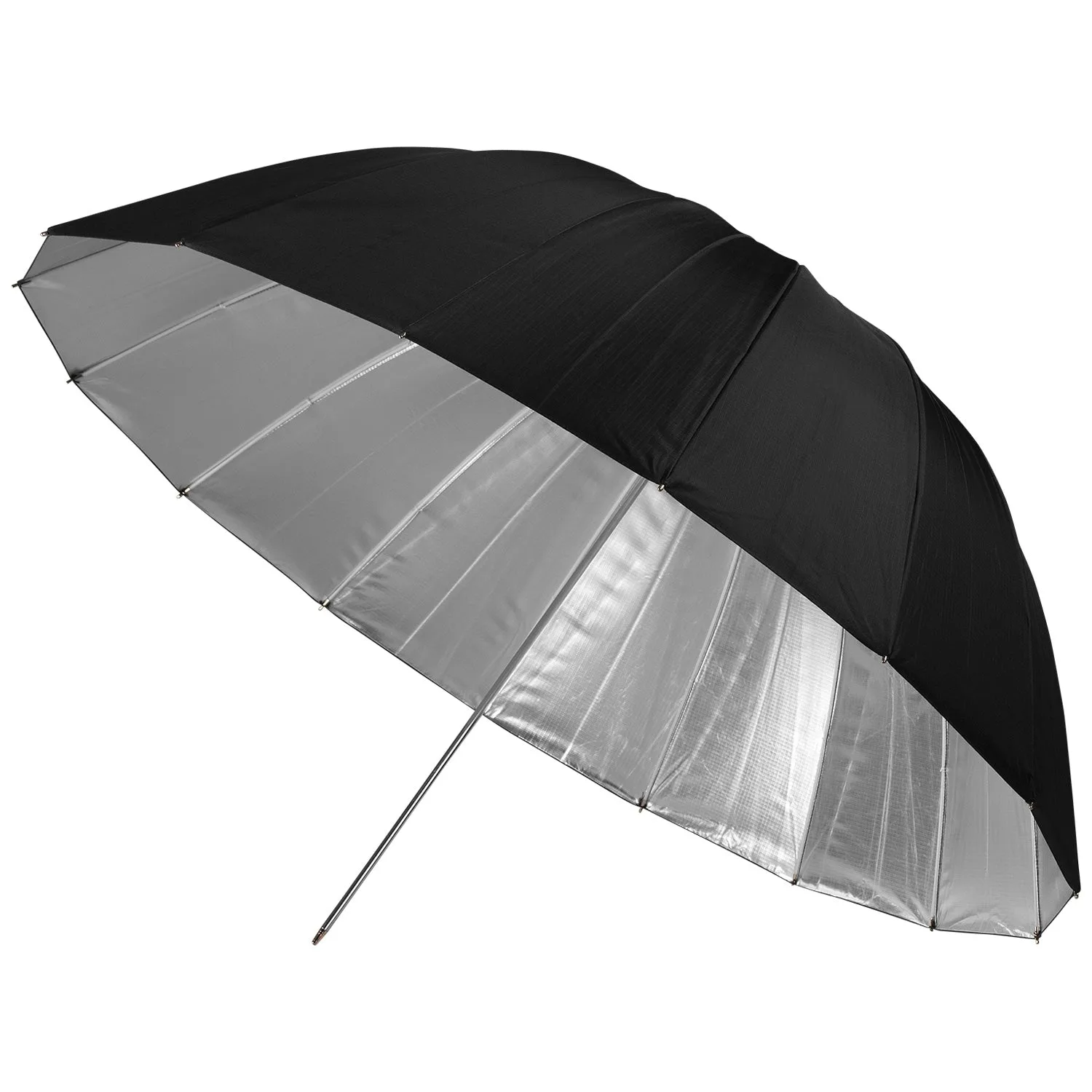
Deep Umbrella - Silver Bounce (43")
-
Deep Umbrella - Silver Bounce (43"): 16 durable fiberglass ribs and durable dual-wall shaft rods. Fiberglass ribs resist bending under repeated use, and dual-wall rods add stability, so the umbrella holds its shape even when you're moving between setups.
-
Deep Umbrella - White Bounce (43"): Focusable light with interior umbrella shaft and maximized output with reflective shiny interior. The focusable shaft lets you position the light source forward or backward to tune the beam spread, while the reflective interior boosts efficiency—useful for speedlights with limited power.
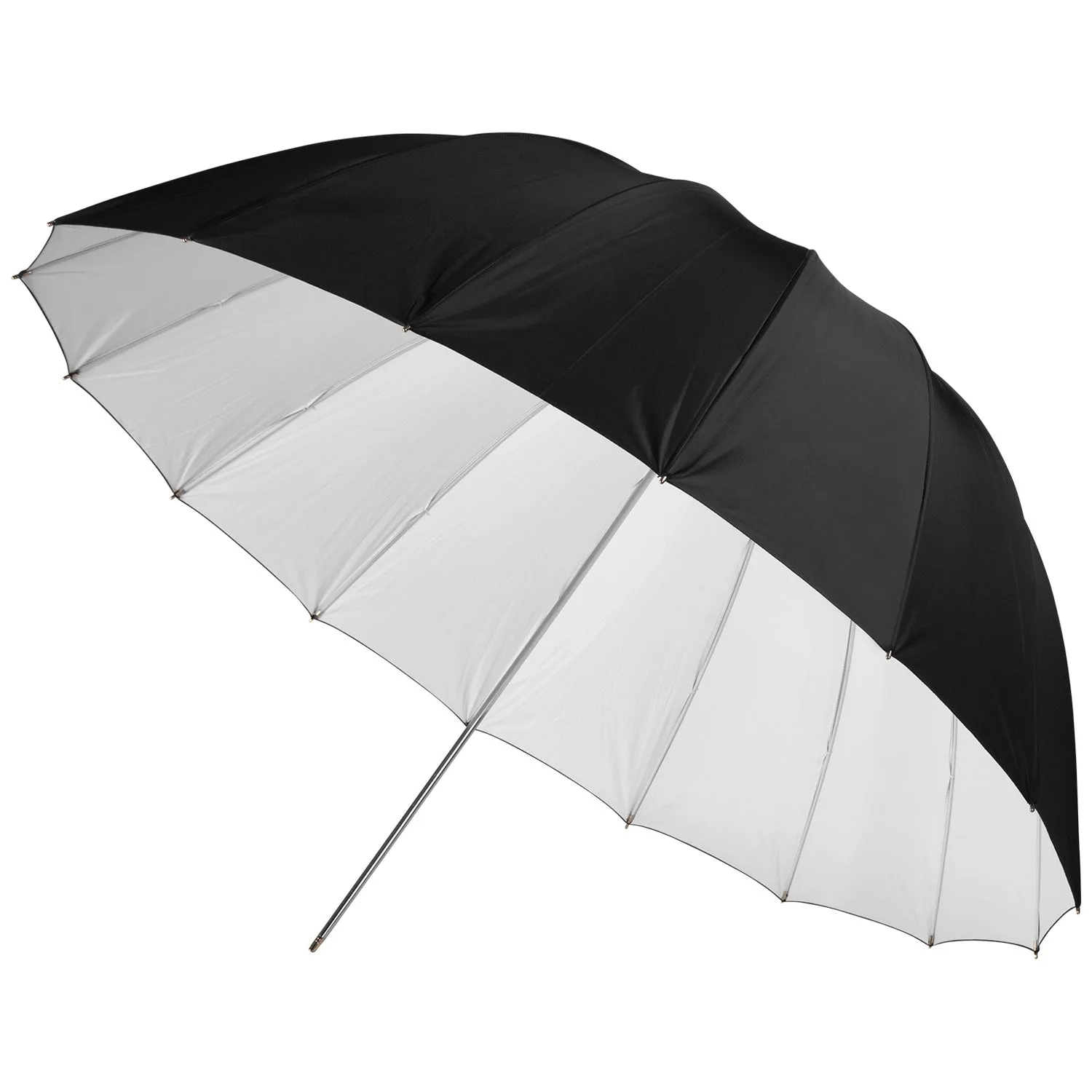
Deep Umbrella - White Bounce (43")
Silver Bounce: When to Choose It
Silver bounce is the go-to when you want more contrast and a defined light quality. The reflective surface increases specular highlights, which can make skin look lively and add dimension to textured fabrics or metallic products. It's also a good pick when you're shooting at a distance and need to maximize output—silver reflects more light back toward your subject than white.
For a classic beauty look with strong catchlights, silver bounce works well. But be prepared to manage shadows: if you're shooting with a single light, the contrast can be dramatic, so you may want a reflector or fill light to soften the dark side.
White Bounce: When to Choose It
White bounce is your choice for softer, more even illumination. The white interior diffuses the light, reducing harsh shadows and making it flattering for close-up portraits or subjects with delicate skin tones. It's also easier to use as a fill light because it won't overpower your key light.
If you're new to using umbrellas, white bounce is generally more forgiving—you can place it closer to your subject without blowing out highlights. For product photography, white bounce keeps reflections smooth and avoids the hot spots that silver can create on glossy surfaces.
Silver vs. White at a Glance
- Contrast: Silver produces higher contrast and deeper shadows; white produces softer, flatter light.
- Output: Silver reflects more light, making it efficient for speedlights; white absorbs a bit more, so you may need to increase power.
- Best for: Silver suits dramatic portraits and textured products; white suits soft portraits and smooth surfaces.
- Learning curve: White is more forgiving for beginners; silver requires more control over placement and fill.
Shoot-Through Use: A Practical Option
Both umbrellas can be used as shoot-through modifiers. When you remove the black backing (if applicable) and point the light through the fabric, you get a larger, softer light source. The deep profile still shapes the beam, but the diffusion fabric spreads the light more widely than bounce.
Shoot-through is great for group shots or when you need to cover a larger area with soft light. However, it can be less efficient than bounce, because some light is lost passing through the fabric. If your speedlight is low on power, bounce may be the more practical choice.
What the Supplied Information Does Not Cover
The records confirm the umbrellas work with strobes, constant lights, and speedlights, but they don't specify how to attach a particular light or whether a separate speedring is needed. Before buying, check your light's mount and whether the umbrella has a built-in shaft adapter or if you need an extra speedring.
Also, the records don't list the umbrella's weight or folded length. If you travel with your gear, consider those specs—check the full product details or contact the store to confirm portability.