What to Look for in a Baby Bottle Starter Set
A baby feeding bottle starter set is often the first feeding purchase for new parents. The right set can make the transition between breastfeeding and bottle feeding smoother, while the wrong choice may lead to frustration for both you and your baby. When choosing a set, focus on three key factors: teat design that mimics breastfeeding, safe materials, and a range of bottle sizes to grow with your baby.
For parents who plan to combine breastfeeding with bottle feeding, a set designed to reduce nipple confusion is especially valuable. Some starter sets include multiple teat flow rates so you can adjust as your baby's feeding skills develop.
Lansinoh Feeding Bottle Starter Set at a Glance
-
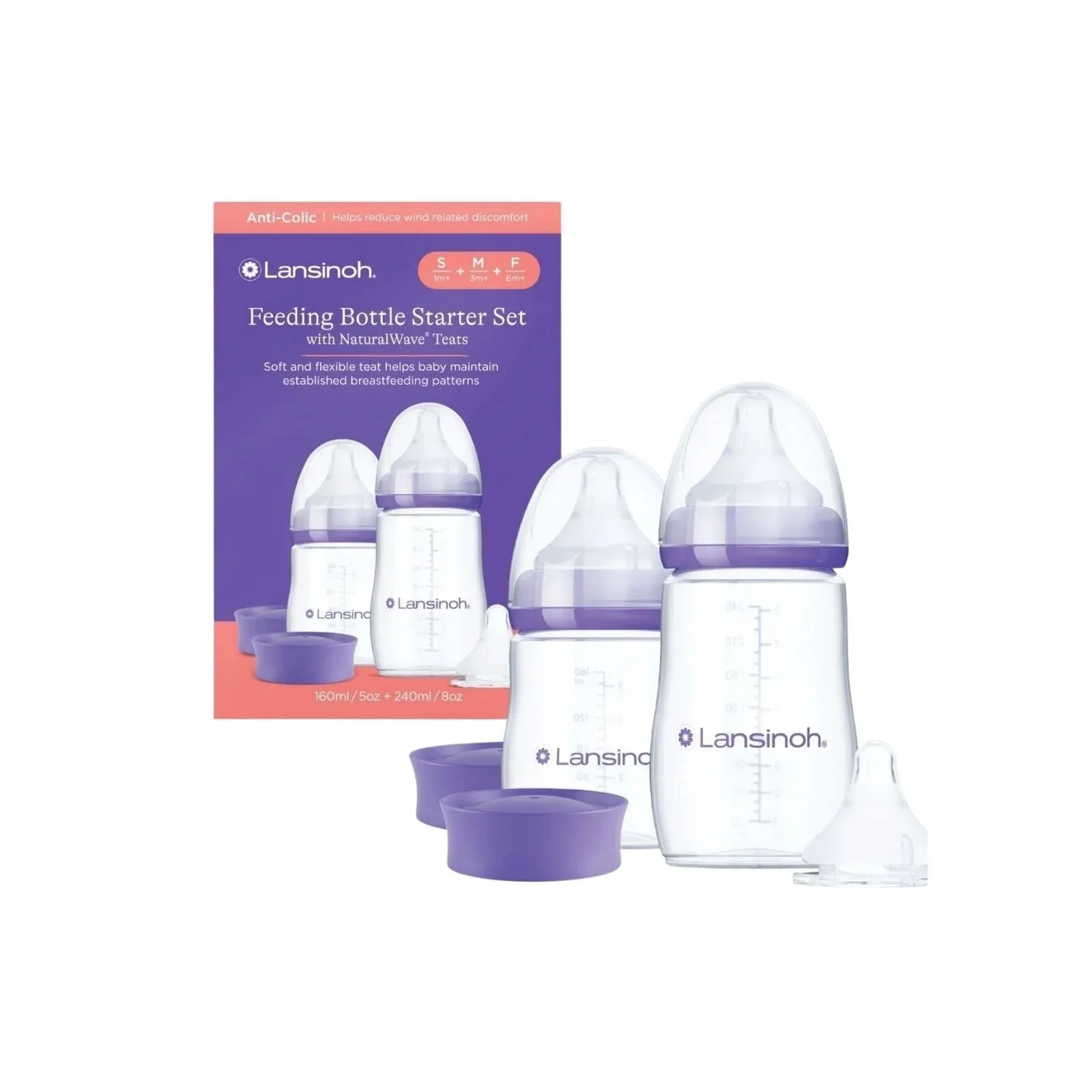
Lansinoh Feeding Bottle Starter Set: Designed specifically for breastfeeding babies with NaturalWave teats clinically proven to reduce nipple confusion. If you are breastfeeding but need to introduce bottles, this teat design encourages the same tongue movement as breastfeeding, making the switch easier.
Lansinoh Feeding Bottle Starter Set
-
Lansinoh Feeding Bottle Starter Set: Includes a 160 ml and a 240 ml feeding bottle, plus three sized NaturalWave teats (slow, medium, fast). You get two common bottle sizes for growing appetites and can match teat flow to your baby's age and feeding pace without buying extras.
-
Lansinoh Feeding Bottle Starter Set: Made from BPA and BPS-free plastic, compliant with EN14350 standards. Safety is a top concern for feeding products. BPA and BPS-free materials meet European safety standards for baby feeding equipment.
Teat Design: The Most Important Feature
Not all bottle teats are the same. Standard teats can cause a baby to prefer the faster, easier milk flow from a bottle, leading to nipple confusion or a refusal to breastfeed. The Lansinoh Feeding Bottle Starter Set uses NaturalWave teats, which are shaped to mimic the breast and require the baby to use a similar tongue movement as during breastfeeding. According to the supplied information, these teats are clinically proven to reduce nipple confusion.
The set includes three teat flow rates: slow, medium, and fast. This allows you to start with a slow flow for newborns and increase as your baby grows and feeds more efficiently. Always check the teat for signs of damage before each feed.
Bottle Sizes and Materials
The Lansinoh starter set includes one 160 ml bottle and one 240 ml bottle. The smaller bottle is suitable for newborn feeds, while the larger one works well as your baby's appetite increases. Both bottles are made from BPA and BPS-free plastic, which is lightweight and shatter-resistant compared to glass.
Plastic bottles are common in starter sets because they are durable and easy for babies to hold once they start self-feeding. However, they may need to be replaced if they become scratched or cloudy over time. The supplied information does not specify dishwasher safety, so hand washing with warm, soapy water followed by sterilization is recommended.
Key Features to Compare in a Starter Set
- Teat design: Look for teats that mimic breastfeeding to reduce nipple confusion, especially if you plan to breastfeed and bottle feed.
- Number of bottles: A set with two or more bottles lets you rotate feeds and reduces how often you need to wash and sterilize.
- Teat flow options: Multiple flow rates (slow, medium, fast) allow you to adjust as your baby grows, rather than buying separate teats later.
- Material safety: BPA and BPS-free plastic is the standard for safe feeding. Check for compliance with safety standards like EN14350.
Feeding Position and Supervision
Regardless of the bottle you choose, proper feeding technique matters. Hold the bottle at an angle during feeding to keep the teat filled with liquid, which helps prevent your baby from swallowing air. Always supervise your baby during feeding and check the teat regularly for any signs of damage. After each use, disassemble the bottle and wash all parts thoroughly, then sterilize as needed.
The supplied information does not specify a recommended age for starting bottle use, so follow your pediatrician's guidance on when to introduce a bottle if you are breastfeeding.