Quick answer
For a thru-hike, choose a backpacking quilt that balances low weight, adequate warmth, and compact packability. Prioritize synthetic insulation for wet conditions or down for maximum compressibility, and verify the quilt fits your sleeping pad attachment system.
Weight vs. warmth trade-off
Thru-hikers often obsess over grams, but cutting weight on insulation can lead to cold nights. A quilt rated for 30°F may save ounces over a 20°F model, but if you hike in alpine or shoulder-season conditions, the lighter option might force you to wear all your layers to sleep. Decide your minimum expected temperature honestly before choosing a temperature rating.
Synthetic vs. down insulation
Down quilts compress smaller and weigh less for the same warmth, making them popular for fast-paced thru-hikes. Synthetic quilts, like those using NanoLoft® insulation, retain warmth when wet and dry faster — a real advantage in rainy or humid sections. The trade-off is bulk: synthetic packs larger, which matters if your pack volume is tight.
Attachment system compatibility
A quilt only keeps you warm if it stays in place. Most backpacking quilts use a foot box and side snaps or straps to attach to a sleeping pad. Before buying, check whether the quilt's attachment system matches your pad's width and thickness. A mismatch leads to drafts and cold spots, especially on restless nights.
Steps to choose your thru-hike quilt
- Determine your lowest expected temperature: Check historical weather data for the trail and season. Pick a quilt rated 5–10°F lower than that number. A 20°F quilt works for most three-season thru-hikes, but drop to a 10°F or 0°F rating if you hike in alpine or early-spring conditions. Common mistake: choosing a quilt based on average temps instead of the coldest night you might face.
- Decide between synthetic and down insulation: If your route crosses wet climates (Pacific Northwest, Appalachian Trail in spring), choose synthetic. If you prioritize pack weight and volume and can keep the quilt dry, go with down. Check the fill power: 800+ fill down offers the best warmth-to-weight ratio. Common mistake: assuming down is always lighter — synthetic quilts can be competitive when you factor in the extra dry bag or liner needed for down.
- Check the quilt's length and width: Measure your height and shoulder width. A regular quilt (up to 6 ft) fits most hikers, but tall or broad-shouldered hikers need a long/wide version. A too-short quilt leaves your feet exposed; a too-narrow quilt lets drafts in when you roll over. Common mistake: ignoring width — side sleepers often need a wider quilt than back sleepers.
- Verify pad attachment compatibility: Look for a quilt with a foot box and either a snap or strap system. Measure your sleeping pad's width (typically 20 or 25 inches) and check if the quilt's straps adjust to fit. Some quilts also work with pad sleeves or wing attachments for a tighter seal. Common mistake: buying a quilt without checking the pad attachment, then dealing with drafts all night.
- Test packability in your actual pack: Stuff the quilt into its compression sack and place it in your pack alongside your other gear. A quilt that looks compact on paper may still take up more volume than expected, especially synthetic models. Leave room for food, water, and layers. Common mistake: assuming a quilt will fit without testing — pack volume is the #1 constraint on a thru-hike.
Product spotlight
-
Backcountry Puffy Blanket - Mountain Green Peak: The Backcountry Puffy Blanket features a SummitShield™ ripstop inner liner for weather-resistance, a VersaWeave™ 30D poly shell, and upgraded NanoLoft® Insulation for improved warmth and durability. This synthetic insulation keeps you warm even if the quilt gets damp from condensation or an unexpected rain splash, a common scenario on long thru-hikes where drying gear is not always possible.
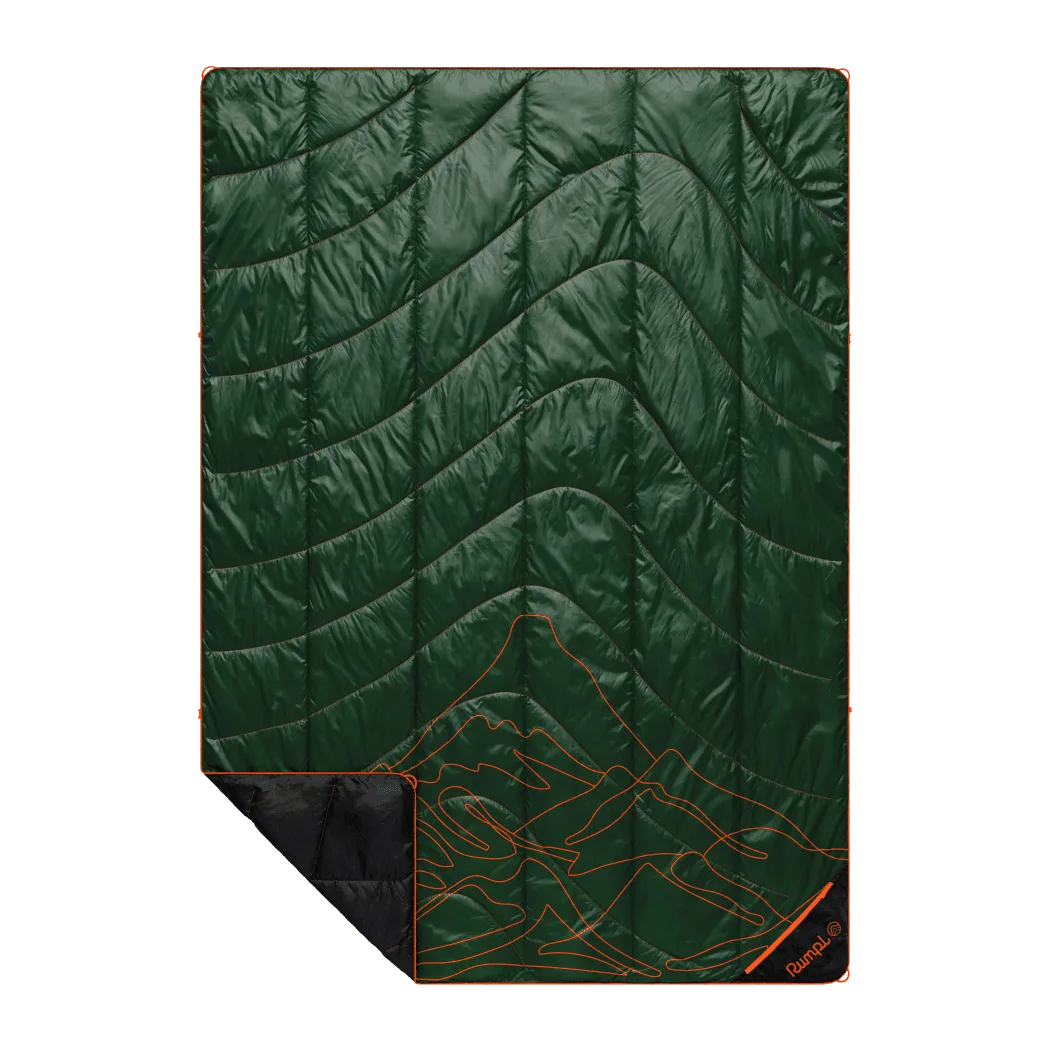
Backcountry Puffy Blanket - Mountain Green Peak