Quick Answer
For most kids, a soft-bristle bamboo toothbrush is the right starting point because it cleans effectively without being too harsh on young gums. Choose extra-soft bristles if your child has sensitive gums, is prone to bleeding, or is new to brushing and tends to press too hard. Always check the bristle type on the package and supervise brushing to ensure gentle technique.
Choosing a bamboo toothbrush for your child involves more than picking a fun color or a sustainable handle. The bristle firmness plays a big role in comfort and effective cleaning. Soft and extra-soft are the two common options for kids, but how do you know which one your child needs?
This guide breaks down the differences, offers practical decision rules, and highlights a couple of bamboo toothbrush options that can make the switch to eco-friendly oral care easier for your family.
Understanding Bristle Firmness: Soft vs. Extra-Soft
Bamboo toothbrushes for kids typically come in soft or extra-soft bristles. Soft bristles are firm enough to remove plaque and food particles effectively, yet gentle on enamel and gums. They are a good all-around choice for children who have been brushing for a while and have no specific sensitivity issues.
Extra-soft bristles are even gentler, making them ideal for toddlers, children with sensitive gums, or those who tend to brush aggressively. They can help prevent gum irritation and are often recommended by dentists for young children who are still learning proper brushing pressure. However, extra-soft bristles may not feel as 'scrubby' to older kids who are used to a firmer clean.
- Check the bristle label on the package—kids' brushes often have softer bristles than adult versions.
- If your child complains that brushing hurts, try switching to extra-soft before assuming they need a firmer brush.
Key Factors in Choosing a Kids' Bamboo Toothbrush
Beyond bristle firmness, consider the size of the brush head and the handle. A smaller head fits a child's mouth better and reaches back teeth more easily. Look for a handle that is easy for small hands to grip, especially if your child is learning to brush independently.
Material matters too: bamboo is renewable and biodegradable, but ensure the bristles are what you expect. Some bamboo toothbrushes use nylon bristles that are not biodegradable, so check the label if that is important to you. Also, consider your child's age and dexterity—younger kids may need more supervision and a brush that feels comfortable.
- Replace the toothbrush every three months or sooner if bristles become frayed.
- Let your child pick a color or design to build excitement about brushing.
Introducing Bamboo Toothbrushes to Your Child
Switching from a plastic toothbrush to a bamboo one can be a fun change for kids, especially if they are involved in the selection. Explain that bamboo is better for the planet, and let them choose their favorite color. Some bamboo toothbrushes, like those from OLA Bamboo, come in a range of colors designed to appeal to kids.
When your child first uses a bamboo brush, they might notice a slightly different feel in their mouth. That's normal. Encourage them to brush gently and praise them for making an eco-friendly choice. Over time, the bamboo handle becomes familiar and comfortable.
- Start with a soft-bristle brush unless your child has specific sensitivity issues.
- Use a pea-sized amount of toothpaste and supervise brushing until your child can spit effectively.
Decision Rules for Soft vs. Extra-Soft
- If your child is under 3 years old: Choose extra-soft bristles to protect delicate gums and emerging teeth. Extra-soft is the safest start for toddlers.
- If your child has sensitive gums or bleeds when brushing: Opt for extra-soft bristles to reduce irritation and allow gums to heal. Extra-soft helps prevent discomfort.
- If your child brushes too hard: Extra-soft bristles can help minimize damage from aggressive brushing. Extra-soft is forgiving on enamel.
- If your child is over 3 and has no sensitivity: Soft bristles are usually sufficient for effective cleaning without being too harsh. Soft is a balanced choice for most kids.
Bamboo Toothbrush Options for Kids
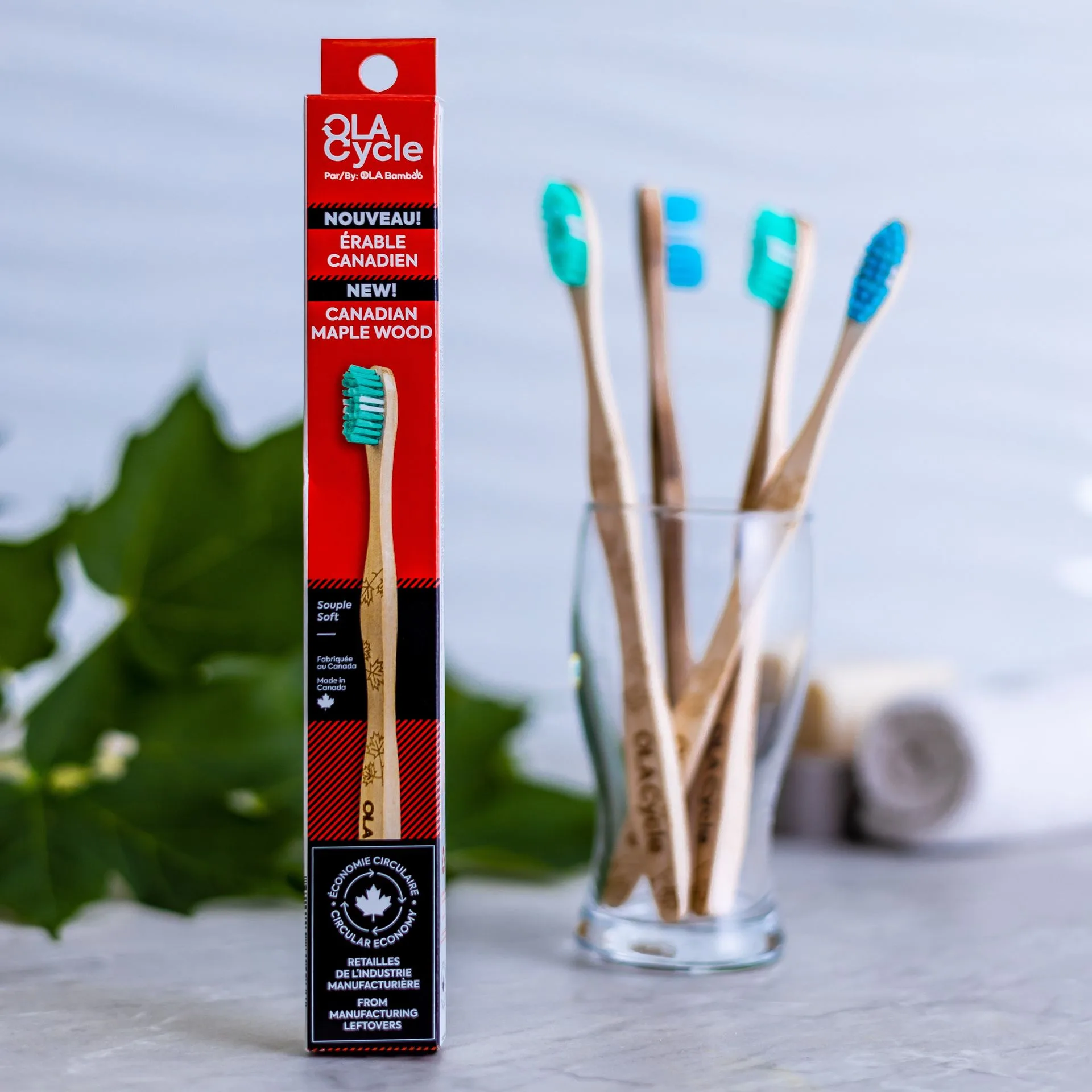
- OLA Bamboo Toothbrush - Kids: Made in Canada by OLA Bamboo, this toothbrush offers soft or ultra-soft bristles and a range of color choices for kids. You can pick the bristle firmness that suits your child's needs, and the fun colors make brushing more appealing.
- OLA Maple Wood Toothbrush: Another OLA Bamboo creation, made from maple hardwood, with soft or ultra-soft bristles and color choices for adults and kids. If your child prefers a wood that feels a bit different, or you want a matching family set, this option provides variety.
Which Bristle Type Fits Your Child?
Best for
- Toddlers and young children (under 3) or those with very sensitive gums.
- Kids who tend to brush with too much pressure.
Not for
- Older children who are used to a firmer clean and have no gum sensitivity—they may find extra-soft less effective.
- Parents looking for a brush with firmer bristles for deeper plaque removal—soft is generally better for kids.
Choosing between soft and extra-soft bristles for your child's bamboo toothbrush comes down to their age, gum sensitivity, and brushing habits. Start with extra-soft for the youngest or most sensitive kids, and move to soft as they grow and develop a gentle technique. Whichever you choose, a bamboo toothbrush is a great step toward a more sustainable oral care routine.